
Last updated November 2, 2026
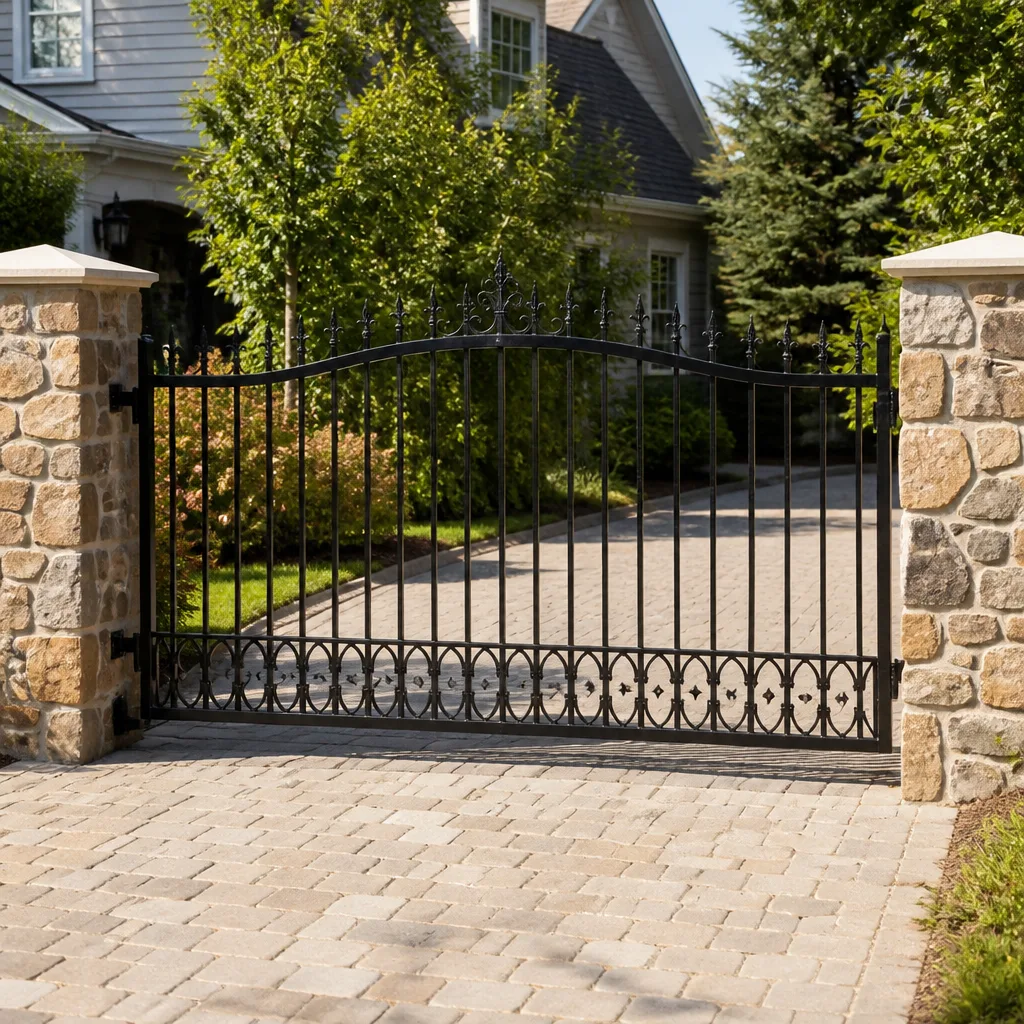 Wrought iron
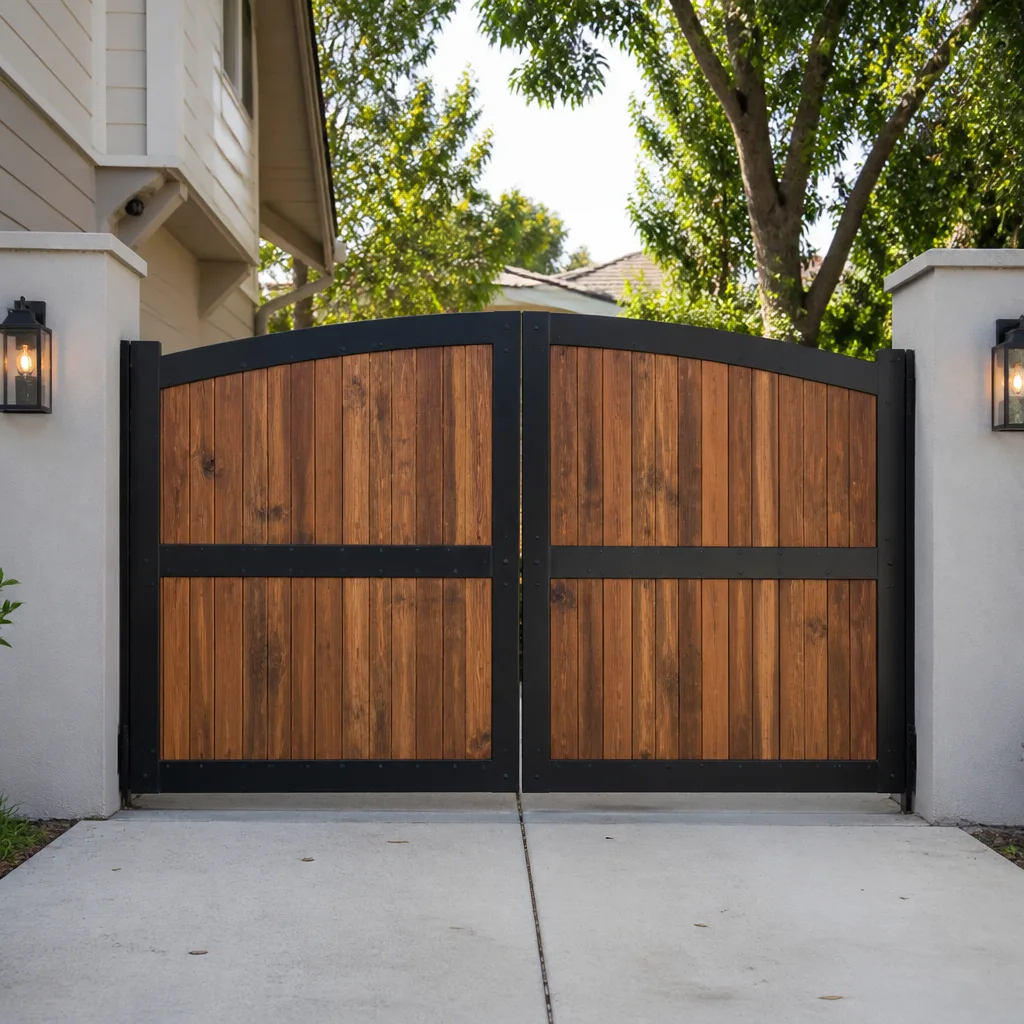 Wood & steel frame
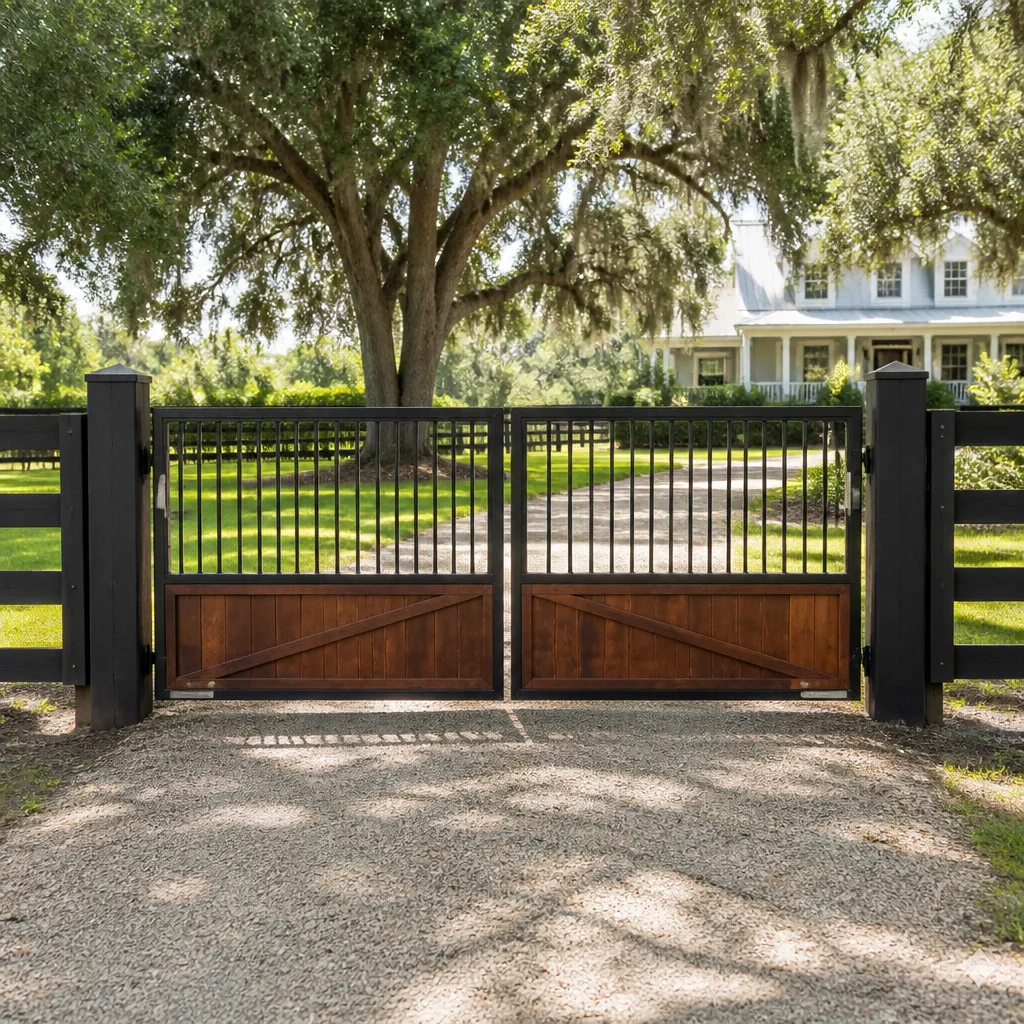 Farm & ranch
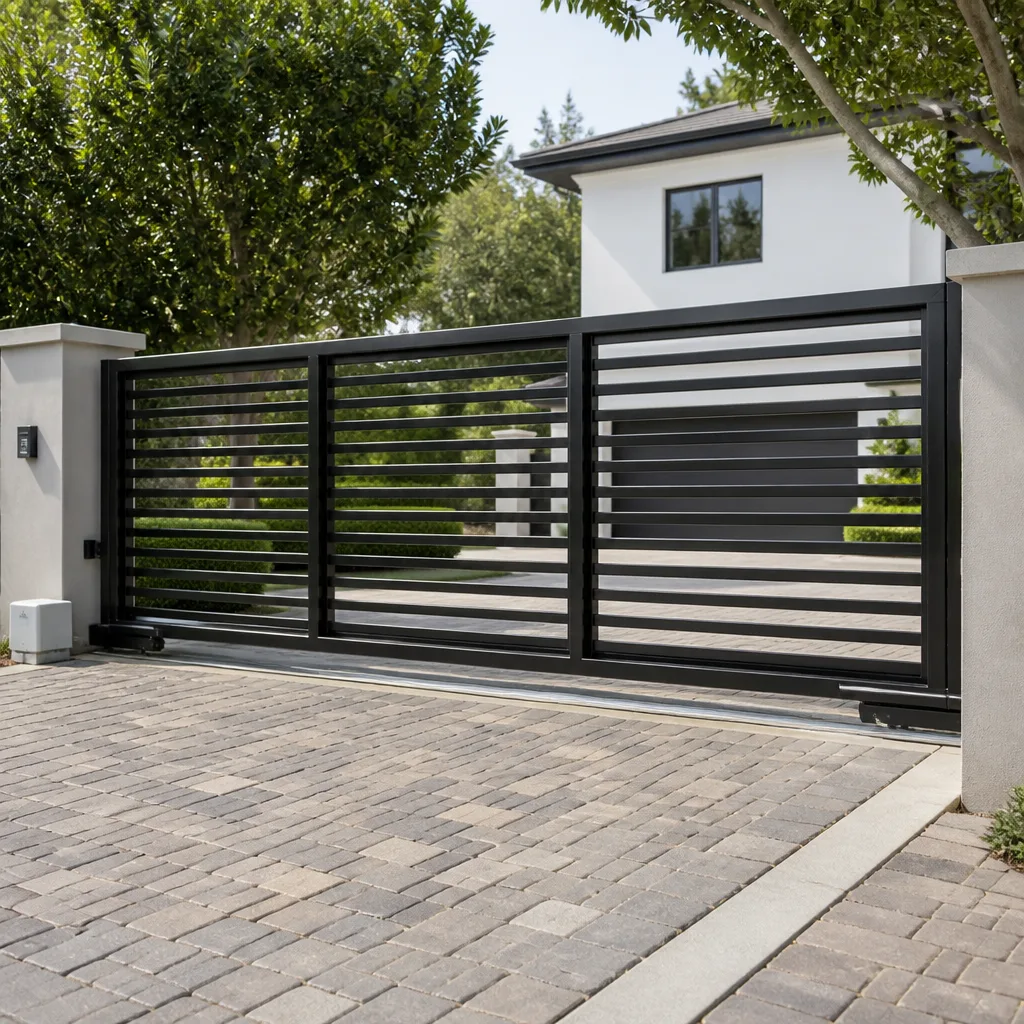 Sliding driveway gates
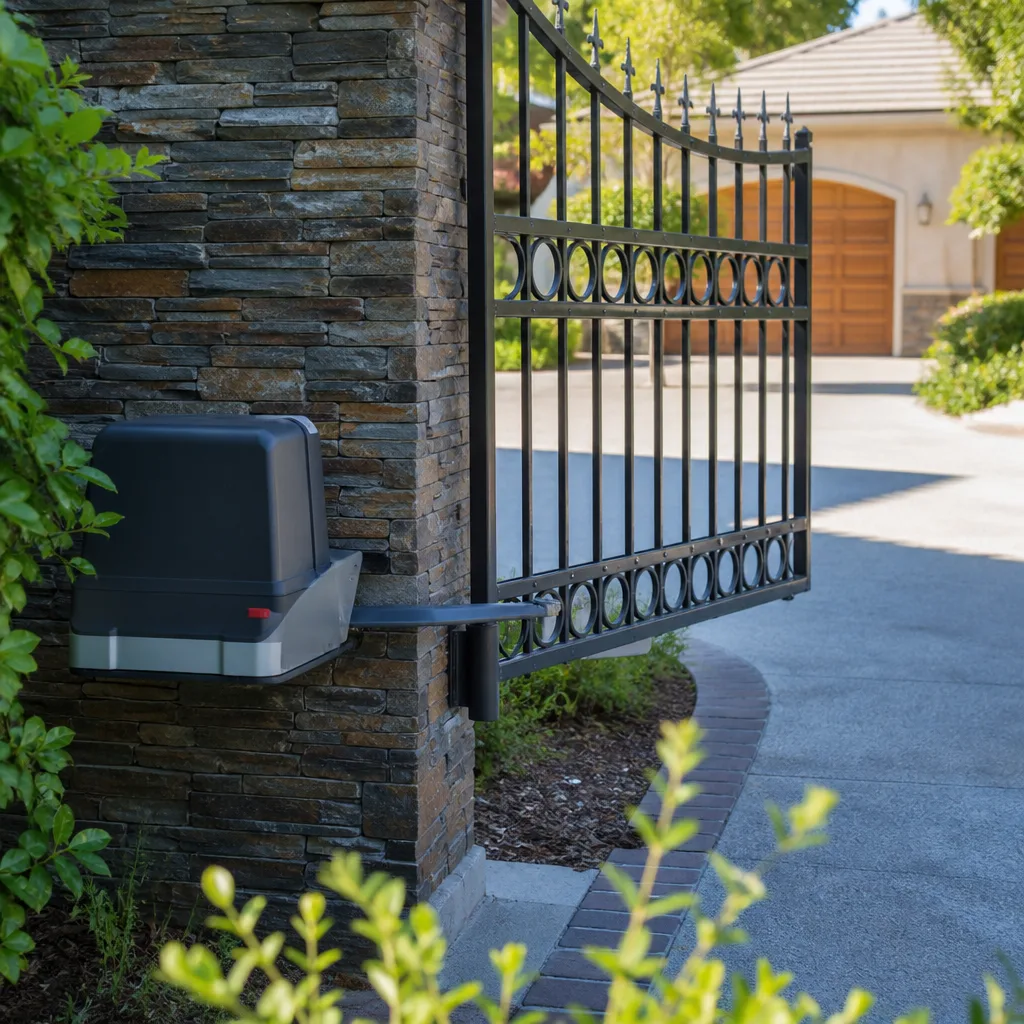 LiftMaster operators
Free on-site gate assessment - hinges, posts, and your LiftMaster or Nice gate operator checked before anything is quoted
The assessment is free and the quote is the invoice.
Get your free estimateChoosing the Right Gate Repair Brand: A Buyer’s Guide for Pleasanton
LiftMaster is the default recommendation from most Pleasanton installers. Not because it’s always the best fit, but because it’s what they stock. For a heavy iron swing gate on a high-cycle driveway, it may be the third-best choice behind FAAC or Viking, and that difference shows up in motor replacement intervals. This guide breaks down brand selection as an engineering decision, not a preference, so you know exactly what you’re paying for and what it will cost you over five years in Pleasanton’s specific conditions. For deeper reading, see The Complete Gate Repair Guide for Pleasanton Homeowners.
Styles & brands we work with
- Wrought iron
- Wood & steel frame
- Farm & ranch
- Sliding driveway gates
- LiftMaster operators
Quick Answer
The right gate operator brand for your Pleasanton property depends on gate weight, how many times it cycles daily, and whether you need slide or swing operation. Consumer-grade brands like Ghost Controls and Mighty Mule handle light residential gates under 300 pounds at low cycle counts, while commercial-grade operators like FAAC, Viking, and DoorKing are built for heavy iron gates, high-traffic driveways, and multi-family access in Pleasanton. Matching the brand tier to the actual load is the single biggest factor in long-term repair costs.
Table of Contents
- Gate Weight and Cycle Frequency: The Real Brand Dividers
- How Pleasanton’s Power Grid Affects Your Brand Choice
- Slide Gate vs. Swing Gate: Different Brands for Different Jobs
- Parts Availability and the Tri-Valley Service Network
- Five-Year Cost of Ownership by Brand Tier
- Brand-Specific Repair Patterns We See in Pleasanton
- Common Mistakes to Avoid
- When to Call a Professional
- Frequently Asked Questions
- The Bottom Line
Gate Weight and Cycle Frequency: The Real Brand Dividers
Every gate operator has a maximum duty cycle and a maximum gate weight. Exceed either one and the motor, gearbox, or control board fails early. This is the most common repair pattern we diagnose in Pleasanton: a consumer-grade opener bolted onto a gate it was never rated to move.
Consumer-grade operators from Ghost Controls and Mighty Mule are engineered for gates up to about 300 pounds and 10 to 15 cycles per day. A cycle is one full open-and-close. For a single-family home where the gate opens four or five times daily, that’s fine. For a shared driveway serving two or three households, that gate might cycle 40 times a day by noon. The operator is now running at triple its intended duty cycle.
Commercial-grade operators sit in a different class entirely:
- FAAC and Viking hydraulically drive gates up to 1,000 pounds or more, depending on the model
- DoorKing builds operators rated for continuous or high-cycle commercial use, common at Pleasanton apartment complexes and HOA entrances
- LiftMaster’s residential line (LA400, LA412) handles most standard single-family gates up to 550 pounds, but its commercial line (CSL24V, RSW12V) is what you need for heavier steel
- Linear sits in the middle: solid residential-to-light-commercial operators that many Tri-Valley gate installers specify for mid-weight applications
Here’s the threshold that matters: if your gate weighs more than 500 pounds or cycles more than 20 times daily, you have crossed out of consumer territory. Continuing to run a consumer opener in that range means you’ll replace the motor or gearbox roughly every two to three years. A commercial-grade operator in the same application will run for a decade with routine service.
How Pleasanton’s Power Grid Affects Your Brand Choice
Pleasanton sits at the eastern edge of the East Bay’s PG&E service territory, where summer heat waves and high-wind events still produce planned outages and public safety power shutoffs. When the power drops, your gate’s behavior depends entirely on the operator’s battery backup design, and brands differ significantly here.
This matters more than most homeowners realize. An automatic gate without backup power is either locked closed (trapping your car inside) or fails open (leaving your property unsecured). Neither is acceptable during a multi-day outage.
Brand-by-brand backup behavior:
- LiftMaster commercial operators accept factory battery backup kits that keep the gate cycling for a limited number of operations during an outage. Residential models vary, and some require an external UPS.
- FAAC and Viking hydraulic operators draw less current at startup than electromechanical units, which means a properly sized UPS or battery bank sustains them longer. Hydraulic pumps don’t need the same surge as a gear-driven motor.
- DoorKing offers integrated battery options on several operators, and their control boards monitor battery health with fault reporting, which helps property managers catch a failing battery before an outage exposes it.
- Ghost Controls runs on 12V DC and pairs naturally with solar and battery setups, but the capacity is sized for intermittent use, not multi-day outages on a high-traffic gate.
- Mighty Mule and Linear rely on external UPS solutions for outage coverage, and quality varies by installation.
In our electric gate repair work across Pleasanton, we routinely see operators that lost their backup capacity because the battery aged out and nobody noticed. Whatever brand you choose, have the battery tested annually. Heat shortens battery life, and Pleasanton summers are hot enough to matter.
Slide Gate vs. Swing Gate: Different Brands for Different Jobs
The best slide gate brand is not the best swing gate brand. These are mechanically distinct systems with different stress profiles, and a brand that excels at one often underperforms at the other.
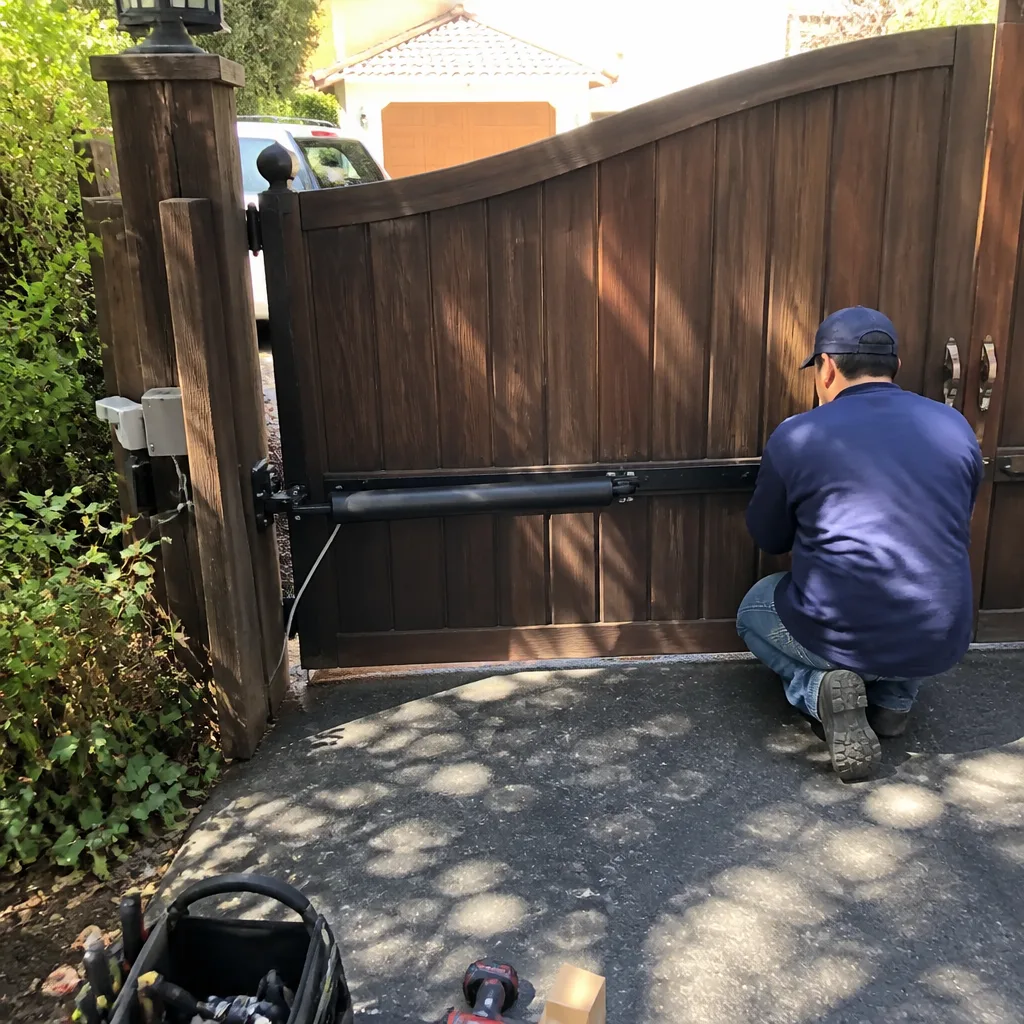
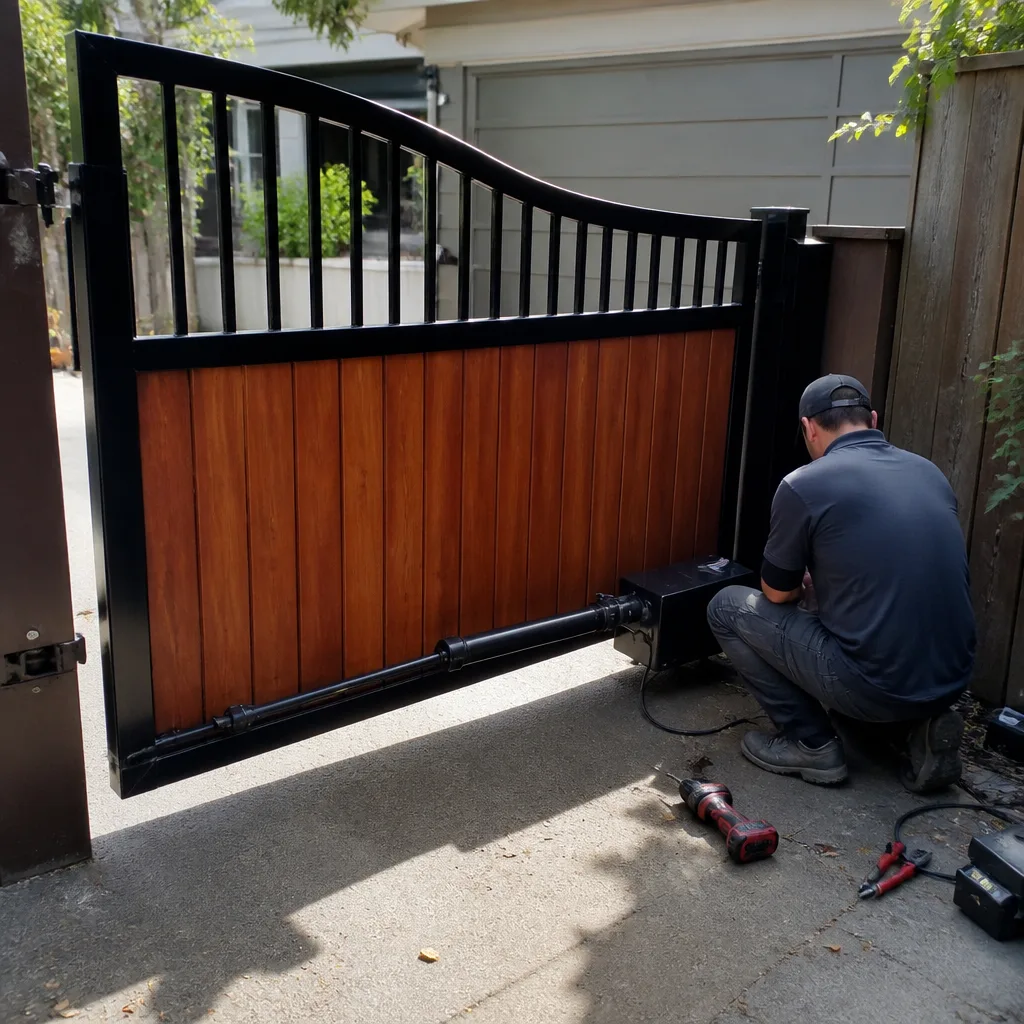
Swing gates put torque demands on the operator at the hinge point. A long, heavy gate leaf acts as a lever, and the operator must overcome that mechanical disadvantage every single cycle. Hydraulic operators from FAAC and Viking handle this load with fewer moving parts under stress. Their rams push smoothly through the stroke rather than cranking through a gear reduction that wears prematurely. For Pleasanton homes with ornamental iron swing gates or driveway gates built from heavy wood, hydraulic operators have consistently proven more durable in residential service.
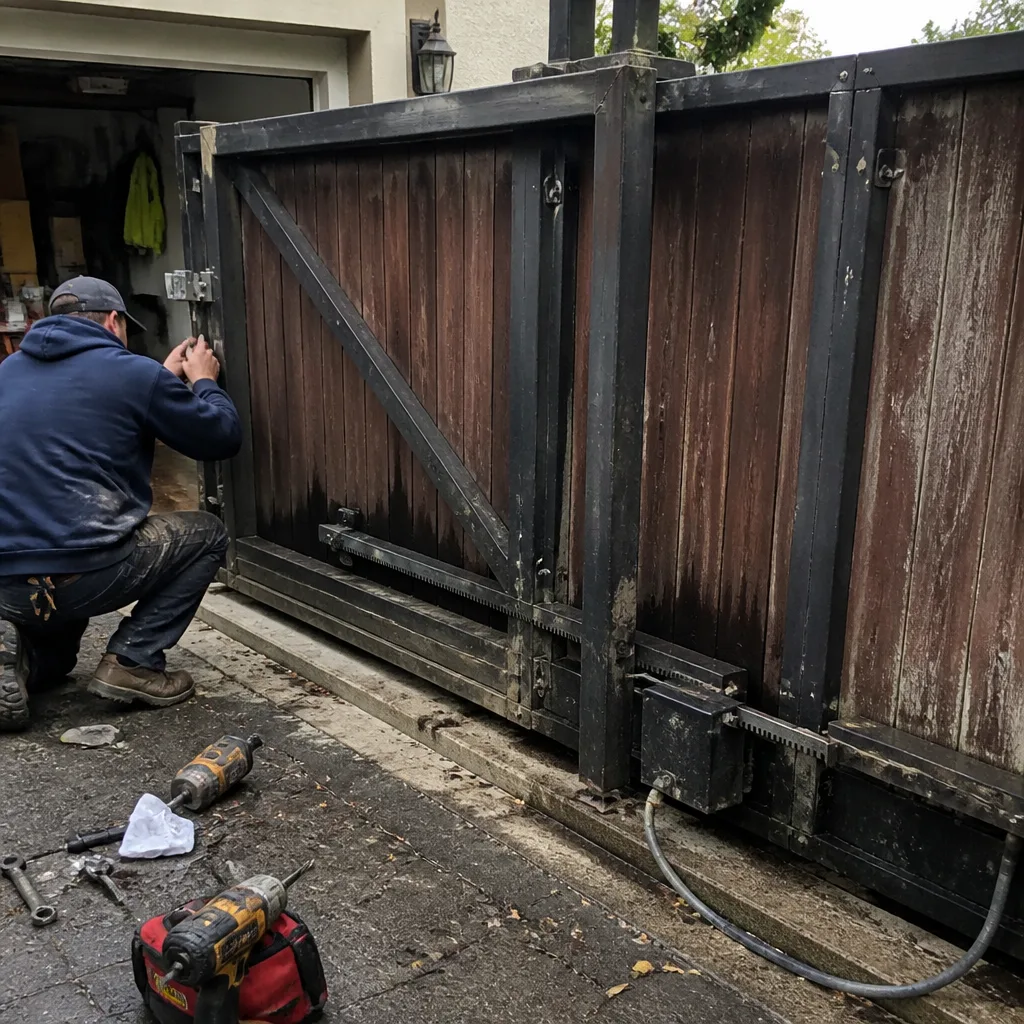
Slide gates roll on a track or cantilever system, which means the operator is fighting rolling friction, not leverage. Gear-driven electromechanical operators from DoorKing, LiftMaster, and Linear work well here because the load profile is flatter. A slide gate that weighs 600 pounds can be moved reliably by a properly sized gear-driven operator, where that same gate as a swing leaf would demand hydraulic power.
The practical takeaway: identify your gate type first, then shortlist brands. A homeowner who falls in love with a specific brand before knowing their gate configuration is putting the cart before the horse.
Parts Availability and the Tri-Valley Service Network
Every gate operator will eventually need a control board, a limit switch, a gearbox, or a motor capacitor. What happens on that day depends on whether the brand has distribution in the Bay Area or whether parts ship from a warehouse across the country.
In the Tri-Valley, the brand support landscape breaks down like this:
- LiftMaster and Linear have established distributor networks in the Bay Area. Boards and common parts are usually available same-day or next-day. This is a legitimate factor in their popularity with Pleasanton installers.
- DoorKing has West Coast distribution and a long track record with commercial property managers in Northern California. Parts for common operators are typically in stock regionally.
- FAAC and Viking maintain specialized distributor networks. Parts availability is good but not universal across every model, and service requires a technician who actually knows hydraulic systems.
- Ghost Controls and Mighty Mule sell heavily through retail and online channels. Parts are easy to order, but if a board fails and you need same-day service, the local technician may not have that specific board on the truck.
This is where brand-agnostic diagnosis matters. A technician who works on all nine major brands, rather than a single brand’s certified line, can identify the actual fault and source the correct part from the right channel. If the local distributor doesn’t stock a FAAC board, the specialist knows the aftermarket path. If a Ghost Controls issue is actually a wiring fault rather than a board failure, that diagnosis saves you a $400 part that wouldn’t have fixed the problem anyway.
Five-Year Cost of Ownership by Brand Tier
The purchase price of a gate operator is a small fraction of what it costs to own over five years. When you factor in service calls, replacement parts, and the cost of a failed gate at the wrong moment, brand tier becomes a financial decision.
Here’s a realistic cost picture for Pleasanton residential use, based on what we see in the field:
- Consumer tier (Ghost Controls, Mighty Mule): operator cost $300 to $800. Expect a motor or board replacement within three to five years under moderate use, and sooner under heavy use. Service calls add $150 to $300 per visit. Five-year total: $1,000 to $2,000 on a light gate, significantly more if the gate is oversized for the operator.
- Mid tier (Linear, LiftMaster residential): operator cost $800 to $1,500. With proper installation and annual service, expect five to eight years before major component replacement. Board failures are uncommon but do occur. Five-year total: $1,200 to $2,200 including routine maintenance.
- Commercial tier (FAAC, Viking, DoorKing, LiftMaster commercial): operator cost $1,500 to $4,000 installed. Lifespan of 10 to 15 years is typical, with gearbox rebuilds or hydraulic service as the primary mid-life expense. Five-year total: $2,000 to $4,500, but amortized over a much longer service life.
The counterintuitive point: the commercial tier costs more upfront but less per year. For a gate that cycles more than 20 times daily, the commercial operator is the cheapest option over a decade by a wide margin. For a light single-family gate that cycles four times daily, the consumer tier genuinely makes sense, and over-buying is wasteful.
Brand-Specific Repair Patterns We See in Pleasanton
Every brand has a personality, and after years of gate repair in Pleasanton, certain patterns repeat often enough to be useful. We service all nine major brands, which means we see the failures other technicians never encounter.
LiftMaster: The most common brand in Pleasanton driveways. Reliable electronics, decent parts availability. The weak point in residential models is the gearbox on swing gate applications where the gate weight approaches the operator’s rating. Installers who match the model to the load get years of service. Installers who undersize get repeat business, and not the kind they want.
FAAC: Exceptional for heavy swing gates. Hydraulic operators handle big iron gates with a smoothness that gear-driven units can’t match. The failure mode we see most is hydraulic fluid degradation and seal wear after years of exposure. Routine fluid service extends life significantly, and few homeowners know it’s required.
Viking: A hydraulic workhorse common on commercial and estate properties in the East Bay. The operators themselves are bulletproof when maintained. Control board failures are the primary service issue, and aftermarket board sourcing requires a specialist who knows the ecosystem.
DoorKing: Ubiquitous at Pleasanton apartment complexes and HOA entrances. Slide gate operators in particular hold up well under high cycle counts. We regularly see DoorKing slide operators with 50+ daily cycles running fine at year eight. The failure patterns are almost always related to sensor misalignment or loop detector issues rather than motor failure.
Linear: A solid mid-tier choice that gets specified frequently by Tri-Valley installers. Good value for the capability. The pattern we see is that Linear operators installed correctly rarely fail dramatically, but they are less forgiving of installation shortcuts than some other brands.
Ghost Controls: Popular for DIY and light residential use. The issues we encounter are almost always the result of under-specification: a Ghost Controls opener on a gate that’s too heavy or cycles too often. Within their rated envelope, they work as designed.
Mighty Mule: The entry-level king. Fine for a light tube-steel gate on a single-family home. Expect a shorter service life than any other brand on this list, and plan for replacement rather than extensive repair when a major component fails.
Common Mistakes to Avoid
- Buying a brand before measuring the gate. Gate weight and cycle count determine the brand tier, not the other way around. Weighing the gate or having it professionally assessed is the first step.
- Ignoring duty cycle. A shared driveway in a Pleasanton neighborhood like Birdland or Del Prado might cycle 30 times daily. That’s commercial territory, regardless of how light the gate is.
- Assuming all installers service all brands. Many Pleasanton installers specialize in one or two brands. When that brand’s board fails and they’re two weeks out, you’re manually opening your gate every day. Ask about brand coverage before you buy.
- Skipping battery backup until the outage happens. By then it’s too late. Pleasanton’s PG&E outage history makes failover a requirement, not a luxury.
- Replacing a failed operator with the same undersized model. If a Ghost Controls unit burned out in three years, the gate was too heavy for it. Replacing it with the same unit guarantees the same failure. Upgrade the tier instead.
- Ignoring hydraulic fluid service on FAAC or Viking operators. Hydraulic systems need fluid and seal attention. The operator that worked perfectly for eight years will fail abruptly if the fluid was never serviced.
- Choosing a slide gate brand for a swing gate application. This seems obvious when stated, but we’ve replaced operators where the installer bolted a slide-gate-rated gear unit onto a swing gate and walked away. The gate moved for a while, then didn’t.
When to Call a Professional
Some gate problems are worth diagnosing yourself. A dead remote battery or a misaligned safety sensor is a quick fix. But when the operator motor hums without moving, when the gate creeps instead of swings, or when the control board shows fault codes you don’t recognize, you’re past the DIY threshold. High-tension components, hydraulic lines under pressure, and live electrical connections make gate repair genuinely dangerous for untrained hands. A gate leaf that falls or a spring that releases can cause serious injury.
If your gate has stopped moving, is making sounds it didn’t make last month, or is opening slower than normal, that’s a diagnosis call, not a YouTube fix. Gate Repair Pleasanton offers free estimates in Pleasanton, CA. Call (833) 593-6440, and we’ll tell you what’s actually wrong before recommending any work.
Frequently Asked Questions
For a standard single-family driveway gate under 500 pounds cycling less than 15 times daily, LiftMaster and Linear provide the best balance of reliability, parts availability, and serviceability in Pleasanton. For heavier iron gates or gates that cycle more often, FAAC and Viking hydraulic operators are the better long-term choice despite the higher upfront cost.
A new gate operator in Pleasanton typically costs $800 to $4,500 installed, depending on brand tier and gate configuration. Consumer-grade operators from Ghost Controls or Mighty Mule run $300 to $800 for the unit, while commercial hydraulic operators from FAAC or Viking start around $1,500 and often exceed $3,000 for heavy gates. For an exact quote on your specific gate, call (833) 593-6440 for a free estimate.
Not necessarily. Many gate technicians in Pleasanton specialize in one or two brands. Gate Repair Pleasanton services all nine major brands, including LiftMaster, FAAC, BFT, Linear, Viking, Ghost Controls, DoorKing, Elite, and Mighty Mule, so a single call covers whatever equipment is on your property.
Gate operator lifespan in the Tri-Valley depends on duty cycle and brand tier. Consumer units average three to five years, mid-tier units average five to eight years, and commercial-grade operators from FAAC, Viking, or DoorKing routinely last 10 to 15 years with annual service. Pleasanton’s summer heat accelerates battery and capacitor aging, so annual maintenance makes a measurable difference.
The most common cause of premature gate operator failure in Pleasanton is under-specification: an operator rated for a lighter gate or lower cycle count than the actual application. Other factors include battery backup degradation from summer heat, lack of hydraulic fluid service on FAAC and Viking operators, and sensor misalignment causing repeated reversal cycles that stress the motor.
Gate Repair Pleasanton handles both gate installation in Pleasanton and repair, including electric gate repair for motors, control boards, safety sensors, and remote systems. That means one specialist handles the full lifecycle of your gate, from initial installation through maintenance and eventual major repair.
The Bottom Line
Brand selection for a gate operator is a load-matching problem, not a loyalty decision. Measure your gate, count your cycles, check your power backup needs, and choose the tier that fits. Consumer-grade brands earn their price on light gates. Commercial-grade operators earn theirs on heavy gates and high-traffic driveways. In Pleasanton, where summer heat and occasional outages are part of the equation, the right match saves thousands over five years. And when something does break, hire a specialist who knows all nine brands, not a generalist who knows one. Gate Repair Pleasanton home has the range to diagnose and fix whatever is on your property, with free estimates and no surprises.
Written by the team at Gate Repair Pleasanton, serving Pleasanton since 2016.
See the difference
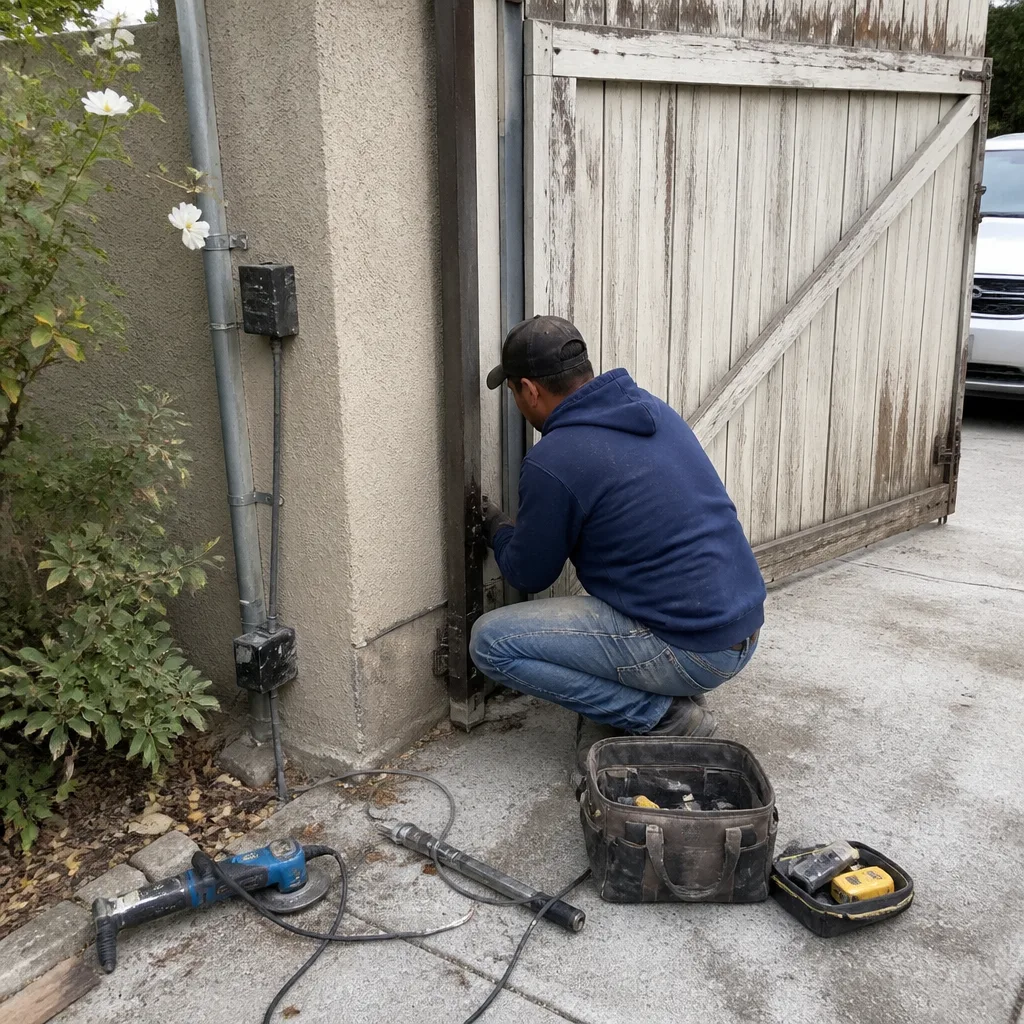 Before
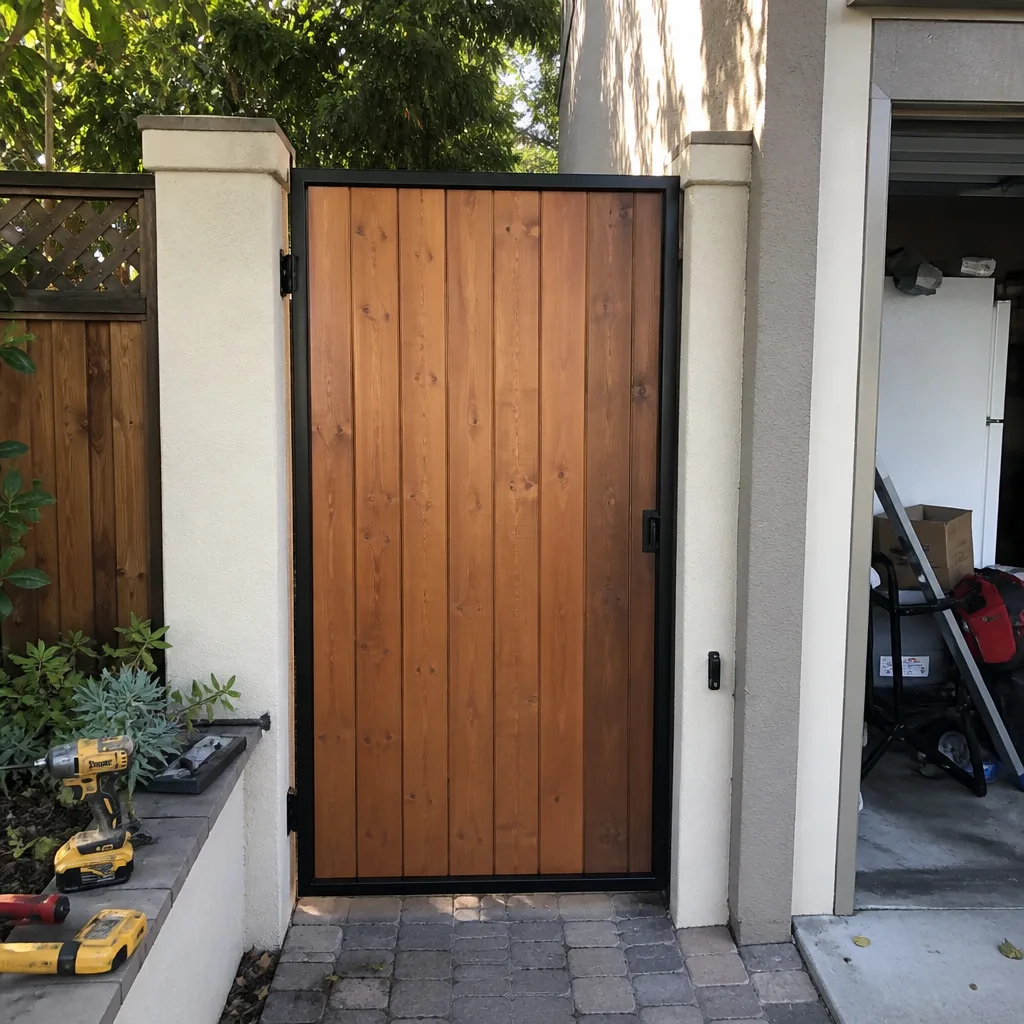 After
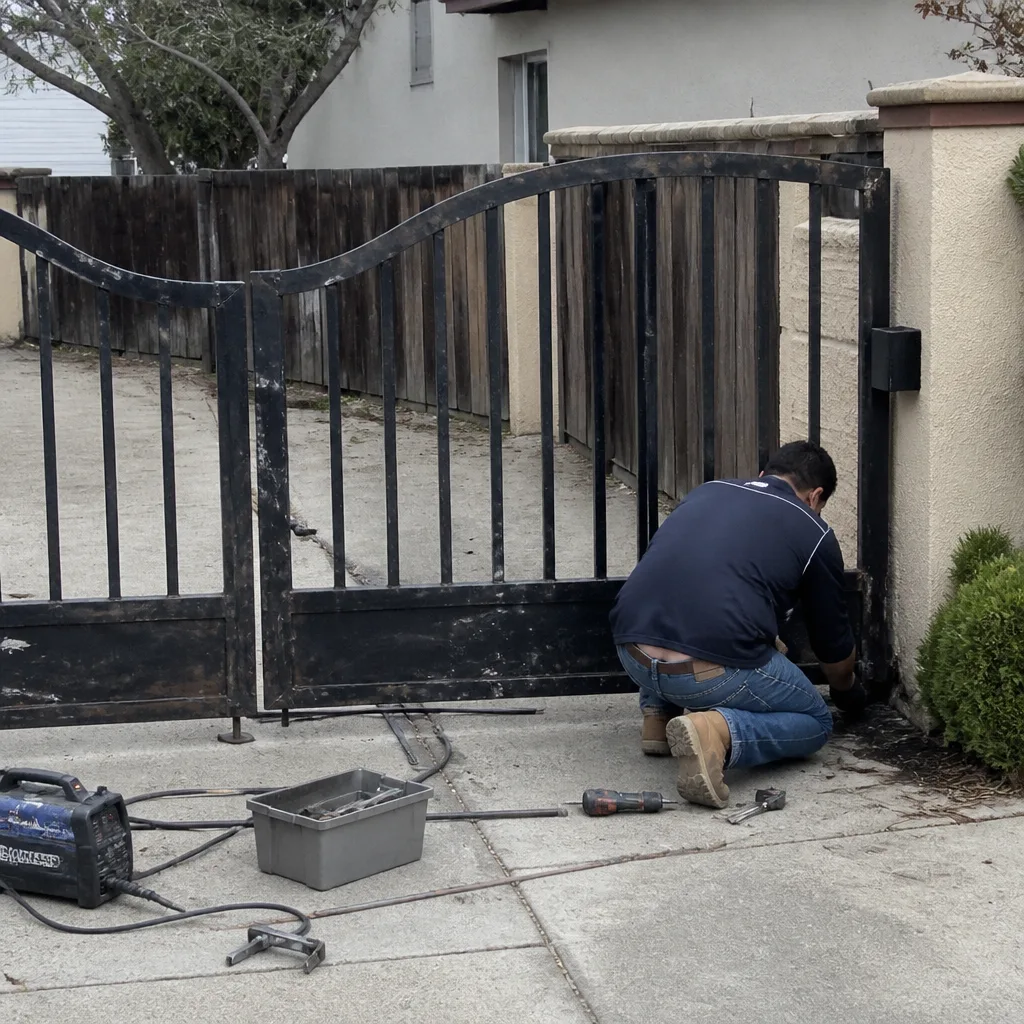 Before
 After
 Before
 After