
Last updated November 2, 2026
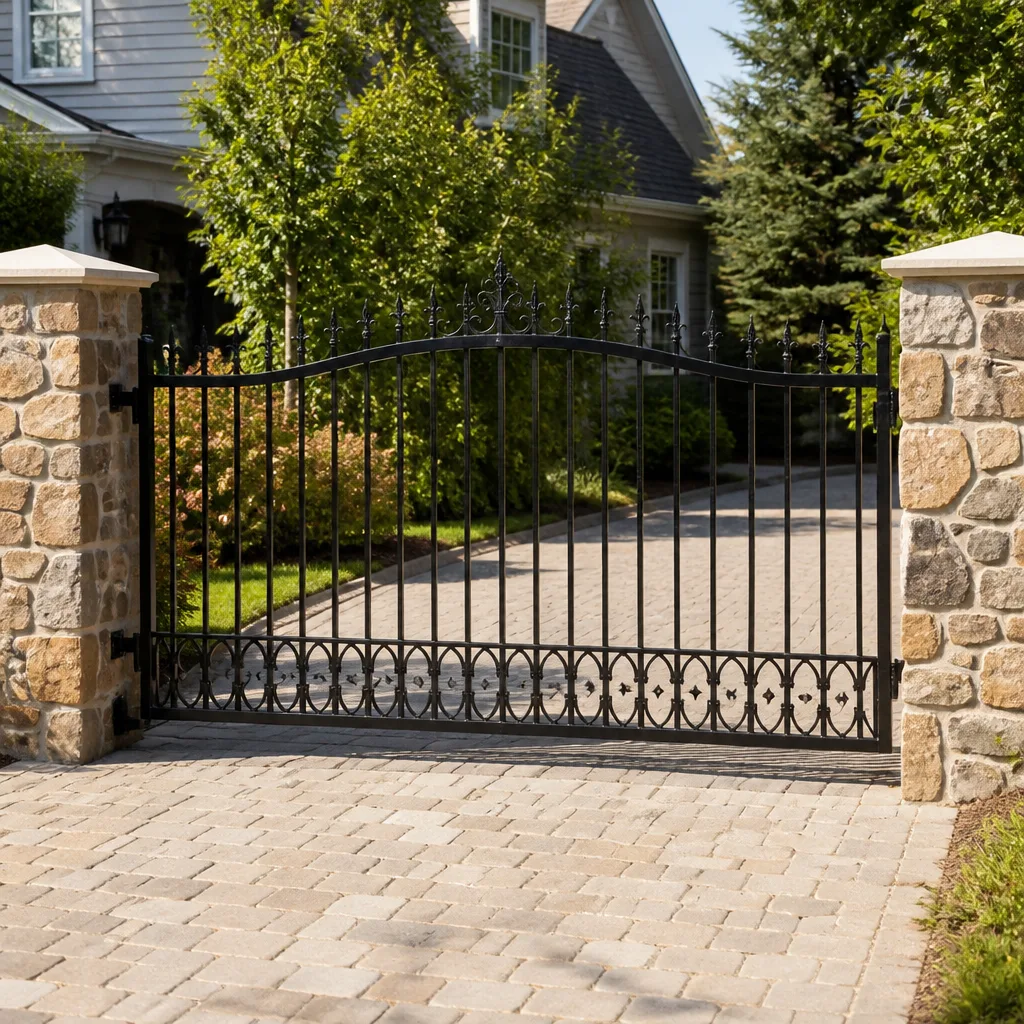 Wrought iron
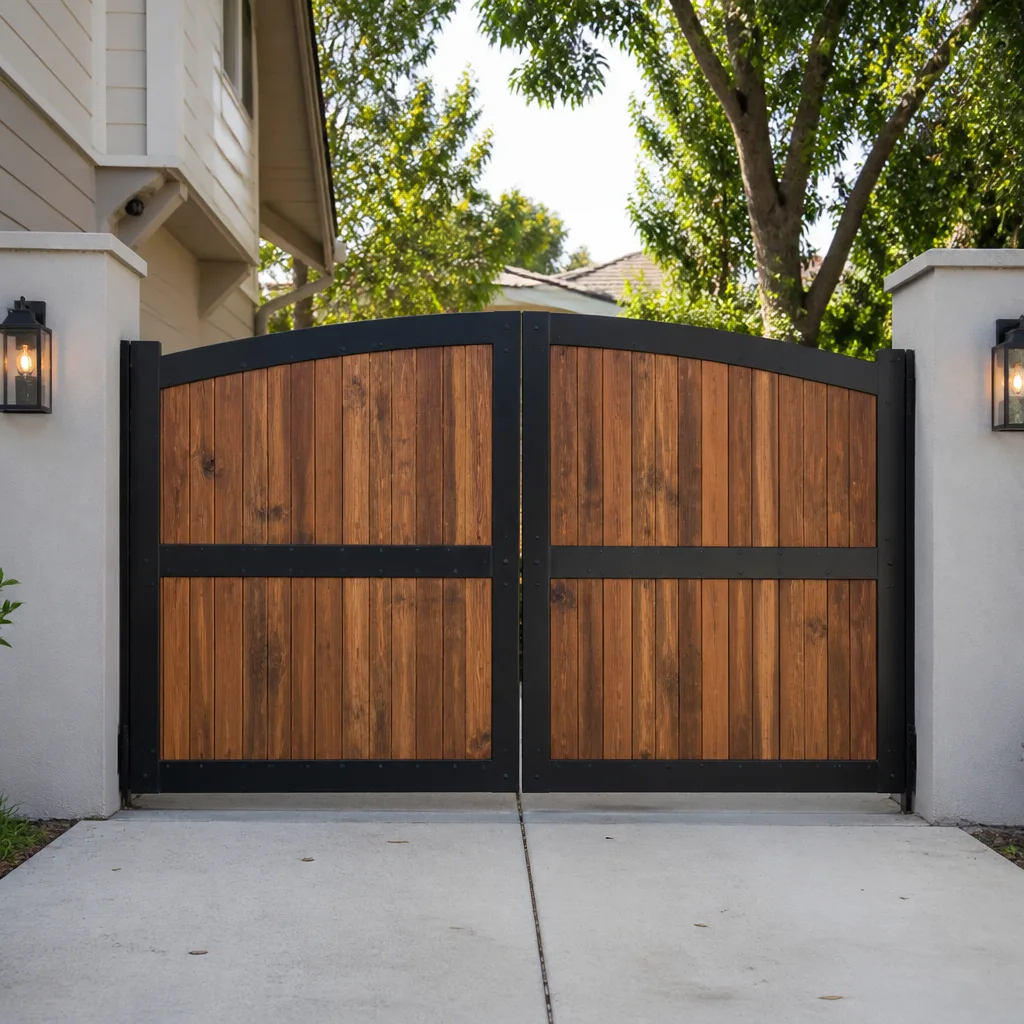 Wood & steel frame
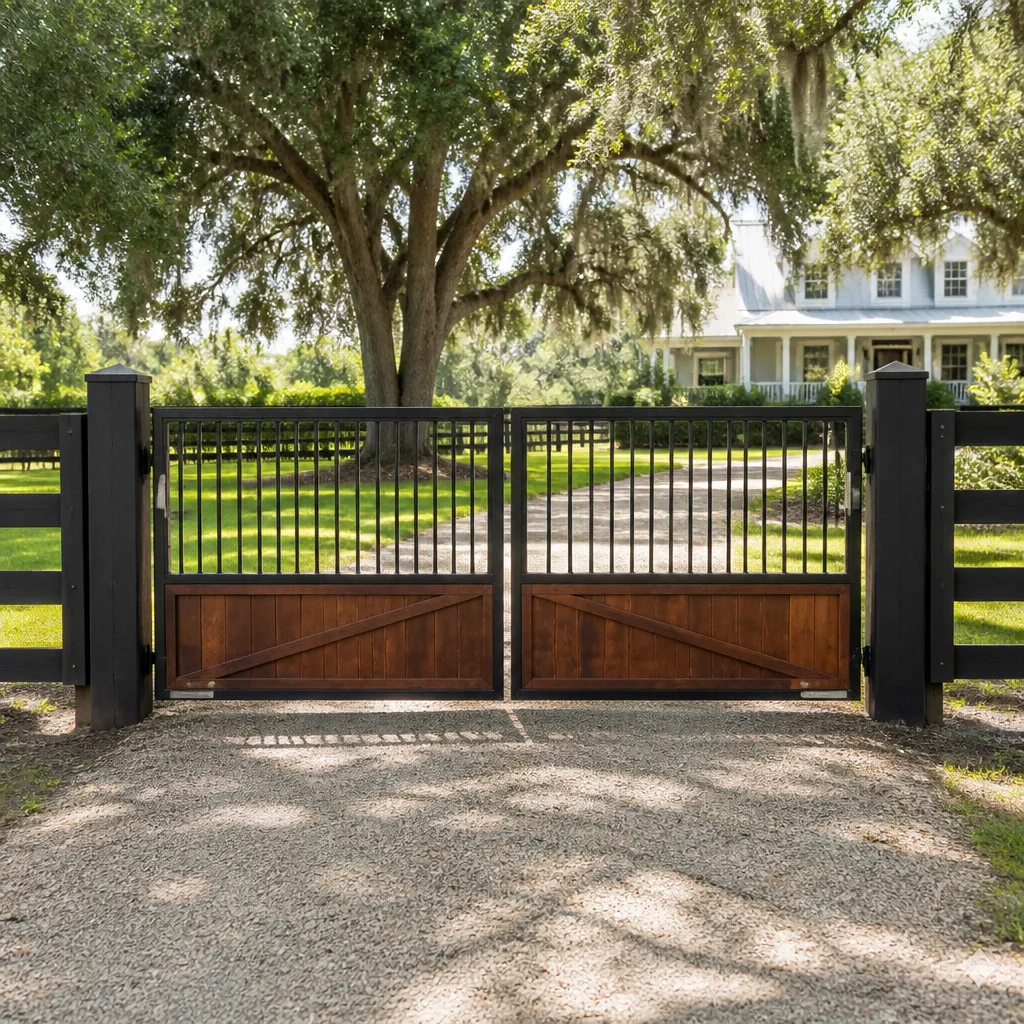 Farm & ranch
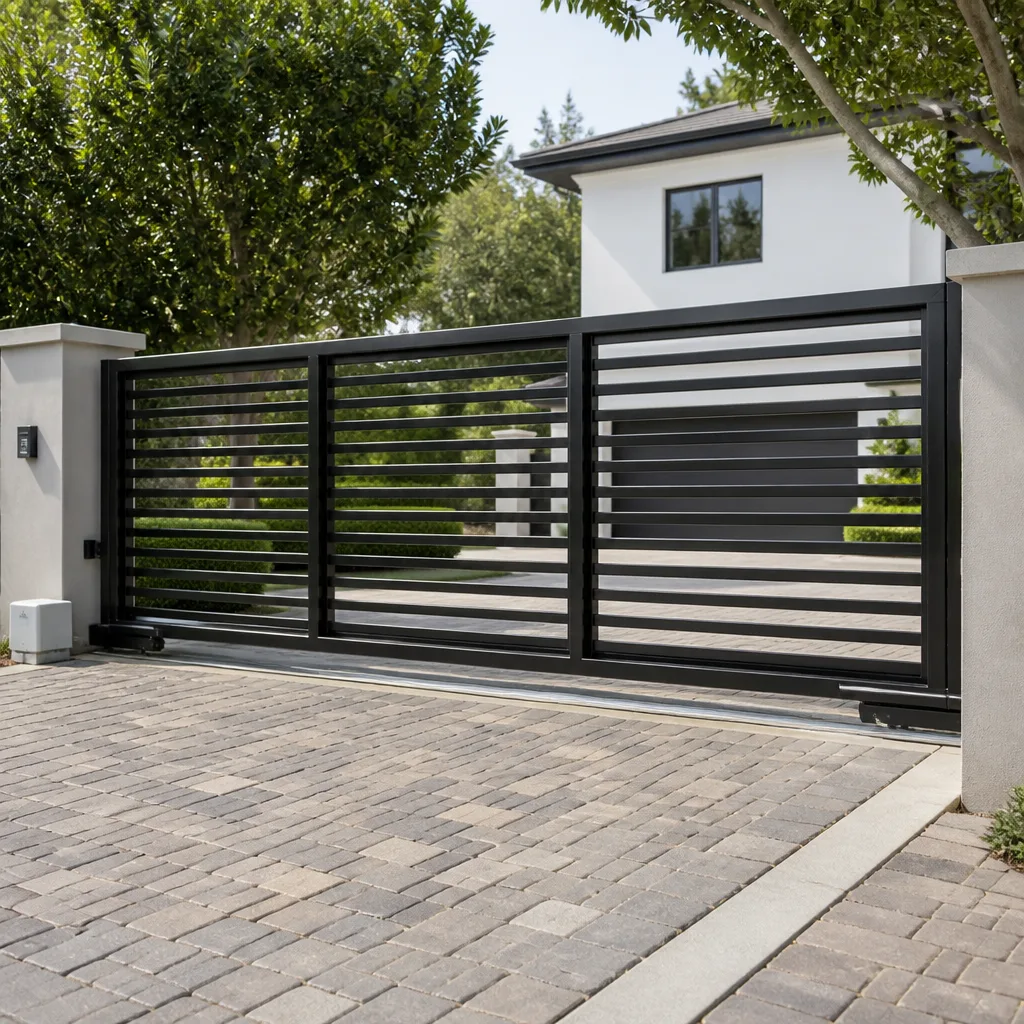 Sliding driveway gates
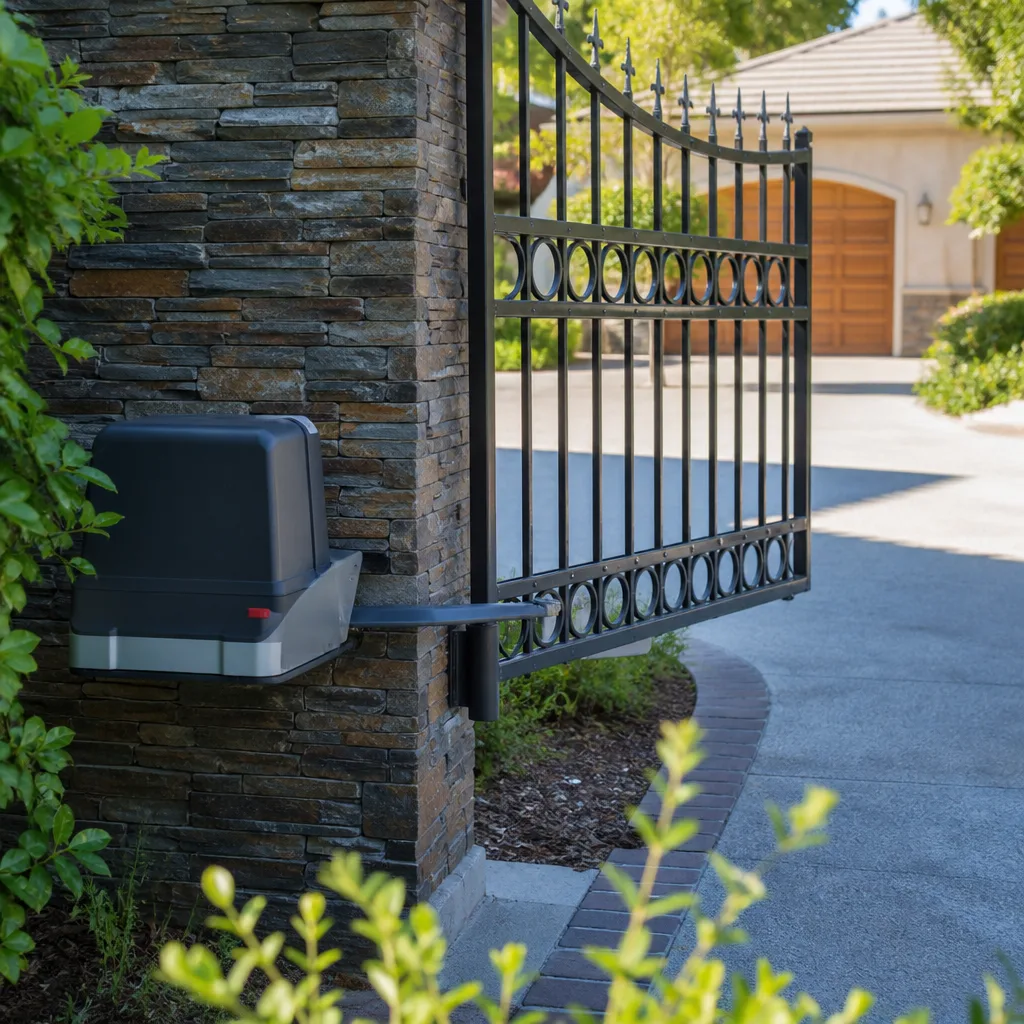 LiftMaster operators
Free on-site gate assessment - hinges, posts, and your LiftMaster or Nice gate operator checked before anything is quoted
The assessment is free and the quote is the invoice.
Get your free estimateDIY vs Professional Gate Repair: The Pleasanton Homeowner’s Decision Guide
Here’s something most gate repair guides won’t tell you: the DIY decision has almost nothing to do with how handy you are. A homeowner who can rebuild a carburetor still shouldn’t touch a gate operator’s entrapment sensors, while someone who’s never held a multimeter can safely program a Mighty Mule remote in four minutes. The real question is which repair category you’re facing, because some tasks are genuinely simple home maintenance and others carry legal liability that follows the property owner, not the technician. In Pleasanton, where neighborhoods like Ruby Hill and Del Prado rely on automatic gates for daily access, getting this distinction wrong means either wasting a weekend or exposing yourself to a denied insurance claim. This guide draws the line at the task level, not the person level, so you can make the call with the same clarity a professional diagnosis provides.
Quick Answer
DIY gate repair is safe and legal for lubrication, remote programming, battery replacement, and minor alignment adjustments in Pleasanton. Professional repair is required for operator installation, entrapment protection work, control board diagnosis, and any repair requiring a permit, because California code and UL 325 compliance make these tasks legally and mechanically non-negotiable. The smartest approach for most Pleasanton homeowners is partial DIY: handle the diagnostics and simple maintenance yourself, then call a gate specialist for Gate Repair services covering the licensed-required portion.
Styles & brands we work with
- Wrought iron
- Wood & steel frame
- Farm & ranch
- Sliding driveway gates
- LiftMaster operators
Table of Contents
- The California Legal Line: What UL 325 Actually Requires
- The Safe DIY List: Tasks Any Pleasanton Homeowner Can Handle
- Warranty-Voiding DIY: What LiftMaster, FAAC, and Viking Won’t Cover
- Licensed-Required Work: Where DIY Becomes Illegal in California
- The Tool and Skill Threshold: An Honest Self-Assessment
- How to Partially DIY a Gate Repair and Legitimately Reduce the Bill
- Pleasanton-Specific Considerations: Climate, Code, and Neighborhoods
- Common Mistakes to Avoid
- When to Call a Professional
- Frequently Asked Questions
The California Legal Line: What UL 325 Actually Requires
UL 325 is the safety standard that governs automatic gate operators in the United States, and California enforces it through the California Code of Regulations, Title 8. The standard exists because automatic gates have killed people. Between 1985 and 2001, the Consumer Product Safety Commission documented 32 deaths and 137 injuries involving automatic gates, mostly children caught in entrapment zones. UL 325 was the regulatory response, and it mandates specific safety devices: photo eyes or contact edges that reverse the gate when obstruction is detected, warning signage, and proper force settings that prevent crushing injuries.
Here’s what matters for the DIY decision: UL 325 compliance isn’t a suggestion, and it isn’t satisfied by installing a motor that “works fine.” The standard requires specific entrapment protection devices installed in specific locations, tested to specific standards. When a property owner installs a gate operator themselves and that operator lacks compliant entrapment protection, the legal exposure shifts entirely to the property owner. Homeowner’s insurance policies typically exclude coverage for injuries caused by non-compliant installations. In Pleasanton, where automatic gates are common on larger properties and in communities like Mission Ranch and Castlewood, this isn’t theoretical. It’s a documented liability.
The practical line is straightforward: if a repair touches the operator, the control board, the safety sensors, or the force settings, it falls under UL 325 compliance. If it touches the gate’s mechanical movement, the hinges, the track, or the remote control, it’s typically outside that scope. Understanding which side of that line your repair falls on is the entire DIY decision in one question.
The Safe DIY List: Tasks Any Pleasanton Homeowner Can Handle
Before we talk about what you shouldn’t touch, here’s what you can absolutely do yourself, legally and safely, in Pleasanton. These tasks require no special licensing, no permit, and no entrapment-protection compliance. They’re home maintenance, not gate repair, and treating them that way keeps the bill where it belongs.
- Lubricating the gate track, hinges, and rollers. Use a silicone-based lubricant, not WD-40, which attracts dust and accelerates wear. Apply to the track every six months, more often during Pleasanton’s dry summer months when dust accumulates faster.
- Replacing remote control batteries. If the remote’s LED dims or the range shortens to a few feet, the battery is failing. Slide the back cover off, note the battery type (usually CR2032 or A23), and replace it. This is a two-minute fix on LiftMaster, Ghost Controls, and Mighty Mule remotes.
- Programming a new remote. Most residential operators have a “learn” button on the control board. Press it, press the remote button, and the operator pairs. Ghost Controls and Mighty Mule publish clear instructions for this. Just match the remote frequency to the receiver, usually 318 MHz or 390 MHz.
- Inspecting and tightening visible hardware. Gate hinges, post brackets, and track bolts loosen over time from repeated cycling. A socket set and 20 minutes can resolve a surprising number of gate sag and binding complaints. This is especially common in Pleasanton’s older neighborhoods like Birdsland and Kottinger Ranch, where original gate hardware is now decades old.
- Cleaning photo eye lenses. The safety sensors on either side of the gate opening accumulate dust and spiderwebs. A soft cloth and glass cleaner often resolves “gate reverses for no reason” complaints. Don’t align the sensors yourself though, that’s where DIY drifts into compliance territory.
- Replacing a handheld remote that’s physically broken. This isn’t repair; it’s disposal and replacement. Order the matching remote for your operator brand and program it per the instructions above.
We’ve seen all of these tasks done well by Pleasanton homeowners, and we’ve also seen the aftermath when a simple task was misdiagnosed. The key distinction: these are all non-safety, non-structural, non-electrical tasks. The moment the repair involves the motor, the board, the sensors, or the gate’s structural mounting, you’ve crossed the line.
Warranty-Voiding DIY: What LiftMaster, FAAC, and Viking Won’t Cover
This is the category that surprises most homeowners. The task looks simple. YouTube makes it look like a 30-minute job. But the manufacturer’s warranty language is explicit: self-performed repairs on the operator, control board, or safety systems void the warranty. LiftMaster, FAAC, and Viking all write this into their warranty terms, and they enforce it. We’ve had Pleasanton customers bring us operators they opened up themselves, only to discover the warranty claim was already dead the moment the case was cracked.
Here’s the specific list of tasks that are technically DIY-capable but void warranties on professional-grade operators:
- Control board replacement. The board is the brain of the operator. FAAC boards, for example, are modular and technically swappable, but self-replacement voids the warranty on the entire operator, not just the board.
- Motor replacement or repair. Viking and FAAC motors are sealed units. Opening one or attempting a rebuild voids the warranty immediately and usually damages the motor beyond professional repair, turning a $400 fix into a $1,400 replacement.
- Limit switch adjustment. The limit switches tell the operator where the gate stops in the open and closed positions. Adjusting them requires opening the operator housing, which voids the warranty on LiftMaster and Viking units.
- Force setting changes. The force setting controls how hard the gate pushes before reversing. This is a UL 325 compliance setting. Self-adjustment not only voids the warranty; it creates the exact entrapment hazard that UL 325 was written to prevent.
- Safety sensor replacement or rewiring. Photo eyes and contact edges are safety devices. Removing and replacing them yourself voids the operator warranty and the sensor warranty.
The pattern here is consistent: anything that requires opening the operator housing or touching the safety system is warranty-voiding territory. Residential brands like Ghost Controls and Mighty Mule are somewhat more lenient; they sell operator arms and boards directly to consumers and publish DIY documentation. That’s a meaningful difference. Consumer-grade operators are designed for homeowner installation. Professional-grade operators from FAAC, BFT, Viking, and LiftMaster are designed for professional installation, and their warranties reflect that.
Licensed-Required Work: Where DIY Becomes Illegal in California
California requires a C-61/D-28 (Door and Gate) contractor license for automatic gate installation and any work that involves connecting an operator to electrical power. This isn’t a technicality. The Contractors State License Board enforces it, and property owners who hire unlicensed installers or perform the work themselves on a permitted project face fines and code enforcement action. In Pleasanton specifically, automatic gate installation typically requires a building permit through the city, and permitted work must be performed by a licensed contractor.
Here’s the definitive list of tasks that require a licensed professional in California:
- New automatic gate operator installation. This requires a permit in Pleasanton and a licensed contractor to perform the work. The permit inspection verifies UL 325 compliance, including entrapment protection placement and force settings.
- Entrapment protection installation or modification. Photo eyes, contact edges, and the control board logic that monitors them are all UL 325 compliance items. Installing or modifying them requires a licensed technician.
- Any electrical work connecting the operator to line voltage. Running conduit, wiring a 120V or 240V circuit, or connecting the operator to a subpanel requires an electrical permit and a licensed contractor. This is true even for low-voltage operators that use a transformer.
- Gate structural modification. Widening a gate opening, replacing mounting posts, or changing the gate’s hinge geometry changes the load characteristics the operator was designed for. This work requires a permit and licensed contractor.
- Commercial gate system installation or major repair. Commercial operators in Pleasanton, including systems at apartment complexes, HOAs, and business parks, must comply with additional accessibility and fire code requirements. Licensed work only.
The insurance consequence is the part most guides skip. If an improperly installed operator injures someone, the property owner’s homeowner’s insurance will investigate whether the installation was code-compliant. If it wasn’t, and the work was self-performed or unlicensed, the claim is denied. The property owner is personally liable for medical costs, legal fees, and potential damages. In Pleasanton, where gate-related injuries are rare but not unheard of, this liability can reach six figures in a single incident.
The Tool and Skill Threshold: An Honest Self-Assessment
Let’s be honest about what DIY gate repair actually requires, beyond the legal and warranty questions. The tools and skills are the same question, because owning a socket set doesn’t mean you know how to diagnose a failing control board.
For the DIY-eligible tasks listed above, the tool requirements are modest:
- Basic socket set and wrenches for hardware tightening.
- Silicone lubricant for track and hinge maintenance.
- Small flathead and Phillips screwdrivers for remote battery replacement.
- Replacement remote or battery matched to your operator brand.
The skill threshold for these tasks is equally modest: the ability to identify which part is which and follow manufacturer instructions. If you can replace a car battery or swap out a door lockset, you can handle the DIY list.
For the professional-required tasks, the tool picture changes dramatically. A proper gate technician shows up with a multimeter for testing control board voltages, a gate-specific force gauge for UL 325 compliance testing, and a laptop with manufacturer diagnostic software. FAAC and BFT operators, for example, use proprietary diagnostic interfaces that read fault codes and log operational history. Viking and Linear commercial operators have configurable parameters that require specific programming tools. None of this is available at Home Depot.
The skill threshold is equally specific. Diagnosing a gate that “sometimes doesn’t close” requires understanding limit switch logic, obstruction sensor behavior, force settings, and the interaction between the control board and the safety devices. It’s a systems problem, not a component problem. In our experience, Pleasanton homeowners who attempt this level of repair typically spend four to six hours and end up calling a professional anyway, except now the diagnosis is complicated by whatever was changed during the attempt.
How to Partially DIY a Gate Repair and Legitimately Reduce the Bill
Here’s the strategy most guides don’t discuss because it reduces service revenue, but it’s the most honest answer we can give. You don’t have to choose between entirely DIY and entirely professional. You can do the diagnosis, the prep work, and the simple maintenance yourself, then hand off only the licensed-required portion to a gate specialist in Pleasanton. This legitimately reduces the labor hours on the invoice because you’re paying for expertise, not for things you can do yourself.
Here’s how to structure a partial DIY repair:
- Document the symptom precisely. When does the gate fail? Morning or evening? Hot weather or cold? During opening, closing, or both? Does it reverse, stop, or make a noise? Write this down. A technician who arrives without this information spends the first 20 minutes recreating the problem. With your documentation, that diagnosis time is cut in half.
- Check the visible basics. Is there debris in the track? Are the photo eye lenses clean? Do the hinges look worn? Are the mounting bolts tight? These are the DIY-eligible tasks from the list above. Doing them first eliminates the simple causes so the technician focuses on the real problem immediately.
- Test the remote at different distances. Stand 5 feet away, then 20 feet, then 50 feet. Note where the signal fails. This tells the technician whether the problem is the remote, the receiver, or interference, before they touch a single tool.
- Check the circuit breaker and any GFCI outlets. Gate operators are often on a dedicated circuit. If the breaker is tripped, reset it once and note whether it trips again. This distinguishes a power issue from an operator issue without opening anything.
- Write down the operator brand and model. LiftMaster, FAAC, BFT, Linear, Viking, Ghost Controls, DoorKing, Elite, or Mighty Mule; the model number is on a label inside the operator housing. Having this ready saves the technician time and ensures the right parts are on the truck.
With this prep work done, the service call becomes focused. The technician arrives, reads your documentation, verifies your basic checks, and goes straight to diagnostic work on the operator or control board. You’ve reduced the service time by 30 to 45 minutes, which is often the difference between a $200 call and a $300 call, and you’ve done it without touching anything you shouldn’t.
Pleasanton-Specific Considerations: Climate, Code, and Neighborhoods
Pleasanton has gate repair patterns that differ from Fremont, Dublin, or Livermore. Understanding these local factors helps Pleasanton homeowners prioritize DIY maintenance and recognize professional-grade problems early.
The first is climate. Pleasanton’s summer temperatures regularly reach the mid-90s and occasionally hit triple digits during heat waves. This heat affects gate electronics in two ways. First, control boards in direct sunlight degrade faster; the capacitors and resistors age prematurely, leading to intermittent failures that are hard to diagnose. Second, gate tracks and metal components expand in the heat, which changes the clearance tolerances and can cause binding that disappears in cooler weather. A gate that works fine in the morning and sticks at 3pm is often a thermal expansion issue, not a mechanical failure. This is a Pleasanton-specific pattern we see in neighborhoods like Ruby Hill and Del Prado, where gates face the afternoon sun.
The second factor is Pleasanton’s permit requirements. The city requires building permits for automatic gate installation and for structural gate modifications. The permit process includes inspection of the entrapment protection system. Homeowners who skip the permit and later sell the property face disclosure requirements; unpermitted gate work must be disclosed to buyers, and it often becomes a negotiation point or a closing condition. Pleasanton’s real estate market is sophisticated enough that buyers and their inspectors regularly flag unpermitted gate work.
The third factor is neighborhood age. Pleasanton has gate stock ranging from brand-new installations in Mission Ranch and Bridle Creek to 30-year-old gates in original neighborhoods like Birdland and Kottinger Ranch. The older gates often have operators that predate current UL 325 requirements, meaning they lack the entrapment protection that’s now standard. These systems are candidates for full operator replacement, not repair, because bringing them up to code requires more work than replacing them entirely.
The bottom line for Pleasanton homeowners: DIY maintenance is more important here because of the dust and heat, and professional electric gate repair in Pleasanton is more important here because of the permit environment and the age mix of the gate stock.
Common Mistakes to Avoid
- Using WD-40 on the gate track. It attracts Pleasanton’s summer dust and creates a gritty paste that accelerates track and roller wear. Use silicone lubricant only.
- Adjusting the force setting to “fix” a binding gate. If the gate is binding, the problem is mechanical alignment or track debris, not force setting. Cranking up the force creates an entrapment hazard and masks the real problem until something fails catastrophically.
- Replacing a safety sensor with an off-brand unit. UL 325 compliance requires the sensors to be compatible with the operator’s control board logic. An off-brand sensor that “fits” may not communicate properly, leaving the gate without functional entrapment protection while appearing to work.
- Ignoring a permit because “it’s just a gate.” Pleasanton enforces permit requirements on automatic gate installation. Unpermitted work becomes a disclosure issue at sale and a code enforcement liability if a neighbor complains.
- Attempting control board repair without a multimeter. Control board diagnosis requires testing voltage at specific points. Guessing without test equipment turns a $300 board replacement into a $900 repair when the wrong component is replaced first.
- Self-installing a professional-grade operator from an online purchase. FAAC, BFT, and Viking operators purchased online and self-installed void the warranty immediately and create a code compliance problem. These operators are sold through distribution channels for professional installation.
- Waiting until the gate fails completely before calling. Gate problems are progressive. A gate that’s slow, noisy, or occasionally reverses is sending a warning. Waiting until it fails completely usually converts a maintenance repair into a replacement.
When to Call a Professional
Call a professional when the repair involves the operator, the control board, the safety sensors, the force settings, or any electrical connection. Call a professional when the gate has injured someone or come close to it. Call a professional when the gate is a commercial system, when the property is in escrow, or when a home inspection has flagged the gate as non-compliant. Call a professional when you’ve done the DIY maintenance and the problem persists, because that means the issue is in the systems you shouldn’t touch yourself. For urgent situations, consult our Gate Repair Emergency Preparedness Guide for Pleasanton Homes.
Gate Repair Pleasanton offers free estimates in Pleasanton. Call (833) 593-6440 and we’ll diagnose the problem and quote a price before any work starts.
Frequently Asked Questions
Professional gate repair in Pleasanton typically ranges from $150 to $350 for common repairs like sensor alignment, track adjustments, and remote programming, while control board replacement runs $400 to $900 and full operator replacement can reach $1,500 to $3,000 depending on the brand and gate size. For detailed pricing context, see our Gate Repair Cost Breakdown: The Pleasanton Homeowner’s Reference for 2026. The price is always quoted and agreed before work begins, so you’ll know the exact cost before we start.
No, automatic gate operator installation in California requires a C-61/D-28 licensed contractor and a building permit in Pleasanton. Self-installation voids manufacturer warranties on professional-grade operators and creates personal liability if the installation lacks UL 325 entrapment protection and someone is injured.
You can legally perform lubrication, remote battery replacement, remote programming, visible hardware tightening, and photo eye lens cleaning yourself in Pleasanton. These tasks don’t require a license, a permit, or UL 325 compliance, and they’re the right place to start if your gate is acting up.
Yes, for professional-grade operators from LiftMaster, FAAC, and Viking, self-performed repairs that involve opening the operator housing, replacing the control board, or modifying the safety system void the warranty. Consumer-grade operators like Ghost Controls and Mighty Mule are explicitly designed for homeowner installation and are more lenient.
Thermal expansion during Pleasanton’s hot summer months is the most common gate problem; metal tracks and gates expand in afternoon heat, causing binding and intermittent failures that disappear in cooler weather. This is usually a maintenance and adjustment issue, not a component failure, and it responds well to professional track alignment.
Test it by placing a piece of cardboard in the gate’s path while it’s closing; the gate should reverse immediately when it contacts the obstruction. If it doesn’t reverse, or if the gate pushes through the obstruction, the entrapment protection isn’t functioning, the gate is unsafe, and you should call a professional immediately. For gate installation in Pleasanton, this test is part of every completion inspection.
The Bottom Line
The DIY vs professional gate repair decision in Pleasanton comes down to one question: does the repair touch the operator, the control board, the safety sensors, or the electrical connection? If yes, it’s professional territory, not because you lack the skill but because California law and UL 325 compliance make it legally non-negotiable. If the repair is lubrication, remote maintenance, or visible hardware tightening, it’s home maintenance, and doing it yourself is the right call. The smart move is the partial DIY approach: handle the diagnostics and simple maintenance, document what you observe, and hand off only the licensed-required portion. Explore more guides & resources to keep your gate running smoothly. It reduces the bill, respects the legal boundaries, and keeps your gate running through Pleasanton’s hot summers and cool winters without putting your property or your family at risk.
For a full gate repair evaluation, call Gate Repair Pleasanton at (833) 593-6440. Estimates are free, and the price is always agreed before work begins.
Written by the team at Gate Repair Pleasanton, serving Pleasanton since 2016.
See the difference
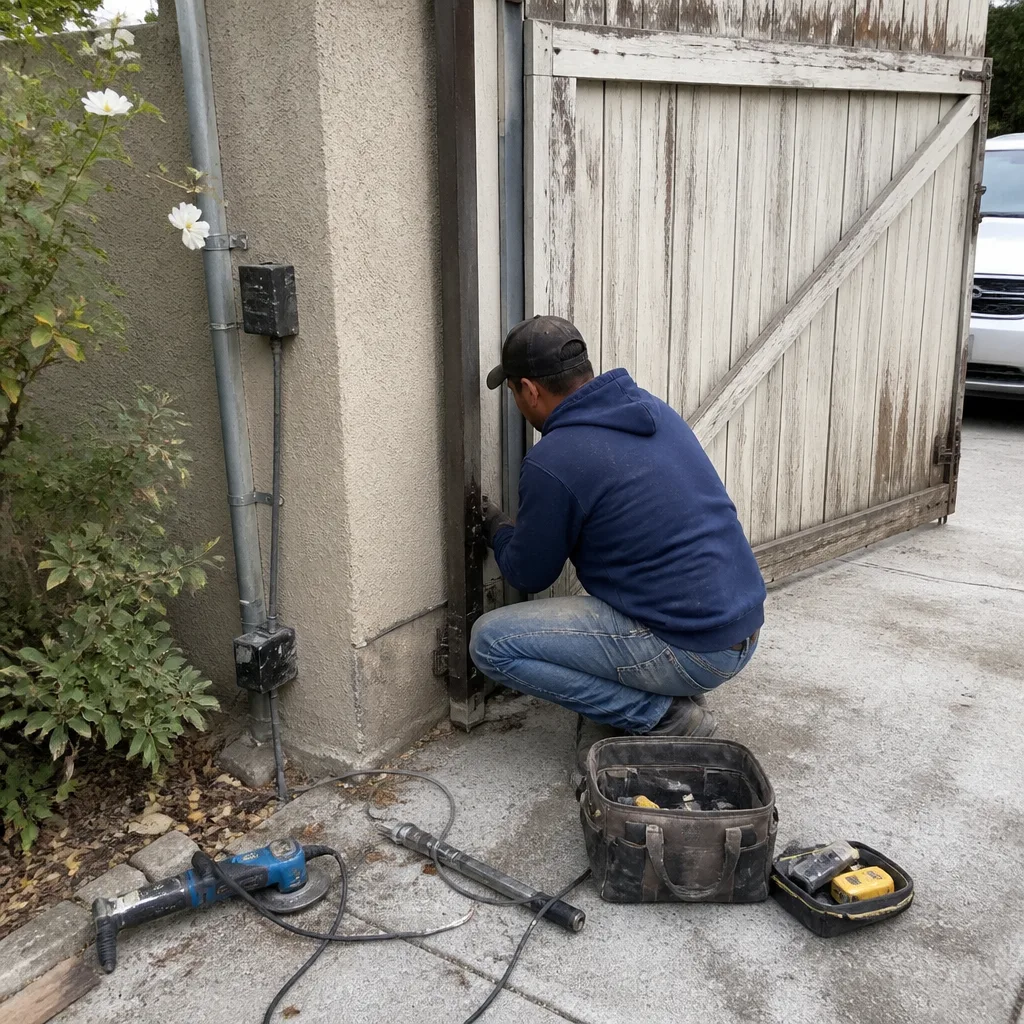 Before
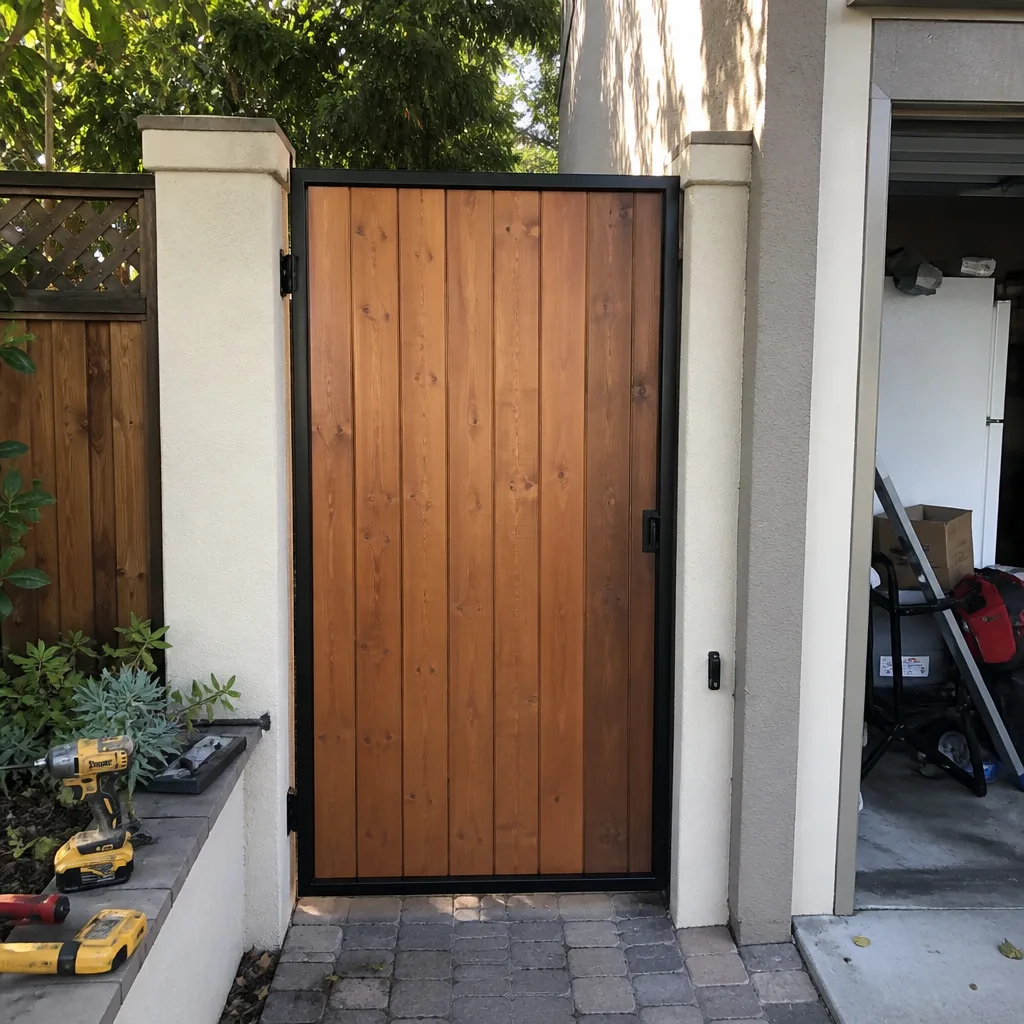 After
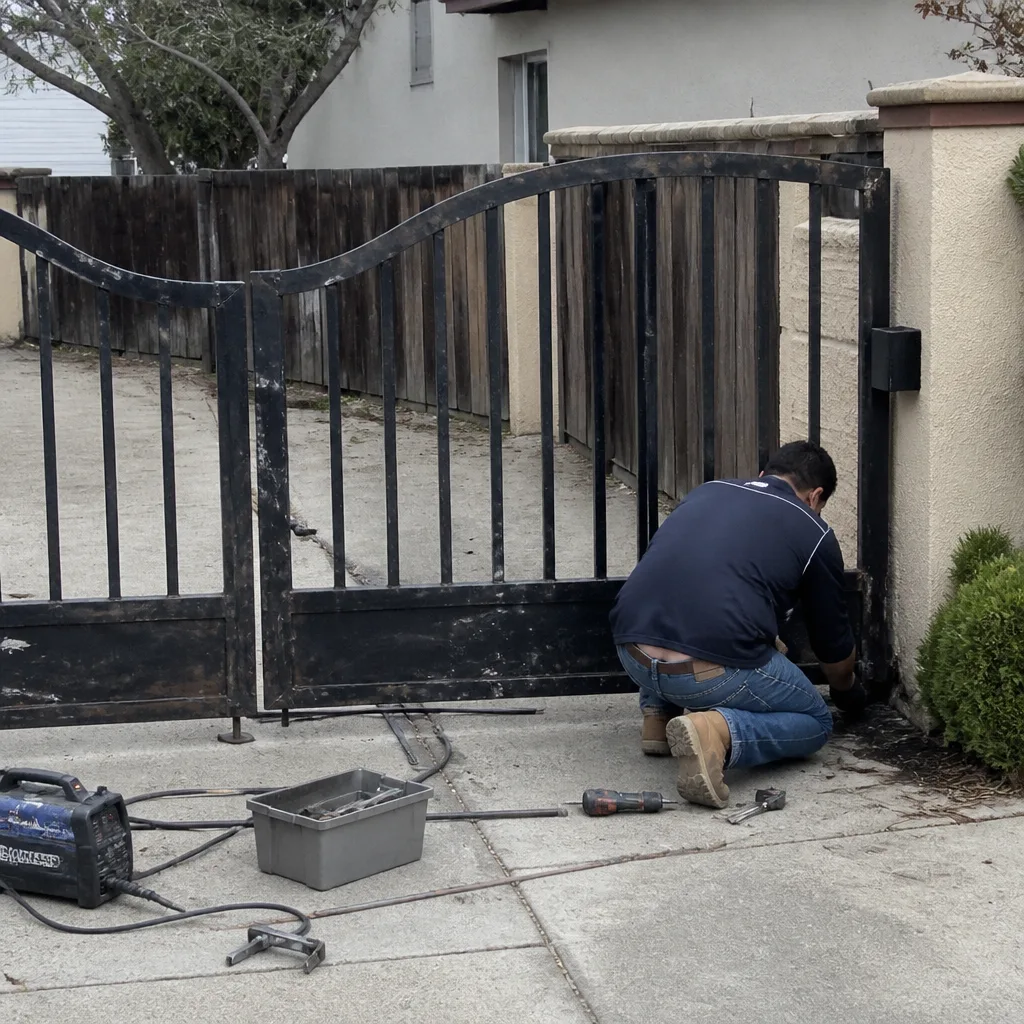 Before
 After
 Before
 After