
Last updated November 2, 2026
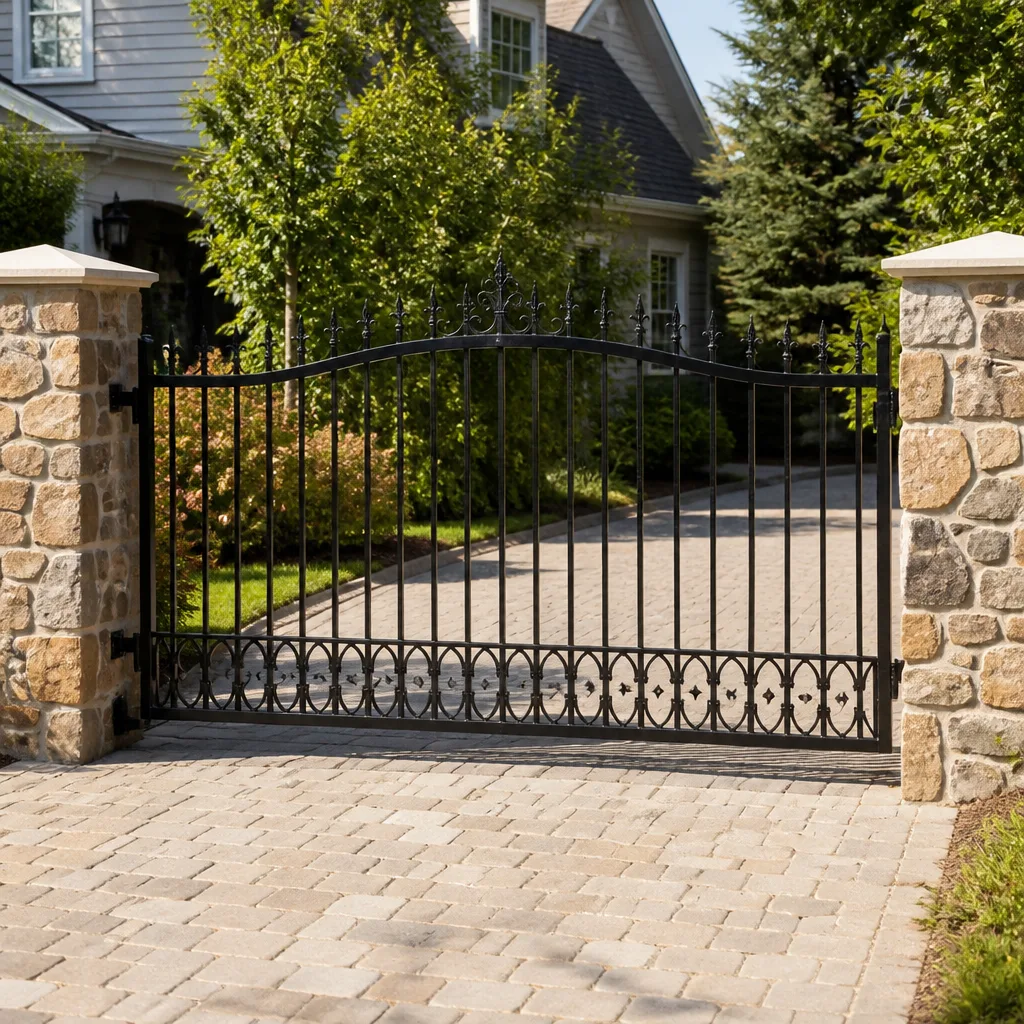 Wrought iron
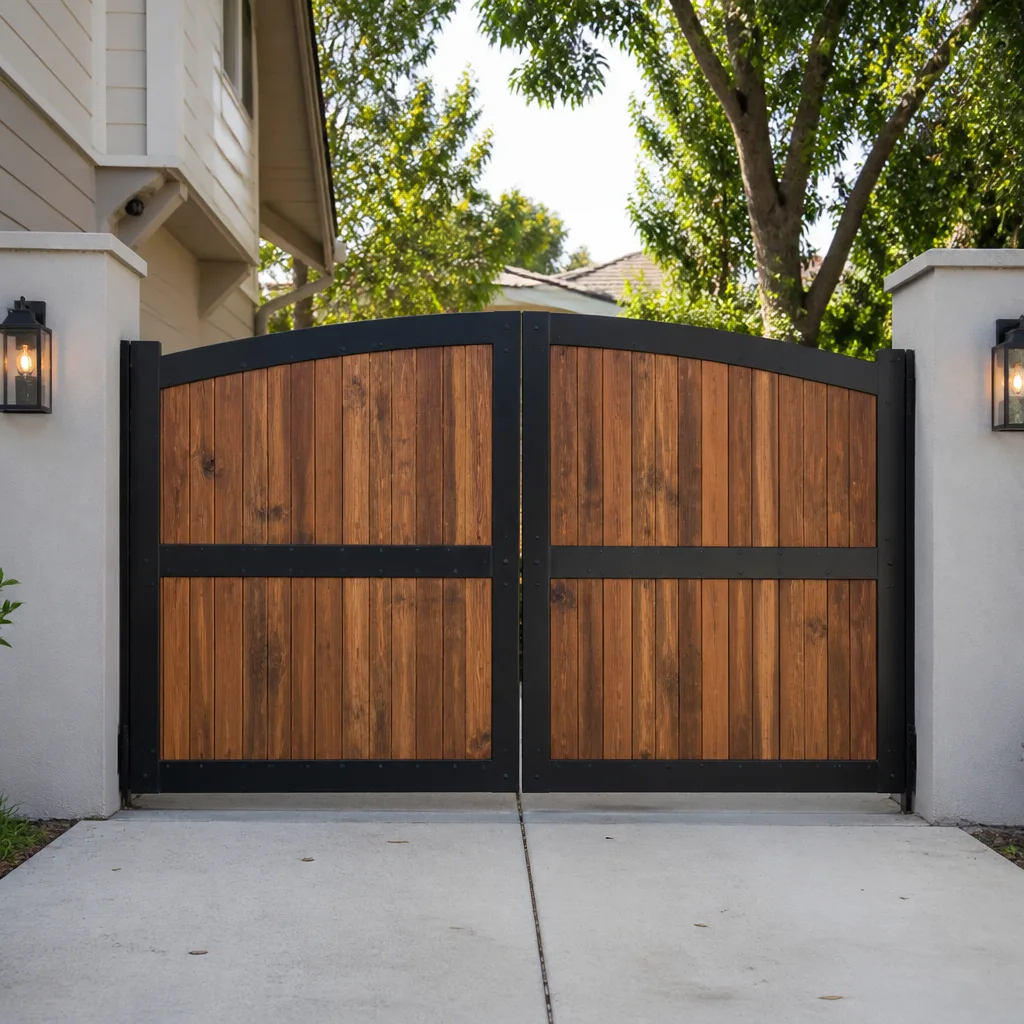 Wood & steel frame
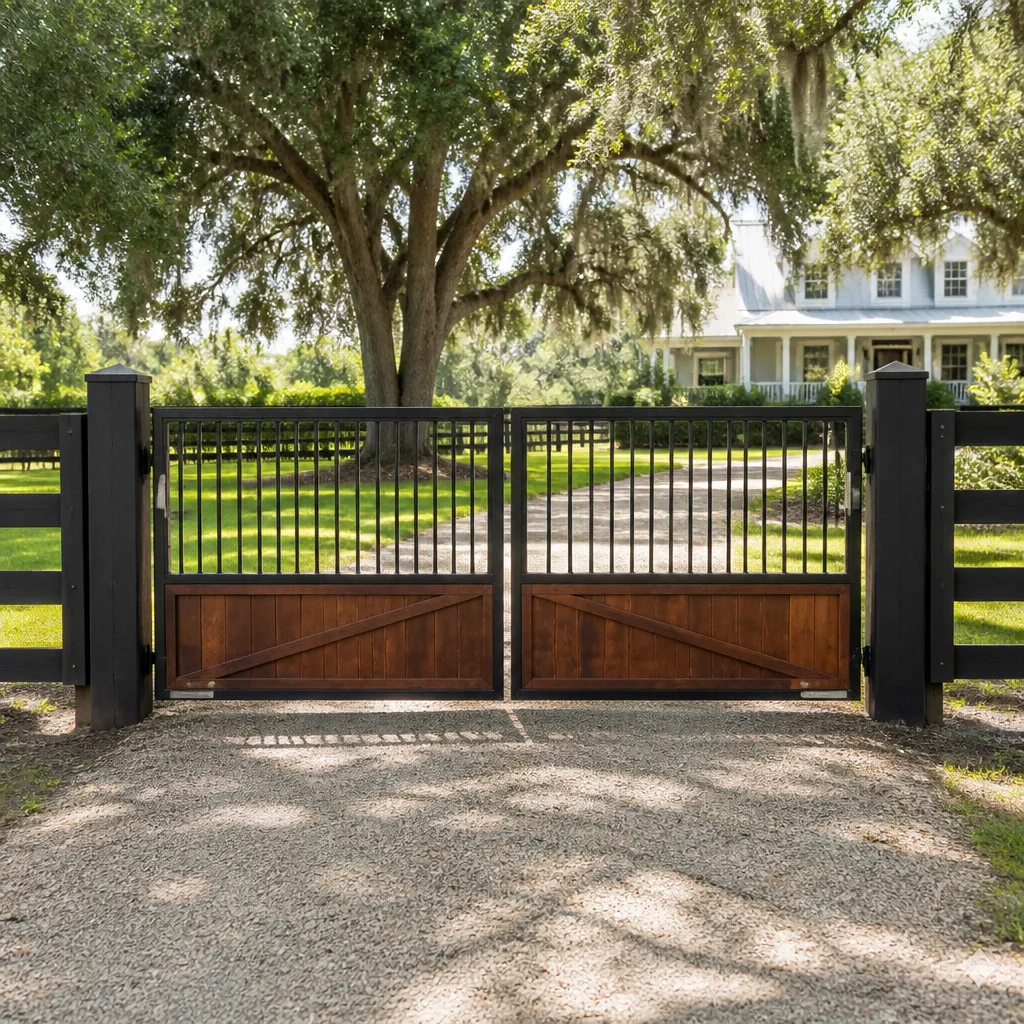 Farm & ranch
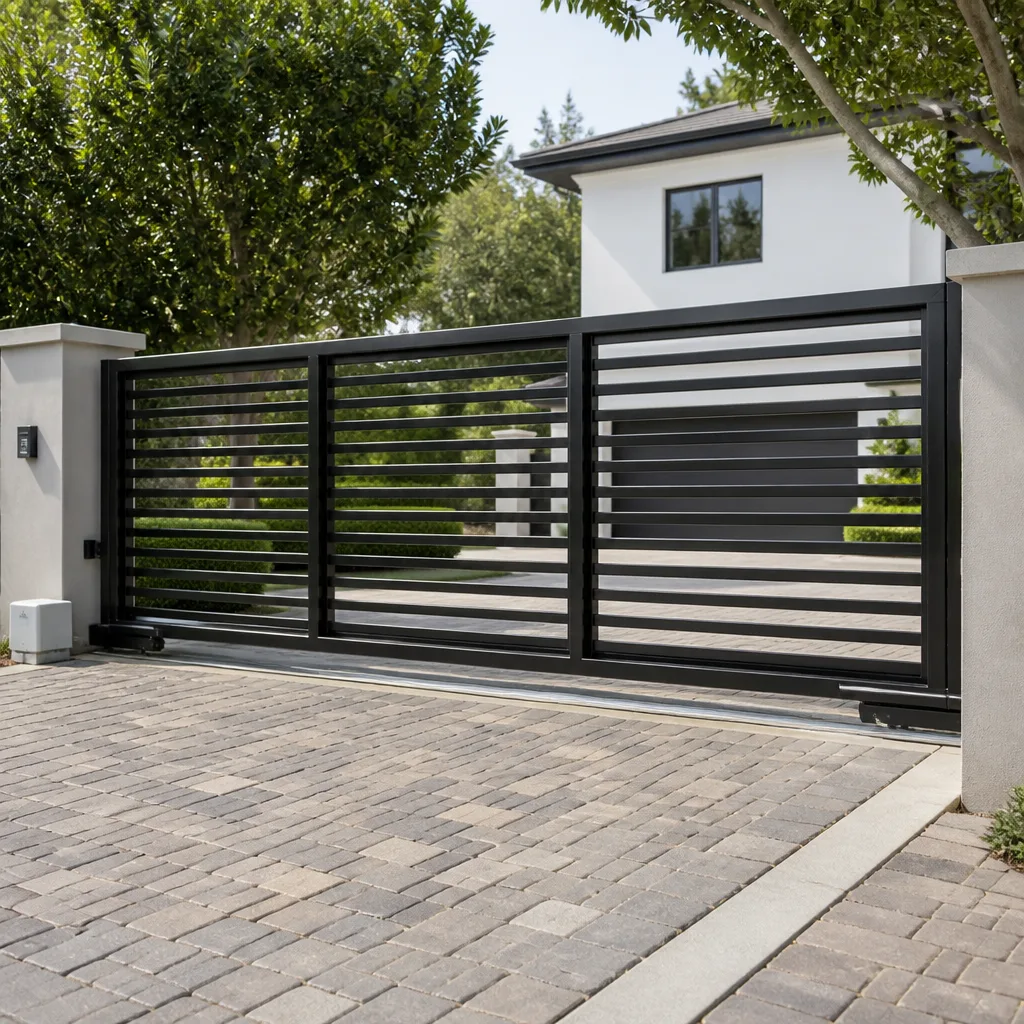 Sliding driveway gates
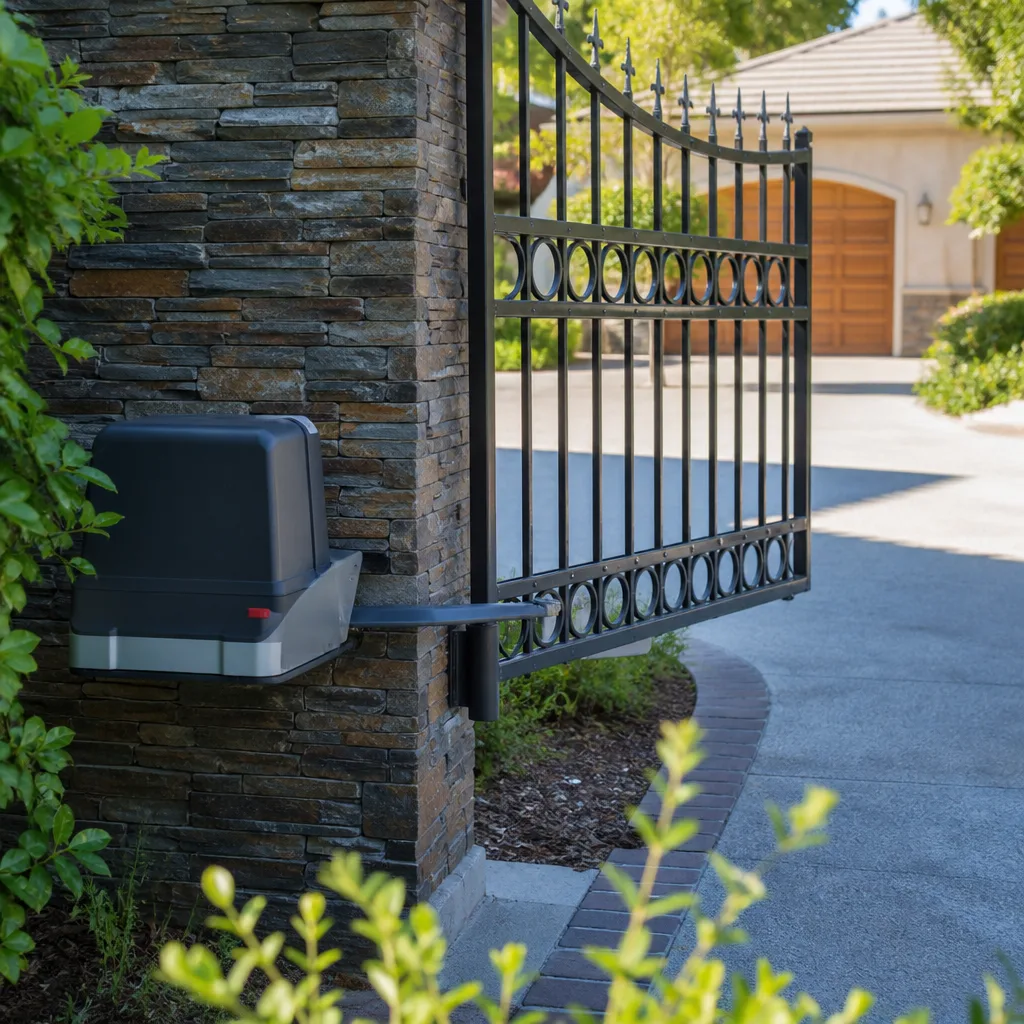 LiftMaster operators
Free on-site gate assessment - hinges, posts, and your LiftMaster or Nice gate operator checked before anything is quoted
The assessment is free and the quote is the invoice.
Get your free estimateThe Complete Gate Repair Guide for Pleasanton Homeowners
Most gate service calls we run in Pleasanton involve a part that was already replaced once, by someone who guessed wrong about the root cause. A homeowner hears a grinding noise, assumes the motor is shot, swaps it out, and the grinding comes back three weeks later because the real problem was a sagging post from expansive clay soil. This guide maps every common gate symptom to its actual cause, so you stop replacing parts that aren’t broken. You’ll learn how Pleasanton’s specific climate and geology stress your gate system, how to diagnose problems in minutes, and which repairs genuinely need a specialist.
Styles & brands we work with
- Wrought iron
- Wood & steel frame
- Farm & ranch
- Sliding driveway gates
- LiftMaster operators
Quick Answer
Gate repair in Pleasanton typically comes down to one of three root causes: foundation movement from expansive clay soils shifting your posts, moisture-driven wear on actuators and control boards from the Tri-Valley fog cycle, or incorrect limit settings after a power outage. Most failures look like motor problems but aren’t. The fastest path to a correct fix is identifying which of the three root causes you’re dealing with before touching any parts.
Table of Contents
- Why Pleasanton Gates Fail Differently
- Symptom-to-Cause Decision Tree: Nine Common Failures
- Expansive Clay Soil and Post Lean
- How Morning Fog Kills Gate Electronics
- Limit Settings and Power Outage Chaos
- DIY Repairs vs. Jobs That Need a Specialist
- Documenting Your Gate System Before It Breaks
- Common Mistakes to Avoid
- When to Call a Professional
- Frequently Asked Questions
- The Bottom Line
Why Pleasanton Gates Fail Differently
Pleasanton sits on soils that shrink and swell with moisture content. In summer, the clay dries out and contracts. In winter, it absorbs water and expands. That movement isn’t dramatic enough to notice on your lawn, but it’s absolutely enough to shift a gate post a quarter inch. And a quarter inch at the post becomes a two-inch sag at the latch end of a twelve-foot gate. We see this constantly in neighborhoods like Pleasanton Heights and Val Vista, where older homes sit on undisturbed clay that’s been cycling through wet and dry seasons for decades.
The second factor is fog. Pleasanton gets morning fog rolling through the valley for large stretches of the year, followed by afternoon sun and heat. That daily moisture-and-bake cycle condenses water on control boards, corrodes relay contacts, and works its way into actuator seals. Rain soaks once and dries. Fog returns every morning, every day, for months. It’s a slower, more persistent form of water damage.
The third factor is simpler: power quality. Pleasanton’s older neighborhoods experience brief outages and voltage dips during wind events and heat waves. When power returns, gate control boards sometimes reset to factory defaults, wiping limit settings that were calibrated when the system was installed. A gate that suddenly stops mid-travel or reverses for no apparent reason often isn’t broken at all, it just forgot where “open” and “closed” are.
Understanding these three factors matters because it changes how you troubleshoot. If you approach every malfunction as a component failure, you’ll spend money replacing motors and boards that were never faulty. If you approach it as a system responding to its environment, you’ll find the actual cause faster. That’s the difference between a $400 fix and a $2,500 replacement. For a deeper look at how we diagnose issues across different equipment types, see our Gate Repair in Pleasanton page.
Symptom-to-Cause Decision Tree: Nine Common Failures
Here’s the thing about gate systems: the symptom you notice is rarely the component that failed. A gate that won’t open could be a dead motor, a corroded loop detector, a shifted limit switch, a tripped breaker, or a post that’s pressing against the gate frame. The only way to diagnose correctly is to work through the possibilities in order of likelihood, not in order of whatever part is easiest to replace.
How to use this section: Find your symptom in the list below. Work through the causes in order. Stop when you find the one that matches your system’s behavior. Each cause maps to a specific fix and a realistic cost range in Pleasanton.
Symptom 1: Gate won’t open at all (no sound, no movement)
- No power to the operator. Check the breaker, the GFCI outlet, and any disconnect switch. In Pleasanton, voltage dips from PG&E can trip GFCIs without a full outage. Reset and test. If the outlet is dead, the problem is electrical, not mechanical.
- Remote or keypad failure. Try the manual override button on the operator. If the gate opens manually, the operator works. The remote battery, antenna, or receiver board is the likely culprit.
- Control board failure. If power is confirmed and the override doesn’t work, the board itself may have failed. This is a replace-the-component job, not a repair-the-component job.
Symptom 2: Gate opens but won’t close
- Blocked safety sensor or photo eye. Clean the lenses, check alignment, remove spider webs and dirt. This is the single most common cause across all brands, including LiftMaster and DoorKing residential operators.
- A loop detector stuck in “vehicle present” mode. If you have an underground loop, a failed detector will tell the board a car is sitting on it. The gate stays open for safety. This is common in older Pleasanton homes with original 1990s-era loop systems.
- Limit switch or close-limit misalignment. The board thinks the gate is already closed. Recalibrate the limits.
Symptom 3: Gate stops mid-travel and reverses
- Obstruction detection being triggered. Check for debris in the track, overgrown vegetation, or a sagging gate edge dragging on the ground.
- Incorrect force settings. If the operator senses too much resistance, it reverses for safety. Post lean from clay soil increases resistance. The fix may be post adjustment, not operator adjustment.
- Worn capacitor or failing motor bearing. These change current draw, which tricks the board into thinking there’s an obstruction.
Symptom 4: Grinding, squealing, or rattling noise
- Worn hinge bearings. On heavy steel gates, hinge wear is normal after years of use. The noise is mechanical, not electrical.
- Post lean causing frame contact. If the gate physically rubs its post or latch post, that grinding sound is metal on metal. Fixing the motor won’t touch it.
- Gearbox or belt wear inside the operator. This requires opening the operator housing and inspecting the drive train.
Symptom 5: Gate opens very slowly
- Low battery on solar or backup systems. Mighty Mule and Ghost Controls solar setups run slow when batteries degrade. Pleasanton’s fog reduces solar charge rates in winter months.
- Hydraulic fluid degradation on FAAC or BFT operators. These professional-grade systems lose viscosity over time, especially with temperature swings.
- Worn drive belt or chain tension. Mechanical wear, not electrical failure.
Symptom 6: Remote works sometimes, not others
- Antenna placement or damage. A cracked antenna housing or antenna routed behind metal panels cuts range dramatically.
- Interference. Nearby radio equipment, new LED lighting, or even some solar inverters can interfere. Pleasanton’s mix of older homes and newer solar installations makes this more common than people expect.
- Receiver board cold-solder joints. Thermal expansion from fog-then-heat cycles creates intermittent connections on older boards.
Symptom 7: Gate slams shut or closes too hard
- Hydraulic bypass valve out of adjustment on FAAC or BFT operators. This is a precision adjustment, not a DIY fix.
- Mechanical closer spring too tight. Most common on manual gates with add-on closers, but it affects automated gates too.
- Missing or failed close-force limiter. On Elite and Viking commercial operators, this is a safety component that must be replaced, not bypassed.
Symptom 8: Keypad works but remote doesn’t (or vice versa)
- Bad remote battery or lost programming. Reprogram the remote. If it won’t program, the remote’s transmitter is dead.
- Keypad wiring degradation. Pleasanton’s moisture cycle corrodes keypad wire connections, especially on north-facing installations that stay damp longer.
- Board input channel failure. One input works, the other doesn’t. Board replacement is the fix.
Symptom 9: Gate sags or drags on one side
- Post lean from expansive clay soil. This is the big one for Pleasanton. The concrete footing has shifted. The gate frame itself is usually straight.
- Hinge wear or broken weld. Inspect where the hinges attach to the post and the gate frame. Weld failures are common on older steel gates.
- Gate frame itself twisted. Usually from vehicle impact or years of wind load.
This decision tree covers the most common residential and light-commercial failure modes we encounter across LiftMaster, DoorKing, Elite, and Mighty Mule equipment. The key discipline is eliminating causes in order of probability before touching parts. For more detailed troubleshooting on motorized systems specifically, our Electric Gate Repair in Pleasanton page covers operator-level diagnostics.
Expansive Clay Soil and Post Lean: The Problem That Mimics Motor Failure
Pleasanton’s soil is classified as expansive clay in large portions of the city, particularly in older neighborhoods east of downtown and any area where homes were built before the mid-1990s. Expansive clay absorbs water and swells, then loses moisture and shrinks. Over years, this cycle pushes shallow concrete footings upward and outward, which means gate posts gradually lean away from their original position.
Here’s the counterintuitive part: when a post leans, the gate operator experiences it as increased resistance. The gate’s travel path changes. Hinges bind. The latch no longer lines up with its receiver. The operator’s motor works harder to overcome that resistance, which increases current draw and heat. Eventually, the motor burns out or the board trips its overload protection. Homeowners see a dead motor and replace it. Six months later, the new motor dies too, because it was fighting the same leaning post the whole time.
How to Check for Post Lean
- Stand back and sight down the gate line. Look at the gap between the gate and the latch post. It should be even from top to bottom. If it’s narrower at the bottom, the post has moved.
- Check the gate at mid-swing. Open the gate manually about halfway (disconnect the operator first). If the gap between the gate edge and the ground changes noticeably through the swing, the post or the gate frame has shifted.
- Check the operator’s mounting bracket. If the bracket is twisted or the operator is visibly misaligned with the gate’s arc, something moved. Operators don’t bend themselves.
- Look at the concrete around the post base. Fresh cracking or a visible gap between concrete and post is confirmation of movement.
Post lean is not a gate repair problem in the traditional sense. It’s a foundation problem. The fix involves resetting or reinforcing the post, which often means excavation, new concrete with proper depth and drainage, and re-hanging the gate. This is absolutely not a DIY job, not on a 400-pound steel gate with an electric operator. A gate specialist who understands Pleasanton’s soil conditions will set new footings below the active clay zone and slope concrete away from the post so water doesn’t pool.
The takeaway here is simple: before you replace a motor, board, or gearbox, check the gate geometry. If the gate doesn’t swing freely on its hinges with the operator disconnected, no electronic component will fix it. For a full walkthrough of what professional repair involves, see our Gate Repair in Pleasanton guide.
How Morning Fog and the Moisture Cycle Kill Gate Electronics
Rain gets a lot of blame for gate electronics failure, but rain is rare in Pleasanton by comparison with morning fog. The Tri-Valley gets ground fog on dozens of mornings per year, especially in winter and early spring. That fog condenses on cold metal surfaces: control board enclosures, relay contacts, terminal blocks, antenna connections, and the inside of actuator housings.
Then the sun burns through by late morning and the temperature climbs fifteen to twenty degrees. The moisture evaporates, but it leaves behind mineral deposits and corrosion. Repeat this cycle a hundred times over a winter and you get what we see on service calls: green corrosion on relay contacts, oxidized terminal connections, and control boards with water spotting even inside supposedly sealed enclosures.
Which Components Fail First
- Relay contacts and terminal blocks. These are the smallest metal-to-metal connection points and the first place corrosion creates resistance. Symptoms: intermittent operation, relays chattering, or the board working only when the weather is dry.
- Control board connectors. Multi-pin connectors between the board and the harness develop oxidation that mimics a dead board. Sometimes simply reseating the connector restores function. Other times the board needs replacement because the traces themselves have corroded.
- Photo eye lenses and housings. Fog condenses inside the lens, then bakes off, leaving mineral film. A dirty photo eye reads as an obstruction and keeps the gate open or prevents closing.
- Actuator seals. On hydraulic and screw-drive operators, the seals around the piston or shaft degrade faster under daily condensation-drying cycles. Oil weeping from a FAAC actuator is a classic fog-cycle failure.
- Solar battery terminals. On Mighty Mule and Ghost Controls solar setups, battery terminals corrode from condensation. The system charges slowly or not at all, and the gate moves sluggishly or dies.
What can you do? Keep the operator enclosure closed and replace any missing gaskets. If your photo eyes sit in a low spot where fog pools, cleaning them monthly during fog season prevents a false obstruction reading. If your system is older and shows signs of internal corrosion, preemptive board and connector replacement can prevent a failure at the worst possible time. For automated systems showing these symptoms, see our Electric Gate Repair in Pleasanton service page.
Limit Settings and Power Outage Chaos
Every automated gate operator has limit settings that tell it where “open” ends and “closed” ends. These are calibrated at installation, and they’re stored in the control board’s memory. Many boards retain those settings through brief power losses. But some boards, particularly older models and certain entry-level units, reset to factory defaults when power drops out completely or experiences a surge.
What happens after a reset? The gate doesn’t know where it is. It may open partway and stop. It may try to close past the close point and grind. It may refuse to move at all because the board thinks it’s already at the correct position. Homeowners describe this as “the gate went crazy after the storm” or “it’s never worked right since the power went out.”
The fix is recalibration, not replacement. On most LiftMaster residential operators, recalibration is a button-press sequence. On professional-grade DoorKing and Elite operators, it’s a more involved procedure that requires understanding the board’s programming menu. If the board won’t hold calibration, that’s a deeper issue: either the memory chip is failing or the power supply is providing unstable voltage.
Here’s a practical step for Pleasanton homeowners: after any significant power outage, test your gate. Open it fully, close it fully, and observe. If anything is off, don’t keep cycling it. Repeated cycling against incorrect limits can damage the gearbox or burn out the motor. Document the behavior and call a gate specialist. Calibration is often a quick service call if caught early, and a full operator replacement if not.
DIY Repairs vs. Jobs That Need a Specialist
Gate repair isn’t a single category. Some jobs genuinely fall into homeowner DIY territory. Others will void manufacturer warranties, damage equipment, or put a 400-pound moving panel in a position where it can injure someone. Knowing the difference saves money and keeps people safe.
Genuine DIY Territory
- Remote battery replacement. If the remote’s LED is dim or doesn’t light, replace the battery. This is a two-minute job and requires no tools.
- Photo eye cleaning and alignment. Clean lenses with a soft cloth. Verify the alignment beam is intact if your system has a visible indicator. This fixes a large percentage of “gate won’t close” problems.
- Track and roller cleaning. Clear debris from the gate track and slide wheels. Remove overgrown vegetation that’s dragging on the gate.
- Basic keypad battery replacement. If your keypad is battery-powered and the buttons are unresponsive, a fresh battery restores function.
- Visual inspection and documentation. Photos, model numbers, and symptom notes. This is free insurance against a wrong diagnosis later.
Leave to a Specialist
- Any work on a gate with a high-tension spring. Counterbalance springs on heavy gates store enormous energy. If one lets go while you’re working on the hinge, the result can be catastrophic. This is the gate equivalent of a garage door torsion spring, and it demands the same caution. Do not attempt spring removal or adjustment. A trained gate technician has the tools and the procedure to do this safely.
- Control board diagnostics and replacement. Boards are static-sensitive and wired in ways that are not always intuitive. A wrong connection can destroy the new board immediately. Avoid touching a board without training.
- Post resetting or concrete work. Moving a gate post requires understanding soil conditions, footing depth, drainage, and load-bearing. Get it wrong and the post will move again in two years.
- Hydraulic operator service on FAAC or BFT systems. These contain pressurized fluid and precision valves. Opening the wrong fitting while the system is pressurized is dangerous. This is professional territory, full stop.
- Any repair on a commercial or shared driveway gate. If the gate serves multiple homes or a commercial property, safety and liability standards are higher. Repairing a commercial operator yourself can void the property owner’s insurance coverage and create legal exposure. Professional service is the only sensible option.
- Opening the operator housing on any gate you didn’t install. Wiring colors vary between manufacturers and even between models from the same manufacturer. Without the correct wire diagram, you risk shorting the board or the operator.
The pattern here: mechanical adjustments and environmental cleaning are within reach for many homeowners. Electrical, hydraulic, spring, and structural work is not. If you’re unsure, a Gate Repair Pleasanton home specialist can assess the situation with a phone call.
Documenting Your Gate System Before It Breaks
The single most useful thing you can do for your gate system costs nothing and takes fifteen minutes. Document it. When a gate fails, homeowners are stressed, and that’s the worst time to try to figure out what model operator you have, where the disconnect switch is, and who installed the thing in the first place. Having this information organized turns a stressful emergency into a manageable service call.
- Photograph the operator. Open the housing (if safe) and photograph the model plate, the wiring, and the overall assembly. Store these photos on your phone in a dedicated album. Do the same for the keypad, photo eyes, and any junction boxes.
- Write down the make and model. The label may include a series number, a voltage rating, and a date code. All of that helps a technician identify the exact revision of your equipment.
- Locate the disconnect switch. Most electric gates have a manual release or disconnect. Find it now, while the gate works. Know how it operates. This is what lets you open the gate manually if the operator dies.
- Note the installer. If you have the original installation paperwork, keep it with the photos. Knowing who installed the gate can reveal wiring choices, conduit runs, and warranty status.
- Document symptoms accurately. When something goes wrong, write down exactly what happened: the date, the weather, whether the gate was mid-cycle, what the remote did, whether the keypad worked. Accurate symptom history is diagnostic gold. “It made a grinding noise for three days and then stopped” tells a technician something valuable. “It’s broken” tells them nothing.
Why does this matter? Because gate systems are like cars: parts evolve, wiring changes, and the technician who shows up at your house has never seen your specific installation before. Every minute they spend identifying equipment and tracing wires is a minute you pay for. A fifteen-minute documentation session when everything works can cut a diagnostic visit by half an hour or more. If your system is being replaced rather than repaired, documentation also protects you: you’ll have a record of what was there before, which matters if a repair causes new problems. For new installations that make future repairs easier, see our Gate Installation in Pleasanton page.
Common Mistakes to Avoid
- Replacing the motor when the post is leaning. The most expensive mistake we see in Pleasanton. A new motor fights the same leaned post, burns out in months, and you’re back where you started. Check gate geometry before touching electronics.
- Ignoring a slow gate. Slowed operation is rarely a symptom that improves on its own. It’s telling you that resistance is increasing, a battery is degrading, or hydraulic fluid is breaking down. Wait long enough and the slow symptom becomes a full failure.
- Adjusting force settings to “fix” a sagging gate. Cranking up the force setting doesn’t fix the sag. It forces the operator to push harder against the obstruction, which accelerates motor and gearbox wear. This is a band-aid that costs more later.
- Buying a universal remote without verifying compatibility. Not all remotes work with all receivers, even within the same brand. Measure twice, buy once. Your operator’s model number determines which remote frequency and protocol you need.
- Failing to clean photo eyes during fog season. Pleasanton’s fall and winter fog coats photo eye lenses with mineral film. Monthly cleaning prevents false obstruction readings that leave your gate stuck open or unable to close.
- Attempting spring or hydraulic work without training. High-tension springs and pressurized hydraulic systems can cause serious injury. These are not YouTube-learnable repairs. The cost of professional service is a fraction of the cost of an emergency room visit.
- Assuming a dead remote means a dead operator. Always test the manual override. If the gate opens manually, the operator works. Replace the remote battery or check the receiver before assuming the worst.
When to Call a Professional
Some gate problems can wait. Others should not. Call a gate specialist in Pleasanton when your gate will not close and is leaving your property unsecured, when you hear grinding or see visible sag that’s getting worse, when the operator smells like burning electronics, or when the gate has been hit by a vehicle. All of these indicate structural or electrical conditions that will escalate without intervention. A gate that’s partially open at 11 p.m. is a security risk today, and a liability tomorrow. If you’re on a shared driveway or commercial property, the urgency is higher: gate failure affects everyone who depends on that access point. Gate Repair Pleasanton offers free estimates in Pleasanton, call (833) 593-6440 to schedule a diagnostic visit. A fifteen-minute phone conversation can often tell you whether you’re dealing with a quick fix or a bigger project.
Frequently Asked Questions
Gate repair costs in Pleasanton vary widely by failure type. A simple photo eye cleaning call runs roughly $125 to $200. A limit recalibration is typically $150 to $250. Control board replacement on a residential LiftMaster or Mighty Mule operator ranges from $350 to $700, including the part. Hydraulic service on professional FAAC or BFT systems starts around $400 and goes up with parts. Post resetting and re-hanging starts around $800 and can exceed $2,500 depending on footing depth and gate weight. Every repair price is quoted and agreed before work begins, so there are no surprises on the invoice. Call (833) 593-6440 for a free estimate on your specific system.
We do our best to accommodate same-day service for urgent repairs in Pleasanton, particularly safety issues or security failures where the gate won’t close. The reality is that some repairs require parts that aren’t stocked locally, especially proprietary boards for older DoorKing or Elite operators. When same-day isn’t possible, we’ll tell you upfront, and we’ll always give you a clear picture of the timeline before any work starts. Call (833) 593-6440 and we’ll let you know what’s possible for your specific situation.
Yes, we service Mighty Mule operators regularly. Mighty Mule and Ghost Controls solar-powered systems are common on Pleasanton properties without hard-wired power at the gate, and we know their failure patterns: battery degradation, solar panel undercharging during foggy months, and board corrosion from condensation. We also service LiftMaster, DoorKing, Elite, FAAC, BFT, Linear, and Viking equipment across both residential and commercial installations.
Full gate installation includes the gate frame and panels, posts with concrete footings set below the active clay zone, hinges and latch hardware, the operator (if automated), a control board, safety photo eyes, a keypad or intercom if needed, and all electrical runs from your main panel to the gate. A free measure and written quote covers all of it before you commit to anything. For more detail on what a Pleasanton installation involves, see our Gate Installation in Pleasanton page.
Intermittent gate operation in Pleasanton usually traces to one of three causes: corrosion on relay contacts or board connectors from the fog-moisture cycle, a failing receiver board with thermal-expansion solder issues, or a loose wiring connection that shifts with temperature changes. If the symptom comes and goes with weather, moisture is almost certainly involved. Intermittent problems are hard to diagnose, but they’re not impossible if the symptoms are documented well. Our Electric Gate Repair in Pleasanton team diagnoses these issues by testing components under load, not just visually.
Yes, we service commercial and residential gate operators under the same roof. Commercial systems from DoorKing, Elite, FAAC, and BFT run on different duty cycles than residential equipment, and they require different parts, programming, and safety standards. If your commercial gate or shared driveway gate is acting up, call (833) 593-6440 and we’ll assess it from the control board outward, not by guessing at parts.
The Bottom Line
Most gate failures in Pleasanton have causes that are predictable once you understand the environment. Expansive clay soil shifts posts and changes gate geometry. Morning fog corrodes electronic components gradually but relentlessly. Power outages reset boards and destroy limit calibration. The gate’s symptom, a dead motor, a grinding noise, a stuck open gate, is usually the effect, not the cause. The fastest way to save money on gate repair is to identify the root cause before touching any parts, document your system while it works, and call a specialist for anything involving electricity, springs, hydraulics, or structural work. Your gate is the first physical barrier between your home and the street. When it stops doing its job, fixing it correctly matters more than fixing it quickly.
Written by the team at Gate Repair Pleasanton, serving Pleasanton since 2016.
See the difference
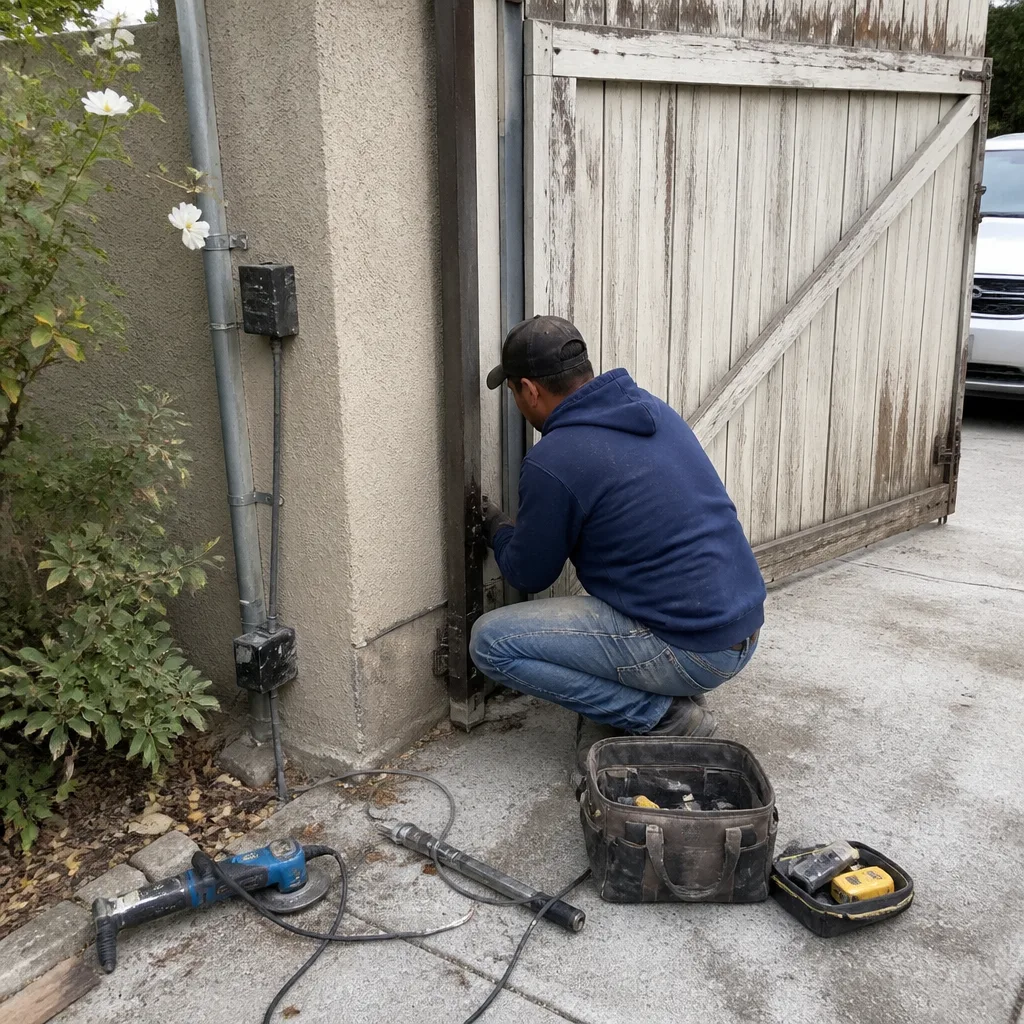 Before
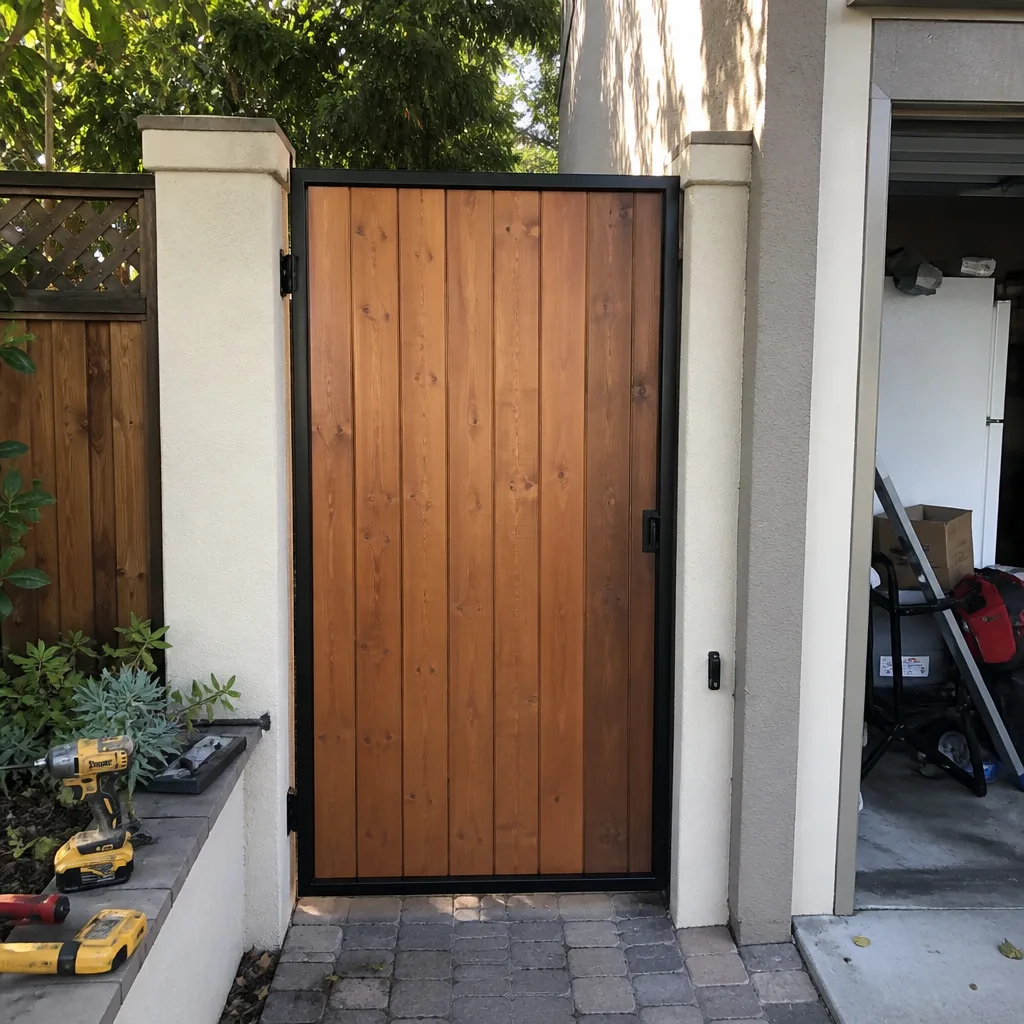 After
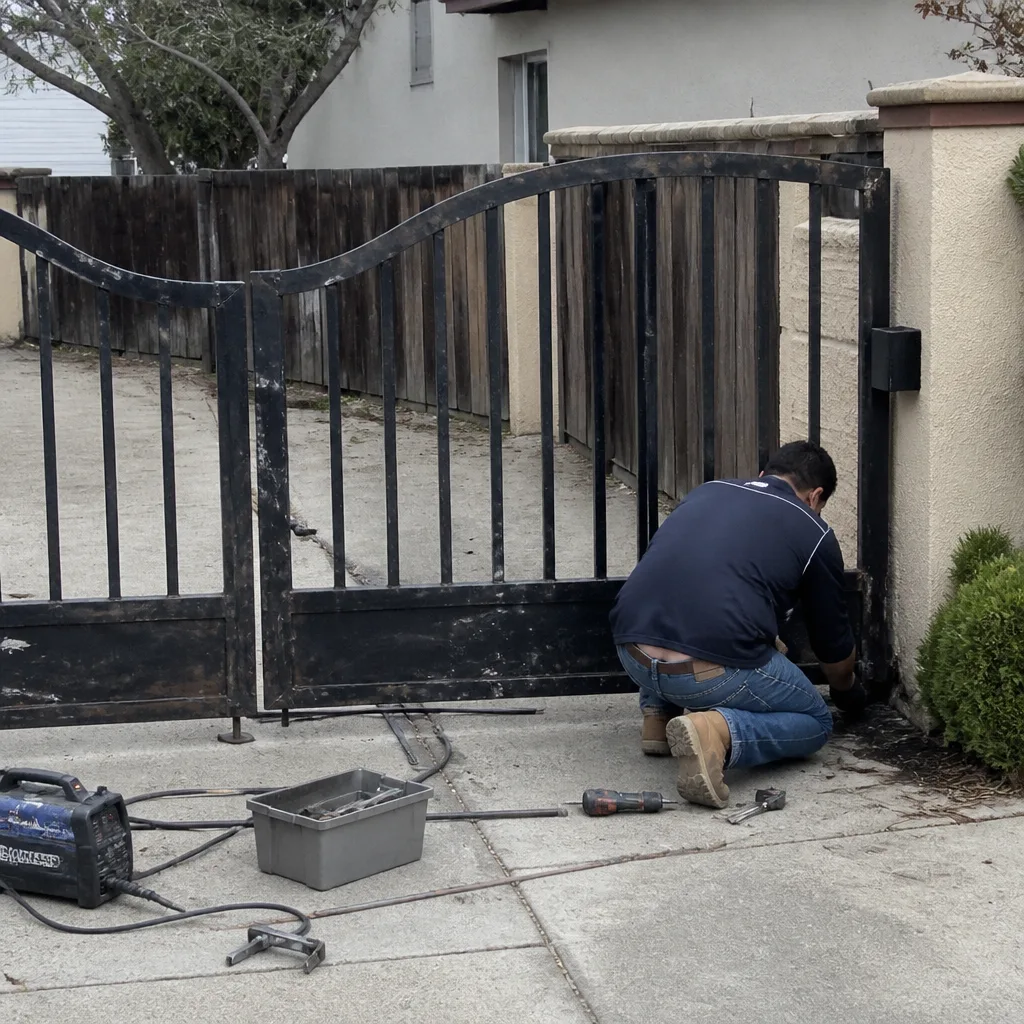 Before
 After
 Before
 After