
Last updated November 2, 2026
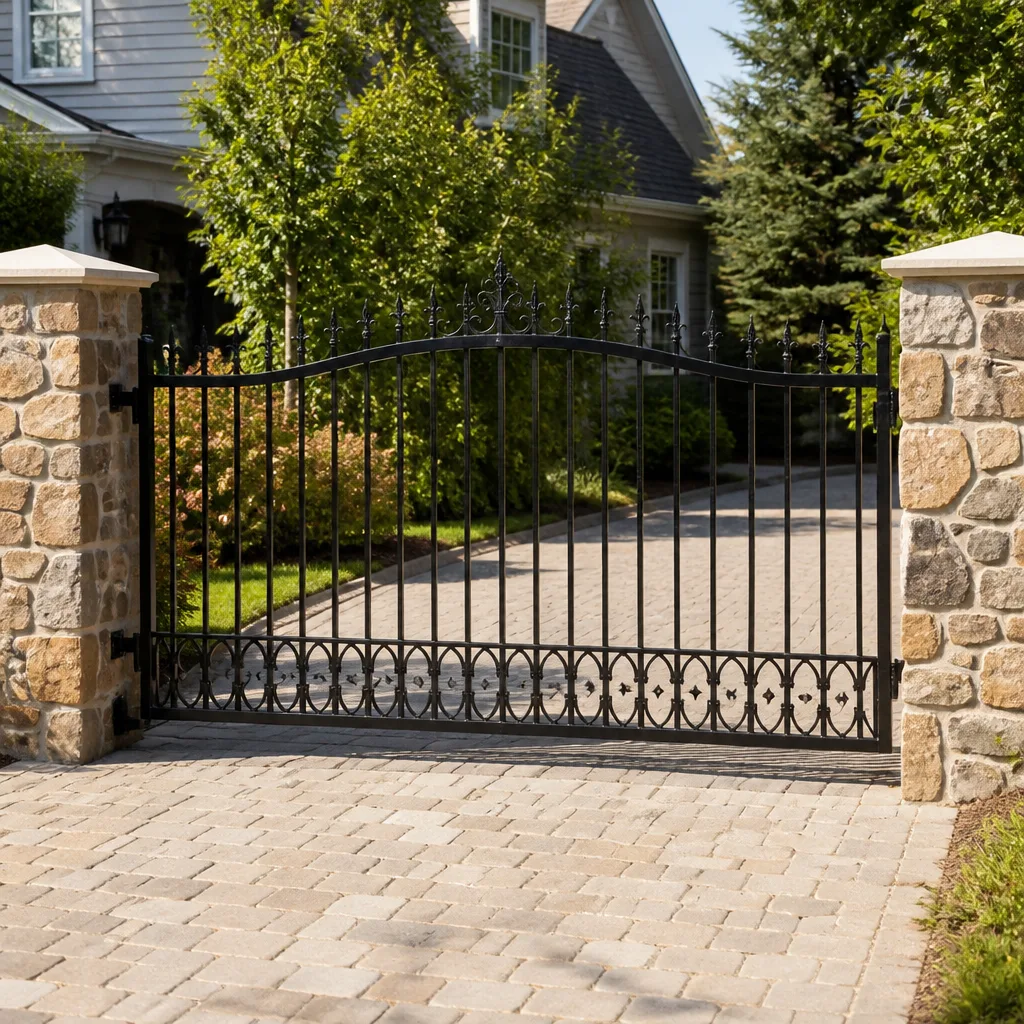 Wrought iron
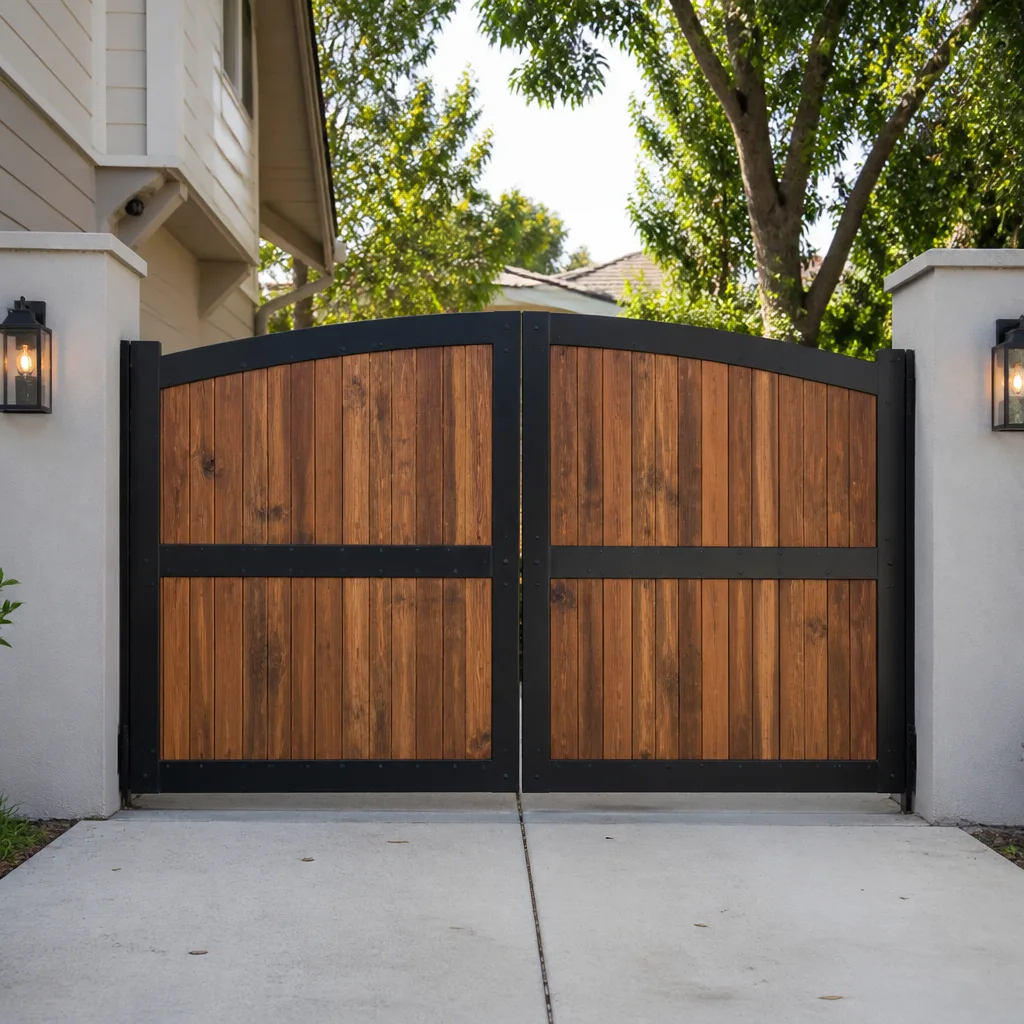 Wood & steel frame
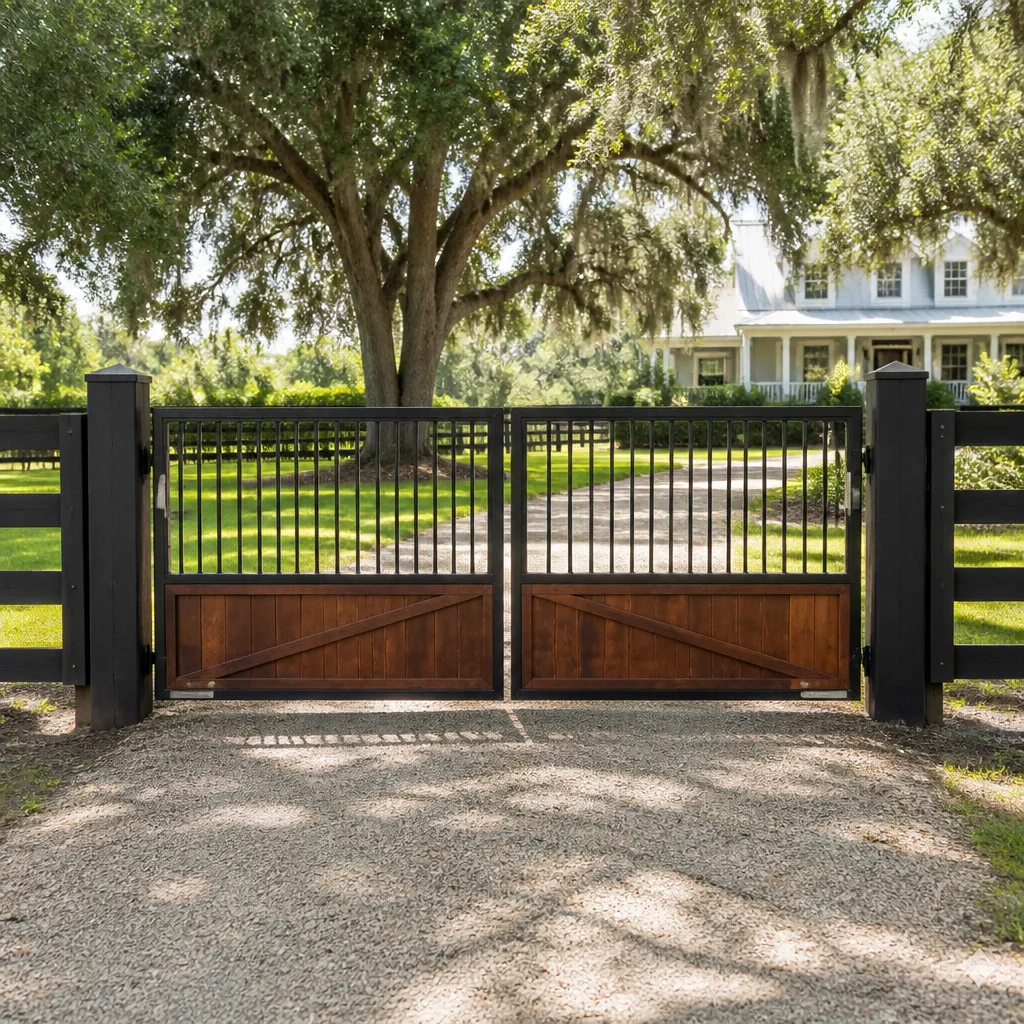 Farm & ranch
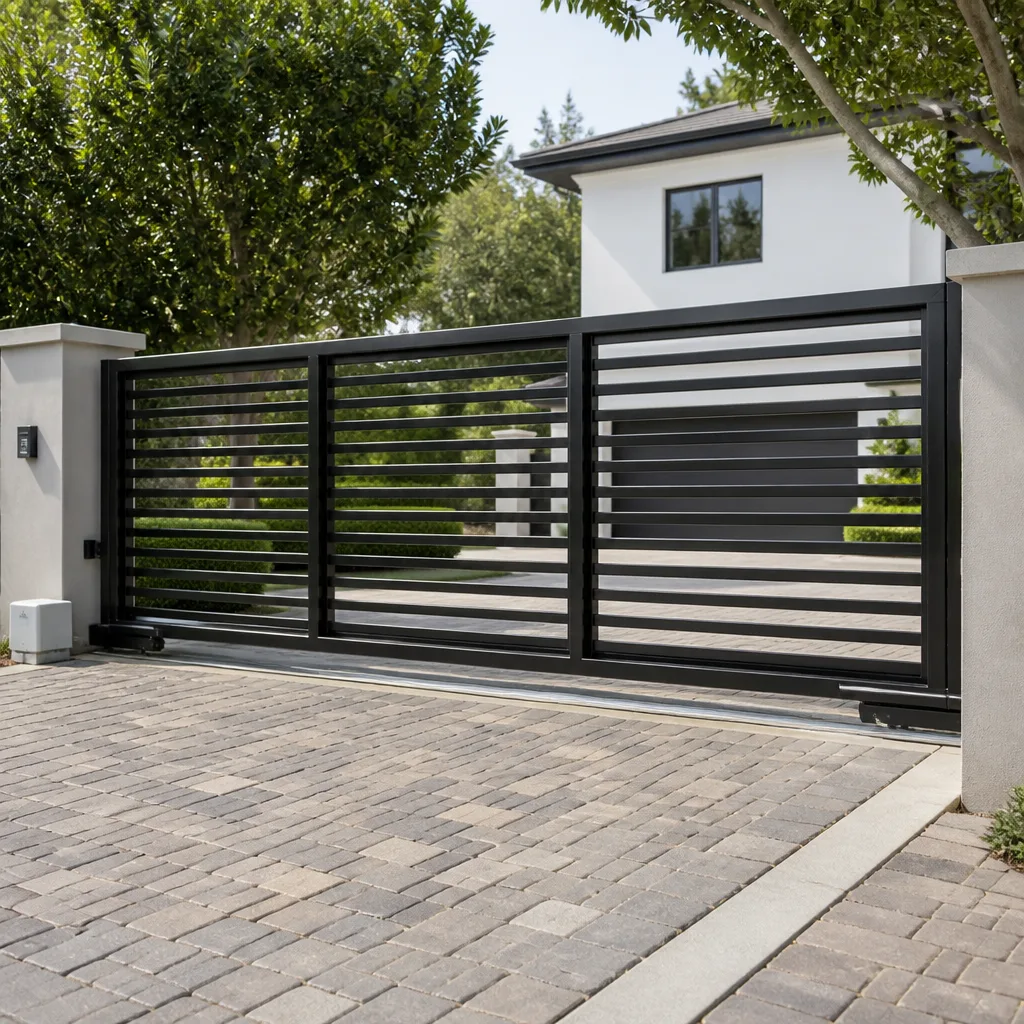 Sliding driveway gates
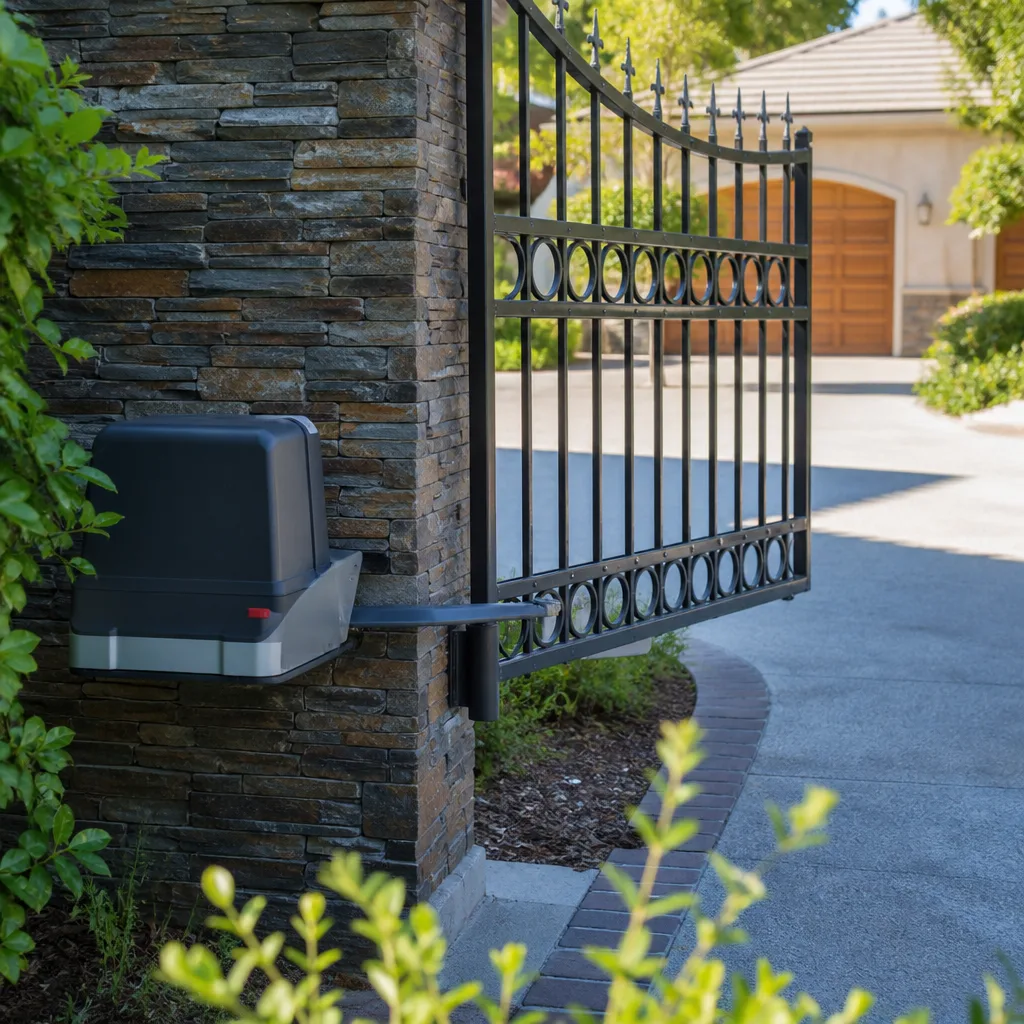 LiftMaster operators
Free on-site gate assessment - hinges, posts, and your LiftMaster or Nice gate operator checked before anything is quoted
The assessment is free and the quote is the invoice.
Get your free estimateGate Repair Cost Breakdown: The Pleasanton Homeowner’s Reference for 2026
Here’s a number most Pleasanton homeowners never hear: the wholesale cost of a gate control board, which is the single most common failure on automated gates, runs between $85 and $240 depending on brand. A fair retail price with installation lands between $350 and $600. We’ve seen invoices in Pleasanton for that exact repair at $1,200. The labor rate wasn’t the variable. The part markup was. This guide – along with our Gate Repair Maintenance Checklist for Pleasanton Homeowners – gives you the actual cost structure behind gate repair in Pleasanton for 2026, by repair type, by brand, and by the line items that separate a fair quote from a padded one. You’ll learn what parts actually cost, what labor time each job legitimately requires, and how to spot the three specific charges that signal someone is inflating your invoice.
Quick Answer
Gate repair in Pleasanton typically costs between $180 and $650 for most service calls, with an average around $340. Control board replacement runs $350 to $600 installed, hinge replacement runs $150 to $500 depending on gate weight, and full operator replacement starts at $800 and can reach $2,200 for professional-grade systems like DoorKing or LiftMaster. The price spread is driven by part cost, gate weight, and whether the technician is a gate specialist or a general contractor marking up a part they had to order same-day.
Styles & brands we work with
- Wrought iron
- Wood & steel frame
- Farm & ranch
- Sliding driveway gates
- LiftMaster operators
Table of Contents
- Repair Cost by Type: What Pleasanton Homeowners Actually Paid in 2026
- Part-Level Cost Benchmarks: Wholesale vs. Fair Retail
- Labor Time Standards: How Long Each Repair Actually Takes
- Repair vs. Replace: The Crossover Calculation
- Emergency and After-Hours Surcharges in Pleasanton
- Why Your Neighbor Paid Half: Gate Type, Material, and Brand Variables
- The Three Charges That Signal a Padded Quote
Repair Cost by Type: What Pleasanton Homeowners Actually Paid in 2026
The most useful way to understand gate repair pricing is to anchor it to the actual failure. A “gate repair” is not one job. It’s a diagnosis followed by one of maybe eight common fixes, and each has a different part cost, a different labor time, and a different total bill. Here’s the breakdown from service data we’ve compiled across the Pleasanton market for 2026, covering everything from the Val Vista neighborhood up through the Ruby Hill and Happy Valley areas.
Control Board Replacement
Typical range: $350 to $600 installed. The control board is the brain of the operator. When it fails, the gate stops responding to remotes, the keypad goes dead, or the gate opens but won’t close. On brands like LiftMaster and DoorKing, a replacement board retails between $120 and $260. On Mighty Mule and Ghost Controls systems, the boards are cheaper, often $85 to $140. Labor is typically 1 to 1.5 hours. A legitimate quote itemizes the board at retail plus 1 hour of labor.
Motor or Operator Replacement
Typical range: $400 to $900 for the motor alone; $800 to $2,200 for a full operator swap. Motors wear out faster on heavy iron gates than on aluminum. A replacement motor for a residential swing gate runs $200 to $400 retail. For slide gates, the motor and gear assembly costs more. Full operator kits, which include the motor, control board, and housing, run $500 to $1,500 depending on whether you need a residential unit or a professional-grade model from FAAC, BFT, or DoorKing.
Hinge Replacement or Repair
Typical range: $150 to $500. Hinges sound minor but they carry the full weight of the gate every time it moves. On a 400-pound iron gate, a seized hinge will eventually burn out the motor. Welded iron gates need hinge posts cut and rewelded, which adds labor. Aluminum gates with bolt-on hinges are faster. In Pleasanton, the dry summer heat accelerates hinge wear on south-facing gate posts, which expand and contract through the daily temperature swing.
Keypad and Remote Programming
Typical range: $75 to $200. If the keypad or remote just needs reprogramming, this is a 15-minute job. If the keypad itself is dead, a replacement unit runs $40 to $90 retail. Some companies charge a “programming fee” of $100 to $150 on top of the part. A specialist includes programming in the labor line. We’ll get to that later in the section on padded quotes.
Loop Detector Replacement
Typical range: $280 to $450. Loop detectors sense vehicles and tell the gate to hold open. They fail in Pleasanton more often than homeowners expect because the city’s clay-heavy soil retains moisture that can degrade the loop wire over time. A replacement detector unit is $80 to $150. The labor includes cutting the pavement, sealing the loop, and testing. This should be itemized.
Sensor or Safety Eye Replacement
Typical range: $120 to $250. Photo-eye safety sensors prevent the gate from closing on a car or person. When one fails, the gate usually refuses to close at all, which is a safety default, not a glitch. Replacement sensors are $40 to $80 per pair, and installation is usually under an hour.
Chain or Belt Drive Replacement
Typical range: $180 to $350. Chain drives stretch and wear. On slide gates, a stretched chain will slip on the sprocket. On swing gates, the belt or chain that drives the arm can snap. Parts run $50 to $120. Labor is 1 to 2 hours depending on access.
Part-Level Cost Benchmarks: Wholesale vs. Fair Retail
This is the section that will save you money. When you know what a part costs before the technician arrives, the quote conversation changes. You’re no longer evaluating a magic number. You’re evaluating a markup. Here are 2026 wholesale and fair-retail ranges for the parts that drive most gate repair invoices in Pleasanton.
Control boards: Wholesale $85 to $240. Fair retail $120 to $320. If the line item says $500 for a control board on a residential Mighty Mule system, you’re being padded. That board costs $95.
Motors: Wholesale $180 to $450 for residential units. Fair retail $260 to $600. Professional-grade motors for slide gates from brands like Elite or DoorKing run higher because they’re rated for continuous cycling.
Hinges: Wholesale $25 to $120 per hinge depending on material and load rating. Fair retail $40 to $180. Powder-coated steel hinges for heavy iron gates cost more than zinc-plated hinges for aluminum gates.
Loop detectors: Wholesale $60 to $120. Fair retail $90 to $170. This is a commodity part. There’s no brand premium on loop detectors, and any quote over $200 for the part alone is inflated.
Keypads: Wholesale $30 to $75. Fair retail $45 to $100. A weatherproof keypad for a Viking or LiftMaster system retails around $70 to $90. Universal keypads are cheaper and work on most major brands.
Remote transmitters: Wholesale $15 to $40. Fair retail $25 to $60. Three-button visor remotes from LiftMaster or DoorKing cost under $50 retail. If you’re being charged $120 for a “branded remote,” that’s markup with no performance benefit.
A fair retail markup on parts runs 1.3x to 1.6x wholesale. That covers the cost of the technician stocking the part, the warranty risk if the part fails, and the overhead of running a gate repair business in Pleasanton. Markups above 2x should be questioned. Markups above 3x are a signal to get a second quote.
Labor Time Standards: How Long Each Repair Actually Takes
Labor is where honest quotes and dishonest ones diverge. A gate specialist who works on these systems daily knows exactly how long a job takes. A generalist who “also works on gates” quotes time defensively, and you pay for their learning curve. Here are the standard labor times for common repairs, based on systems in normal working condition with reasonable access. These are the numbers you can use to evaluate a quote.
Standard Labor Times
- Remote or keypad programming: 15 to 30 minutes.
- Photo-eye sensor replacement: 45 minutes to 1 hour.
- Control board swap: 1 to 1.5 hours.
- Motor replacement (swing gate): 1.5 to 2.5 hours.
- Motor replacement (slide gate): 2 to 3 hours, including chain or rack tensioning.
- Hinge replacement on an aluminum gate: 1 to 2 hours.
- Hinge replacement on a welded iron gate: 2 to 3.5 hours, including cutting and rewelding.
- Loop detector replacement: 1.5 to 2.5 hours including pavement saw-cut and seal.
- Full operator replacement: 3 to 5 hours including mounting, wiring, limit setup, and safety testing.
At a Pleasanton market labor rate of $90 to $140 per hour for a specialist, a control board replacement should carry 1.5 hours of labor, not 3 hours. A quote for a motor replacement with 6 hours of labor on a simple swing gate is padded, unless the gate is inaccessible or the post mounting is compromised. Ask the technician to itemize labor hours. A legitimate gate specialist will tell you without hesitation. Call the team at Gate Repair in Pleasanton at (833) 593-6440 and we’ll give you the honest breakdown.
Repair vs. Replace: The Crossover Calculation
There’s a point where continued repair stops making financial sense. The calculation is simple: if the cost to repair exceeds 50% of the cost to replace the operator, and the operator is more than 10 years old, replacement is usually the better decision. Here’s the crossover math with real Pleasanton pricing.
A professional-grade residential operator from a brand like DoorKing or LiftMaster installed in Pleasanton costs $1,400 to $2,200. Half of that is $700 to $1,100. If your 12-year-old operator needs a new motor and a new control board, that’s $750 to $1,200 in parts and labor. You’re now spending replacement money on an aging system that will need another repair within two years. Two repairs in that window puts you over the cost of a new operator with a fresh lifespan.
The crossover shifts based on brand. Mighty Mule and Ghost Controls systems are entry-level. A full replacement runs $600 to $900 installed. If you’re facing a $400 repair on a 9-year-old Mighty Mule, the repair is almost 50% of replacement cost. That’s the crossover zone. A FAAC or BFT operator is a professional-grade system. Replacement runs $1,800 to $3,000, which means a $700 repair is more defensible, because it’s below the 50% threshold and the system is built for a longer service life.
Here’s the decision sequence we walk Pleasanton homeowners through:
- Total the repair quote. Include every line item.
- Get a replacement quote for the same gate. Any gate specialist can provide it in 10 minutes.
- Divide repair cost by replacement cost. If it’s above 0.5, replacement makes sense for operators over 10 years old.
- Factor in the operator’s age and brand. A 6-year-old FAAC at 0.4 ratio is still worth repairing. A 12-year-old Mighty Mule at 0.45 ratio is not.
- Decide once. Repeated small repairs are the most expensive path, not the cheapest.
If you’re unsure where your gate falls, Gate Installation in Pleasanton is something we handle alongside repair work, so we can quote both sides of the calculation without a separate vendor. One call to (833) 593-6440 and you’ll have the full picture.
Emergency and After-Hours Surcharges in Pleasanton
An emergency gate call in Pleasanton costs more, and that’s legitimate. A technician who drives to your property at 9 p.m. or on a Saturday is charging for time they can’t sell elsewhere. The question is how much more, and whether the surcharge matches the inconvenience or exploits the situation.
The price is set by the job and quoted before we start. Here’s what a legitimate emergency quote looks like for a Sunday morning call: $180 to $250 call-out fee, labor at $135 to $180 per hour, plus parts at normal retail. A legitimate emergency control board replacement on a Sunday would land around $550 to $800, versus $350 to $500 for the same job during business hours.
Here’s what’s exploitative: a $400 “emergency dispatch fee” on top of a 3x hourly rate. A “holiday surcharge” of $300 for a Tuesday in August. A “priority service fee” that appears on the invoice with no prior mention. These are phantom charges designed to capture revenue from urgency. Pleasanton homeowners should ask one question before approving any emergency work: “What is the call-out fee, and what is the hourly rate?” If the answer is vague or arrives after the work is done, you’re dealing with the wrong contractor.
The other variable is whether it’s actually an emergency. A gate that won’t close at 10 p.m. is an emergency, because it’s a security risk for your property. A gate that opens slowly but still moves is a next-business-day repair. A remote that stopped working when you have a functioning keypad is a routine fix. Knowing the difference saves you $200 to $400 on a single call.
See the difference
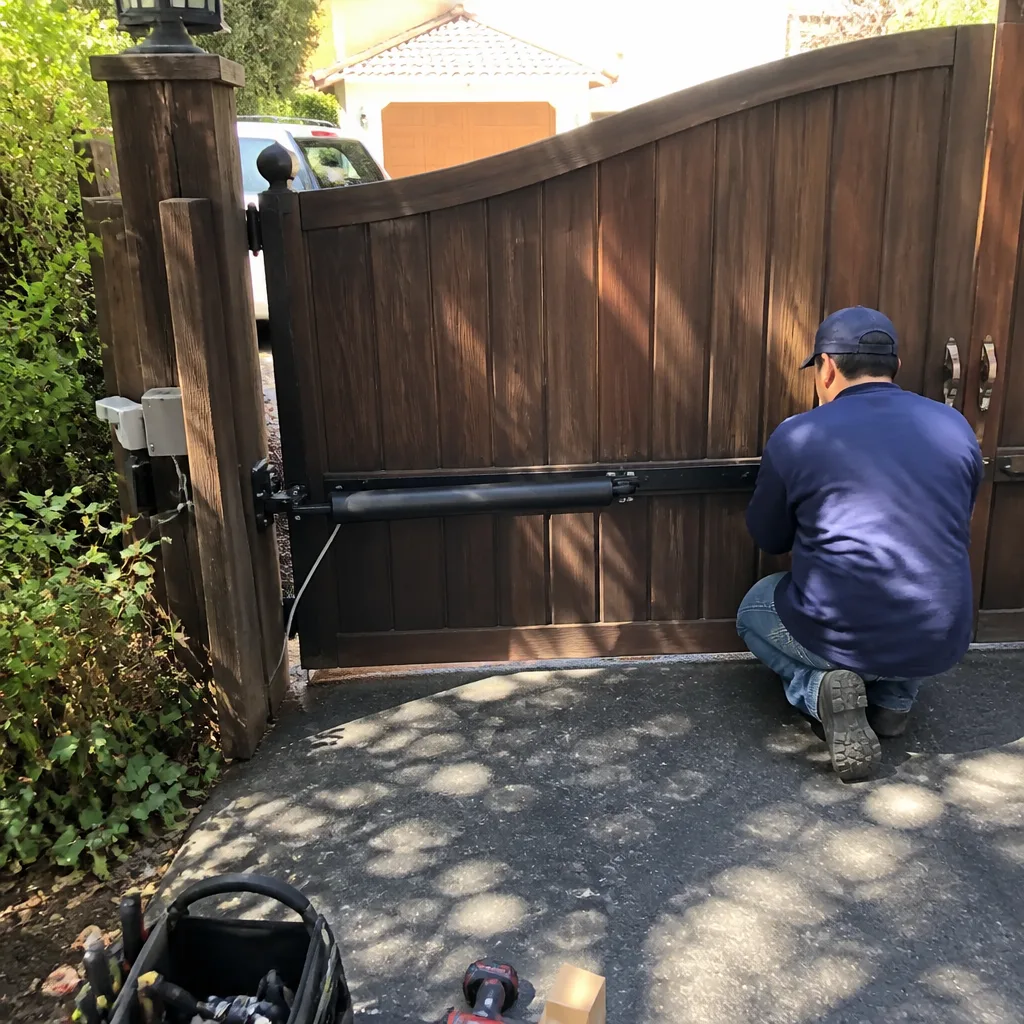
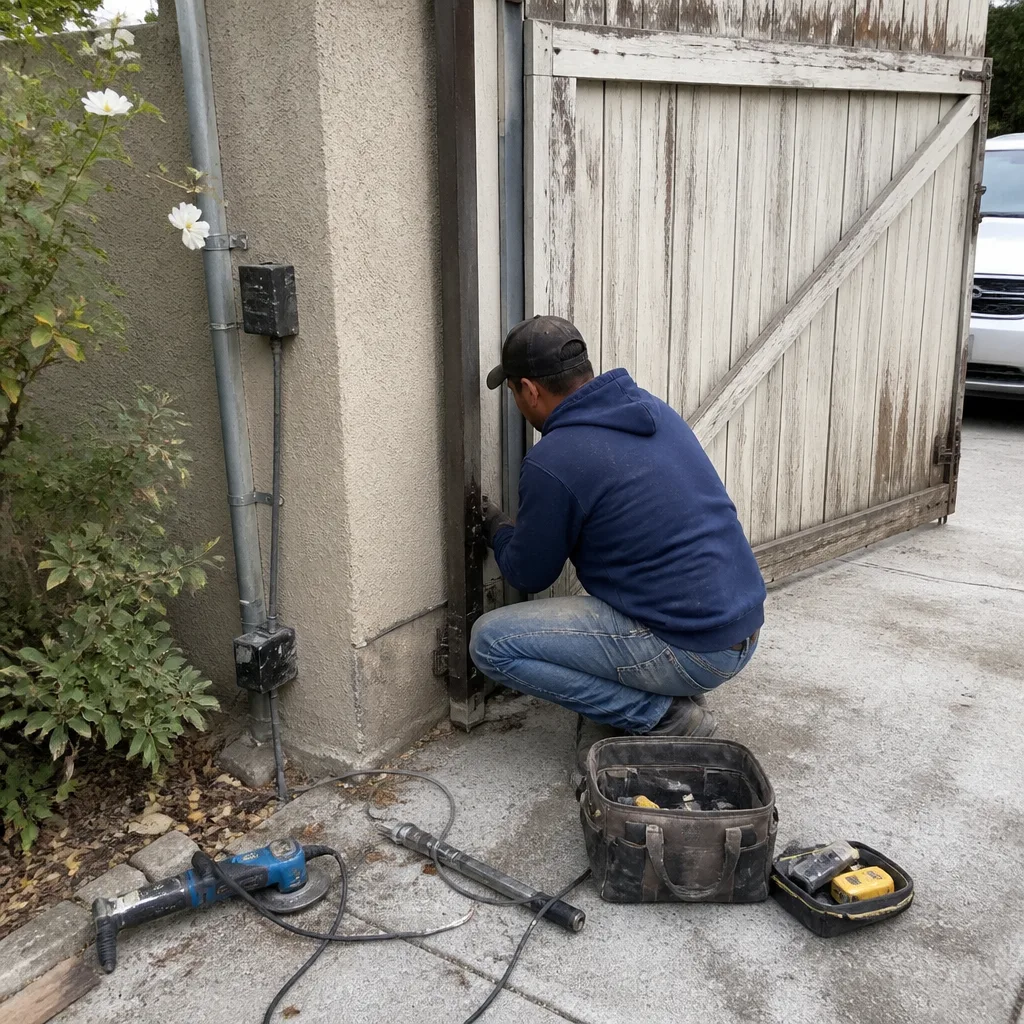 Before
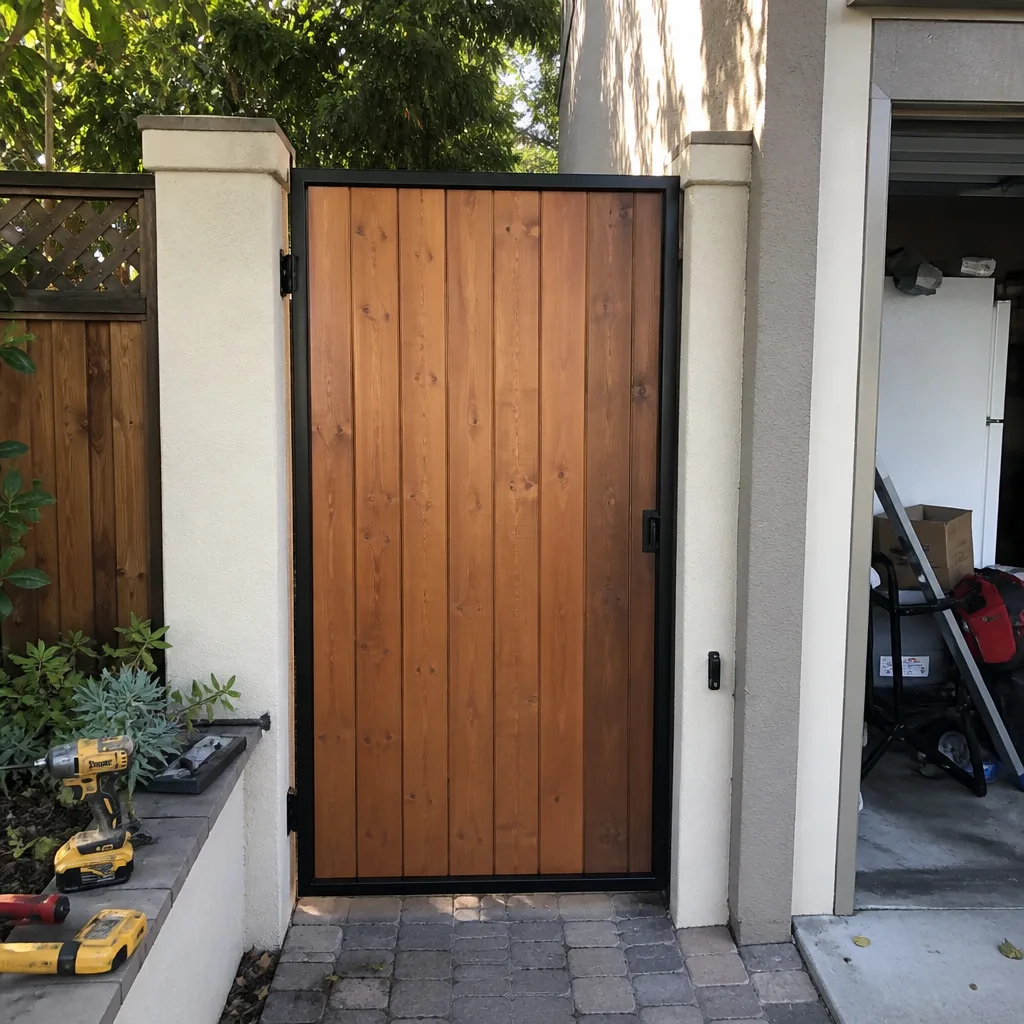 After
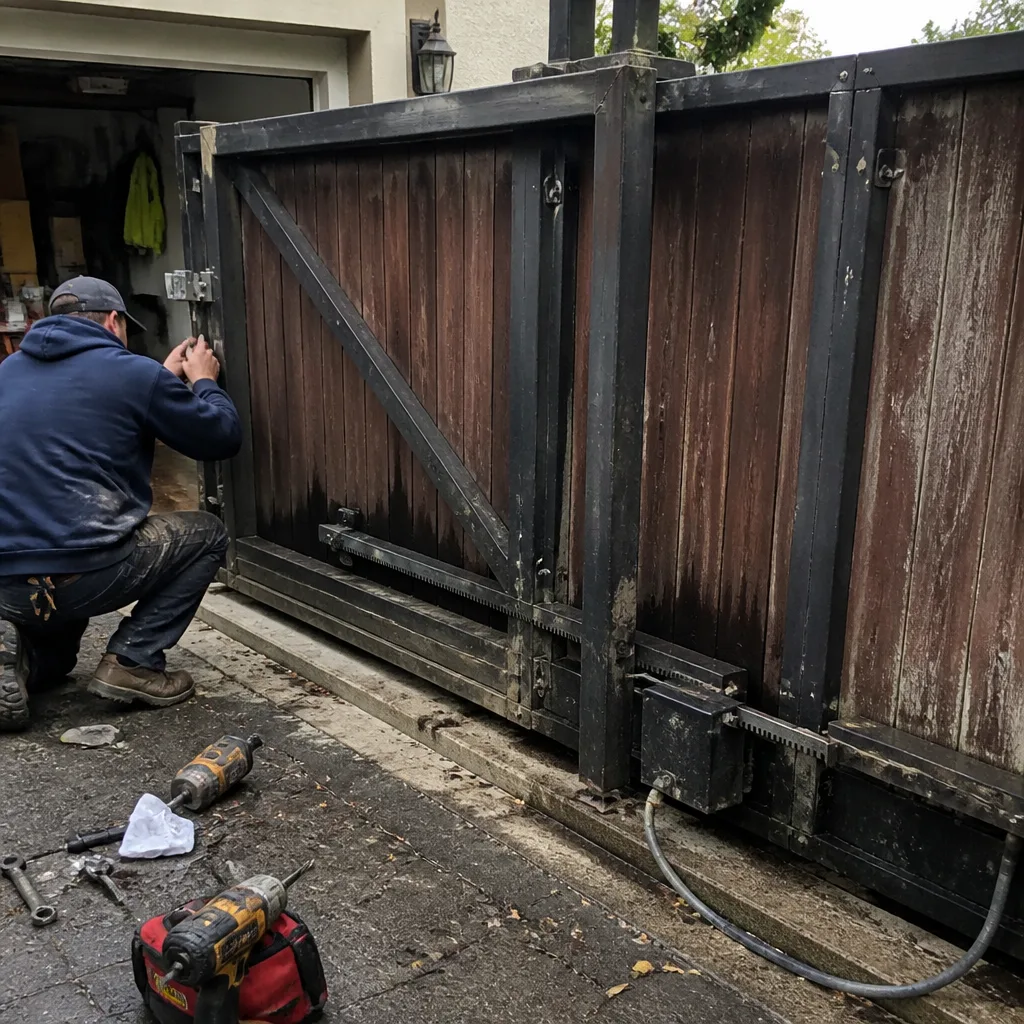
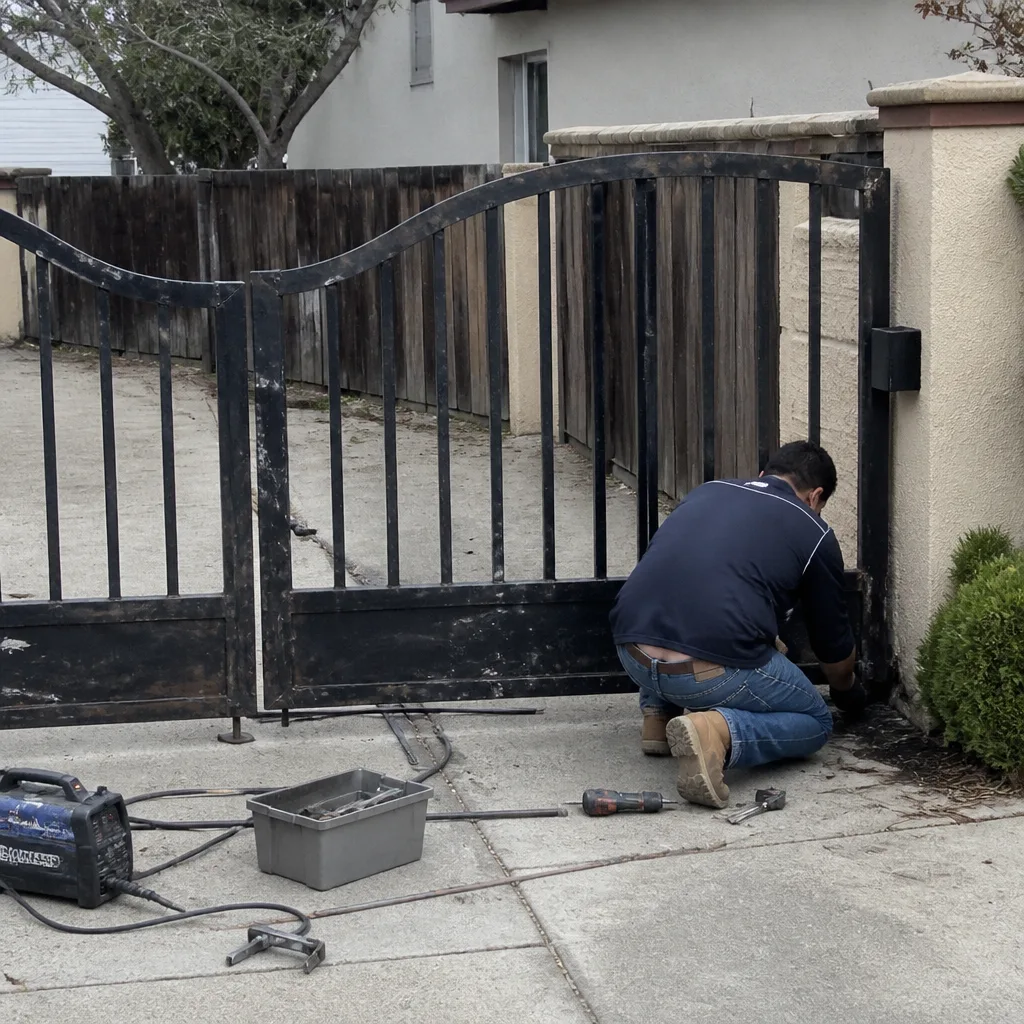 Before
 After
 Before
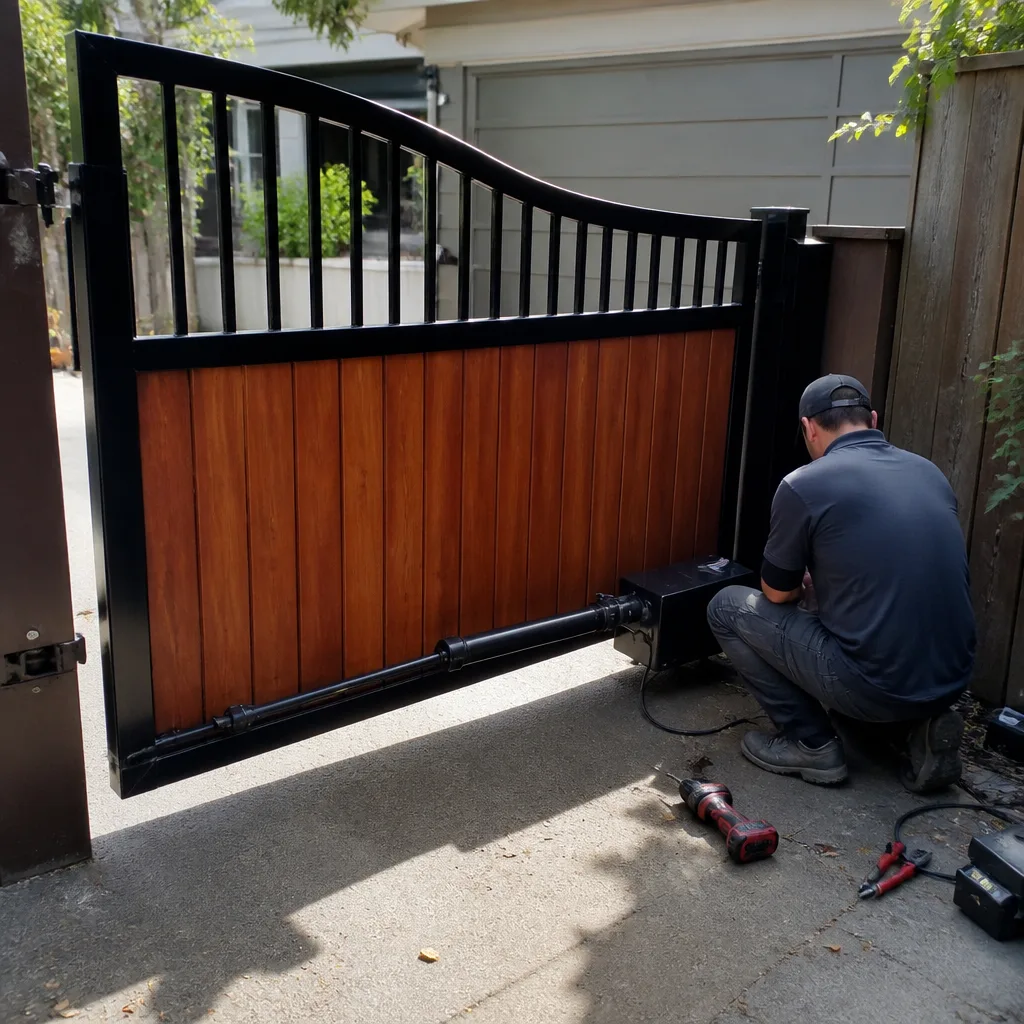 After
Why Your Neighbor Paid Half: Gate Type, Material, and Brand Variables
Two houses in the same Pleasanton neighborhood can have radically different gate repair bills for the same “gate repair” description. The difference is rarely the contractor. It’s the gate. Here’s what drives the variance.
Swing Gate vs. Slide Gate
Swing gates are simpler mechanically, which makes them cheaper to repair. A motor on a swing gate works through an arm or an underground operator, and the load path is shorter. Slide gates roll on a track or cantilever system, and they need a chain or rack drive, guide rollers, and often a stronger motor. Slide gate motor replacement typically costs 40% to 60% more than swing gate motor replacement because the parts are heavier-duty and the labor includes track alignment and chain tensioning.
Aluminum vs. Iron
Aluminum gates weigh 200 to 400 pounds. Iron gates weigh 400 to 900 pounds or more. That weight difference strains every component: hinges, motors, brackets, and posts. A hinge replacement on a 300-pound aluminum gate is a bolt-off, bolt-on job that takes an hour. The same repair on a 700-pound iron gate requires supporting the gate, possibly cutting welded hinges, and rewelding new ones. The labor doubles or triples. The hinges themselves cost more because they’re rated for a higher load. If your neighbor with an aluminum gate paid $200 for a hinge repair and your iron gate quote is $500, the difference is legitimate physics, not contractor greed.
Operator Brand
Brand matters less than most homeowners think, but it’s not zero. Entry-level consumer brands like Mighty Mule and Ghost Controls use parts that are inexpensive to replace. A Mighty Mule control board costs under $100. A DoorKing board for a commercial-grade operator costs $200 to $300. But the trade-off runs the other way too: Mighty Mule boards fail more often because the electronics are built to a lower duty cycle. A DoorKing, FAAC, or BFT operator that’s properly maintained will run for years without a board failure. You pay more per repair but repair less often. Elite and Viking systems fall in the middle, built for light commercial use, which means parts are built for longevity but carry a moderate price premium.
Where brand knowledge matters most is in diagnosis. A technician who knows LiftMaster systems intimately won’t misdiagnose a limit switch failure as a motor failure. A generalist might replace the motor, charge you $800, and leave the limit switch problem untouched. That’s the hidden cost of hiring someone who doesn’t know your specific operator. We work on these brands daily, which is why we can often diagnose the fault in a single visit rather than a parts-swapping sequence.
The Three Charges That Signal a Padded Quote
Most padded gate repair invoices in Pleasanton follow the same three patterns. Once you know them, you’ll spot them instantly.
1. The Phantom Diagnostic Fee
A diagnostic fee is legitimate when a technician spends real time troubleshooting an intermittent fault. But on a gate that’s clearly dead with an obvious burned board, a diagnostic fee of $150 to $250 that is not applied toward the repair is padding. The technician identifies the problem in 10 minutes, then charges you for the diagnosis and again for the fix. A fair practice is to waive the diagnostic fee when the repair is approved, or to charge a flat service call fee that includes diagnosis. Ask this question before the technician touches your gate: “Is the diagnostic fee applied toward the repair?” If the answer is no, find another contractor.
2. Marked-Up Commodity Parts
A control board is not a commodity, because it’s brand-specific. But a loop detector, a photo-eye sensor, and a keypad are commodity components with universal equivalents. When a quote shows a $50 photo-eye sensor at $140, that’s a 180% markup on a generic part. When a universal keypad shows up at $110 when it retails for $45, you’re paying for convenience, not value. A gate specialist stocks these parts and sells them at fair retail. A contractor who doesn’t stock gate parts orders them from a supply house same-day and passes the rush-order cost to you, often with an extra margin on top. Ask: “Do you carry this part on the truck, or is it being ordered?” The answer tells you whether you’re paying for inventory or desperation.
3. “Programming Fees” for 10-Minute Tasks
This is the most common padding line item in Pleasanton. A technician replaces a remote or keypad, spends 10 minutes programming it to the operator, and adds a $75 to $150 “programming fee” line item. Programming is part of the installation. It is not a separate service. A legitimate quote includes the remote at retail, 15 minutes of labor, and nothing else. When you see a programming fee on a quote, cross it out or find someone else. The same applies to “setup fees,” “calibration charges,” and “system configuration” line items on simple residential gates.
Repair Cost Reference Table: Pleasanton 2026
The table below consolidates the cost ranges from this guide in one place for quick reference. These numbers are based on the Pleasanton market as of 2026, including labor rates and part availability.
- Control board replacement: $350 to $600 installed. Part: $85 to $260. Labor: 1 to 1.5 hours.
- Motor replacement (swing): $400 to $750 installed. Part: $200 to $400. Labor: 1.5 to 2.5 hours.
- Motor replacement (slide): $550 to $900 installed. Part: $260 to $480. Labor: 2 to 3 hours.
- Full operator replacement (residential): $800 to $2,200 installed. Part: $500 to $1,500. Labor: 3 to 5 hours.
- Hinge replacement (aluminum): $150 to $350 installed. Part: $40 to $120. Labor: 1 to 2 hours.
- Hinge replacement (iron, welded): $300 to $500 installed. Part: $60 to $180. Labor: 2 to 3.5 hours.
- Loop detector replacement: $280 to $450 installed. Part: $90 to $170. Labor: 1.5 to 2.5 hours.
- Photo-eye sensor replacement: $120 to $250 installed. Part: $40 to $80. Labor: 0.75 to 1 hour.
- Keypad replacement and programming: $75 to $150 installed. Part: $45 to $90. Labor: 15 to 45 minutes.
- Chain or belt drive replacement: $180 to $350 installed. Part: $50 to $120. Labor: 1 to 2 hours.
Common Mistakes to Avoid
- Approving a quote without part and labor itemization. A single “gate repair: $850” line gives you no ability to evaluate fairness. Demand itemization. A reputable Pleasanton gate specialist provides it without being asked.
- Replacing a 2-year-old operator instead of repairing it. We’ve seen homeowners quoted full replacements for a failed limit switch. Get a second opinion before authorizing a full operator swap on anything under 5 years old.
- Ignoring a slow gate. A gate that moves slower than it used to is drawing more current and overheating the motor. Waiting until it fails turns a $200 limit adjustment into a $600 motor replacement.
- Hiring a general contractor for a gate-specific fault. Electric gate systems with safety sensors and loop detectors require specialist knowledge. A generalist who “can probably figure it out” costs you twice: once in misdiagnosis, again in the correct repair.
- Neglecting hinge lubrication in Pleasanton’s dry season. The long rain-free stretch from May to October dries grease and accelerates hinge wear. A $30 maintenance visit prevents a $400 hinge replacement.
- Paying a programming fee. As covered above, programming is part of the installation. If it’s a separate line item, request it removed.
- Skipping the loop detector when the gate misbehaves at the exit lane. Not all gate problems are the gate. A failing loop detector makes the gate think a vehicle is present or absent when it isn’t. Replacing the operator won’t fix the loop.
When to Call a Professional
Some gate problems are safe to diagnose yourself, and some are not. If your gate is moving but the remote isn’t working, check the battery and the keypad before calling anyone. If the gate is partially open and won’t move, or if it’s making a grinding noise, or if the safety sensors won’t let it close, those are professional-level problems. Gate operators carry enough torque to crush a person, and the safety systems are not DIY territory. A gate that backs up or reverses unexpectedly needs a technician before someone gets hurt. If you’re in Pleasanton and your gate is misbehaving, Electric Gate Repair in Pleasanton is our core service, and we work on every brand covered in this guide. Call (833) 593-6440 for a free estimate. We’ll tell you what’s wrong, what it costs to fix, and whether repair or replacement makes more sense.
Frequently Asked Questions
Most Gate Repair services in Pleasanton land between $180 and $650, with an average around $340. Control board replacements, the most common repair, run $350 to $600 installed. The final cost depends on the failed component and the gate’s weight and material. Call (833) 593-6440 for an exact quote, free of charge.
A full operator replacement is the most expensive residential gate repair in Pleasanton, running $800 to $2,200 installed. Motor replacement on a slide gate comes next at $550 to $900. The highest single-part cost is typically the operator’s control board, but a failed board alone doesn’t require a full operator swap unless the system is over 10 years old.
For most component failures including control boards, sensors, and remotes, same-day repair is possible in Pleasanton if parts are on the truck; see our more guides & resources for additional help. For full operator replacements or welded iron hinge work, the job is typically scheduled within 1 to 3 days. Call (833) 593-6440 and we’ll give you a straight answer on timing.
Gate type, material, and operator brand drive most of the price difference. A swing gate is cheaper to repair than a slide gate. An aluminum gate is cheaper to work on than an iron gate. A Mighty Mule control board costs less than a DoorKing board. The difference is almost never the contractor when quotes are itemized.
Generally no. At 15 years old, a gate operator in Pleasanton has exceeded its expected service life, especially if it’s exposed to full sun. A repair costing $500 or more on a system that age is money better spent on a replacement operator with a fresh warranty. The crossover math in this guide walks through the calculation.
Yes. Electric gate repair including motors, control boards, safety sensors, and keypad wiring is a core service, not an add-on. We work on residential and commercial operators across nine major brands, from Mighty Mule to DoorKing. Call (833) 593-6440 for a free estimate.
The Bottom Line
Gate repair pricing in Pleasanton is not mysterious, but it feels that way when quotes arrive as a single number. Once you understand that the cost is driven by three variables, part cost, labor time, and markup, you can evaluate any quote in minutes. Part-level benchmarks for 2026 give you the reference point. Labor time standards let you verify the hours. And the three padding patterns, phantom diagnostic fees, marked-up commodity parts, and programming fees, give you a filter for separating a fair quote from an inflated one. A gate specialist who knows your brand, stocks the parts, and itemizes the invoice is worth more than a discount contractor, because the specialist fixes it once. The Gate Repair Pleasanton home team works on every brand in this guide, from entry-level Mighty Mule to professional DoorKing systems. When your gate stops moving, call us at (833) 593-6440 and you’ll get a straight answer before you get an invoice.
Written by the team at Gate Repair Pleasanton, serving Pleasanton since 2016.