
Last updated November 2, 2026
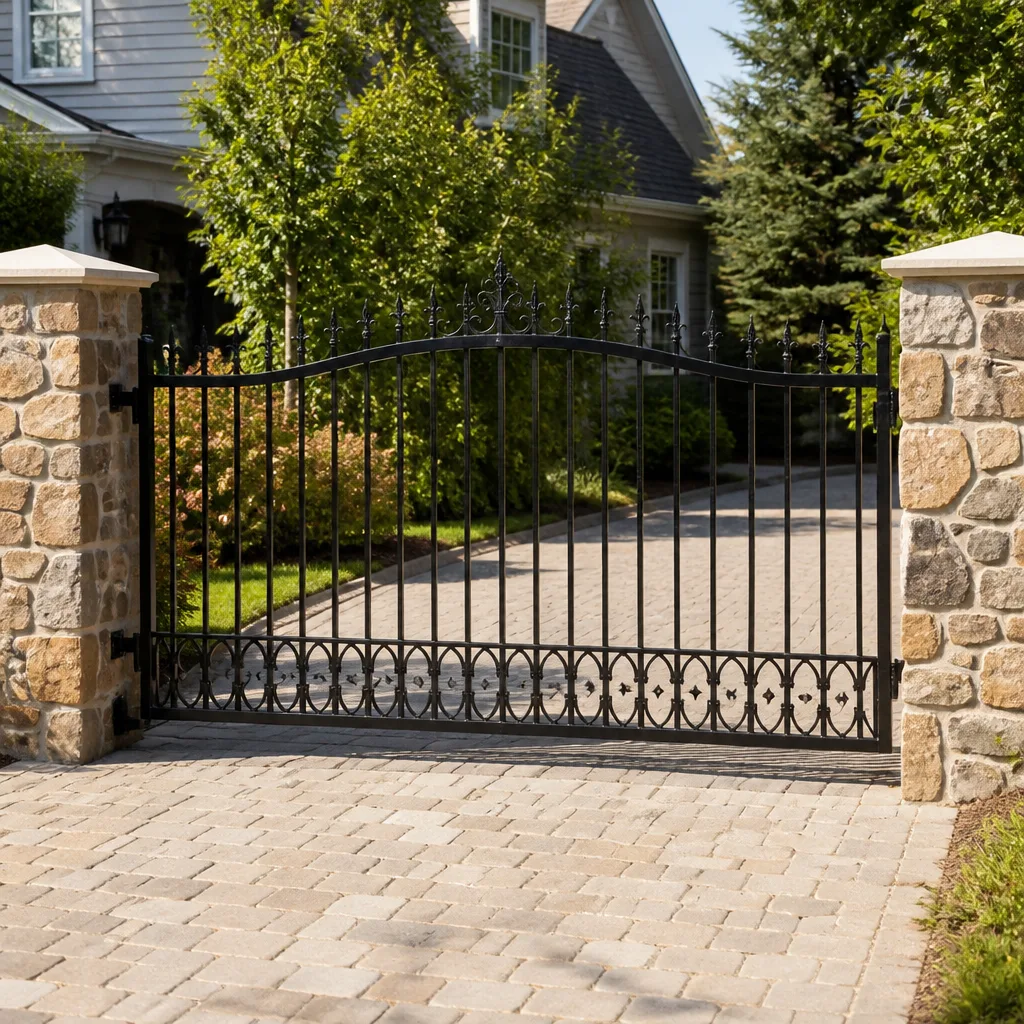 Wrought iron
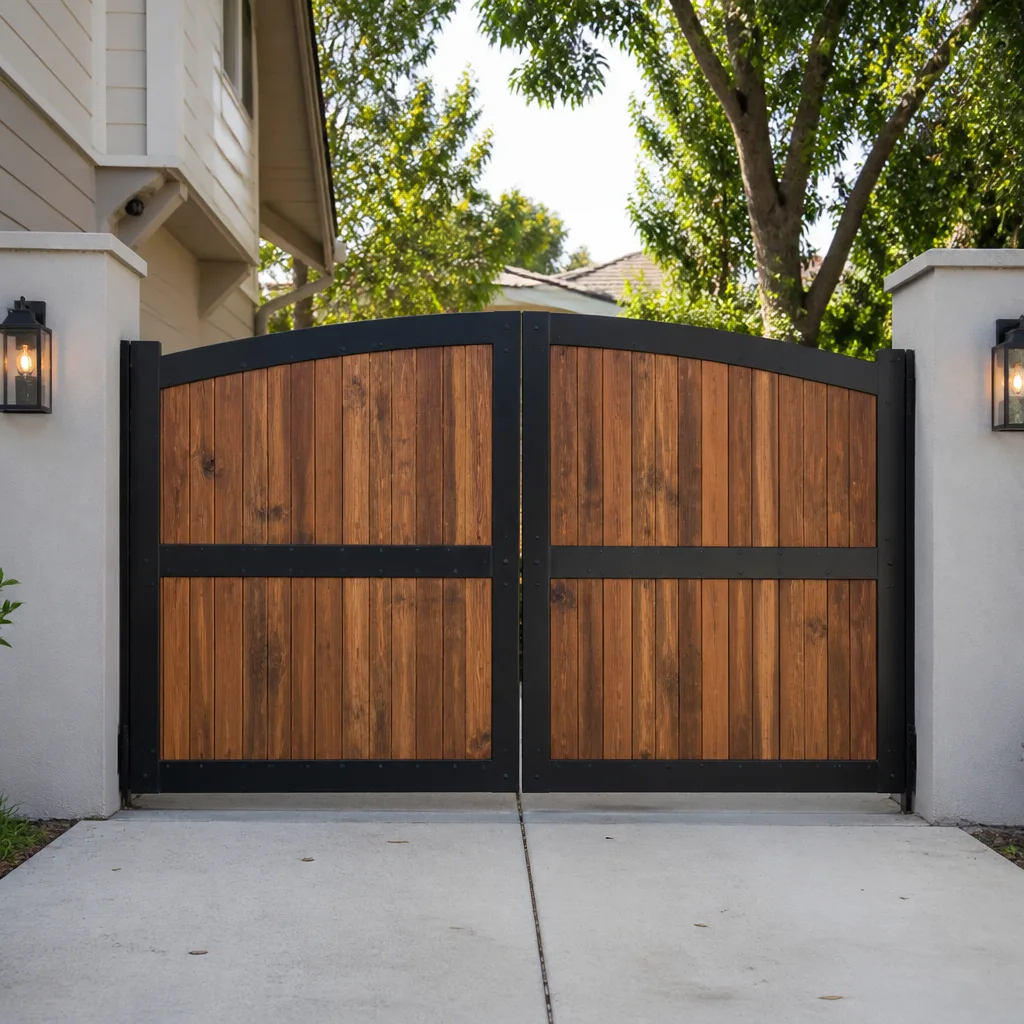 Wood & steel frame
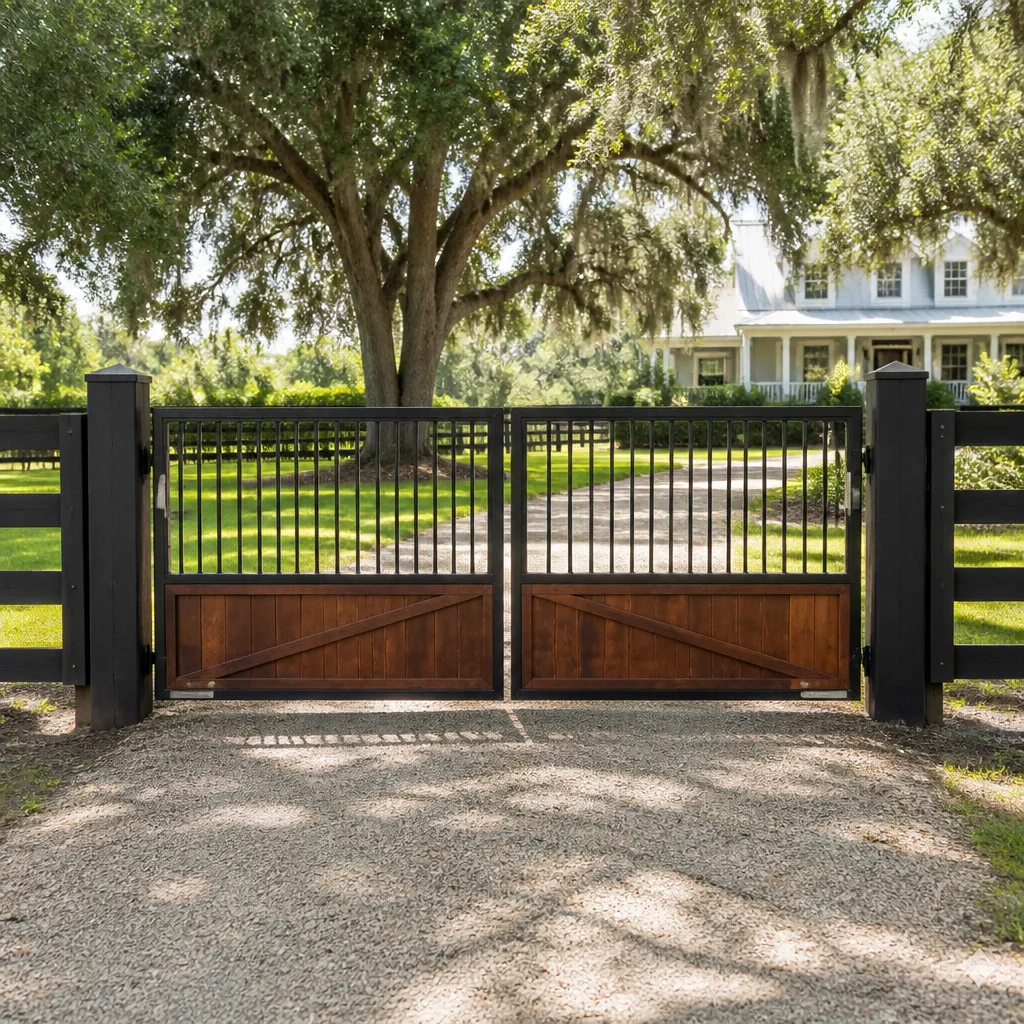 Farm & ranch
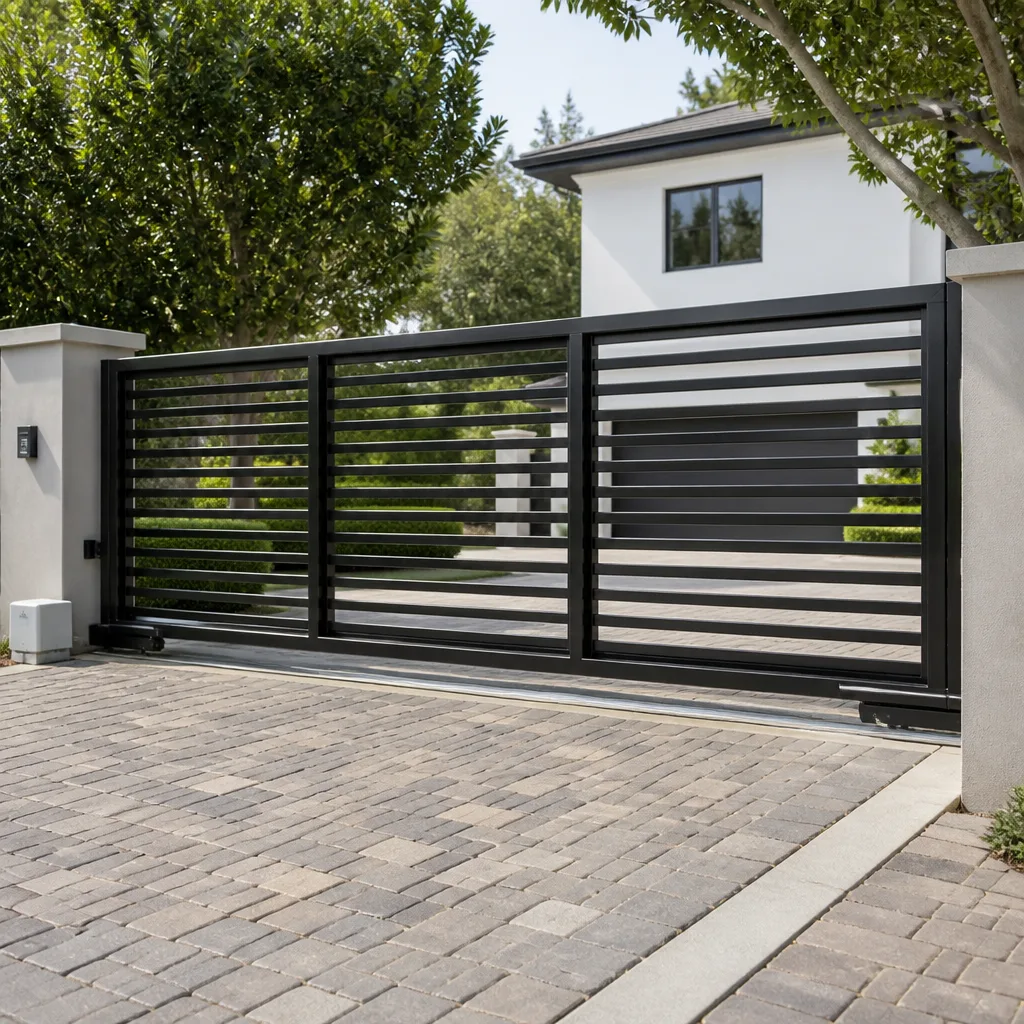 Sliding driveway gates
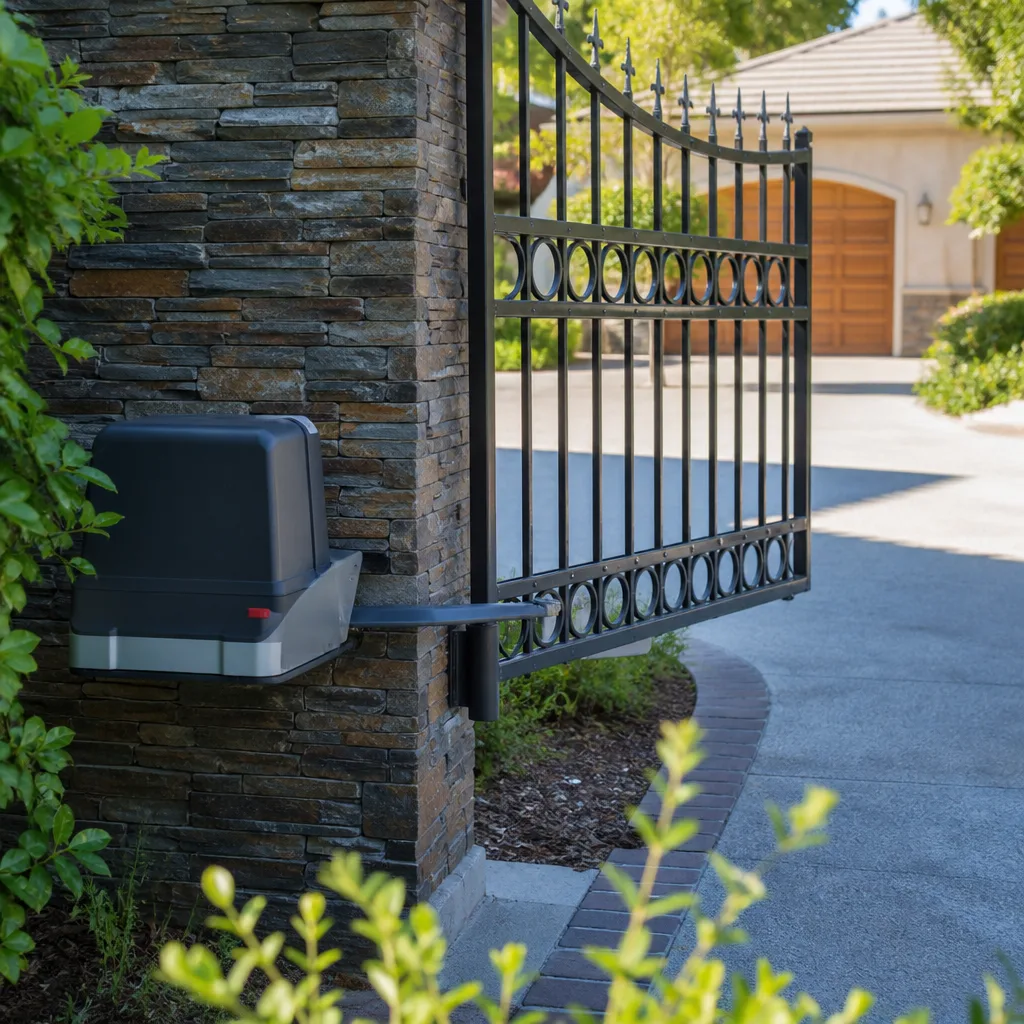 LiftMaster operators
Free on-site gate assessment - hinges, posts, and your LiftMaster or Nice gate operator checked before anything is quoted
The assessment is free and the quote is the invoice.
Get your free estimateSeasonal Gate Repair Care for Pleasanton: Year-Round Homeowner’s Guide
Pleasanton averages only 15 inches of rain a year, but it doesn’t arrive gently. It comes in concentrated winter bursts that saturate the clay soil under your gate posts, then a dry spring pulls that moisture back out. The soil expands, contracts, and shifts. Your gate posts shift with it. This guide walks through what that means season by season, what to watch for, what you can handle yourself, and what needs a gate technician before a small problem becomes a post replacement. If you’ve ever wondered why your gate worked fine in October and dragged by February, the answer is usually under the soil in Pleasanton, not in the motor.
Styles & brands we work with
- Wrought iron
- Wood & steel frame
- Farm & ranch
- Sliding driveway gates
- LiftMaster operators
Quick Answer
Seasonal gate care in Pleasanton breaks into four distinct jobs: winter post and hinge monitoring during clay-soil saturation, a spring inspection sequence after the first dry stretch, summer heat management for operator electronics, and fall prep that drains water away from swing gate posts before rain returns. Most seasonal failures trace back to soil movement and temperature swing, not motor wear.
Table of Contents
- Winter: Clay Soil, Post Lean, and What Saturation Actually Does
- Spring: The Post-Rain Inspection Sequence
- Summer: Heat, Circuit Boards, and Why Shade Placement Matters
- Fall: Drainage, Seals, and Pre-Wet-Season Prep
- Year-Round: Diurnal Temperature Swings and Limit Switch Drift
- Common Mistakes to Avoid
- When to Call a Professional
- Frequently Asked Questions
- The Bottom Line
Winter: Clay Soil, Post Lean, and What Saturation Actually Does
Pleasanton sits on expansive clay soil in a large portion of its residential footprint. Older neighborhoods like Del Prado, Valley Trails, and Birdland were built on it. Clay doesn’t absorb water quickly. It swells slowly, holds moisture for weeks, then cracks as it dries. A gate post set in concrete that sits above that clay layer becomes a lever. When the soil heaves, the post moves. When the soil recedes, the post doesn’t always come back level.
We’ve seen gates in Pleasanton drop two inches at the latch side between November and March. The motor still works. The wheels still turn. But the gate won’t close because the latch no longer lines up with the receiver. Homeowners assume the opener failed. Most of the time, the opener is fine. The ground moved.
Here’s what to monitor during a wet Pleasanton winter:
- Latch alignment: If the gate closes but the latch scrapes the top of the receiver, soil has lifted one post. This is early-stage movement.
- Hinge gap changes: Look at the gap between the gate leaf and the post at the top hinge versus the bottom hinge. If the top gap is wider, the gate is sagging. If the gap is uneven side to side, the post is leaning.
- Scraping sounds: A gate that scrapes concrete only when wet has a post that moves seasonally. The gate is fine. The footing is undersized for the soil.
- Puddle pooling: Water standing within 18 inches of a post after rain means the post is sitting in saturated clay. That’s the highest-risk condition for movement.
What requires immediate attention versus what you can watch: a gate that scrapes slightly but still opens and closes is a monitoring situation. A gate that no longer closes, a post that has visible lean beyond an inch, or concrete that has cracked away from the post base needs a call. Those don’t self-correct. The fix typically involves re-setting the post with a deeper footing or adding drainage before the next rain cycle. Waiting through a second wet season makes the repair larger, not just later.
For gates with operators, winter is also when moisture intrusion shows up. Condensation inside a control box that isn’t sealed well can cause intermittent faults. If your gate opens fine during the day but faults at night after a rain, moisture is a prime suspect. That’s an electric gate repair situation, not a mechanical one.
Spring: The Post-Rain Inspection Sequence
Spring in Pleasanton is the critical diagnostic window. The soil has dried enough to reveal what winter did, but the summer heat hasn’t yet baked everything solid. This is when you catch post movement, hinge wear, and moisture damage before they compound through another season.
Wait for the first dry stretch of at least seven days. Then run this sequence. It takes 20 minutes and it tells you more than any list of generic advice:
- Open the gate fully and look at the post bases. Fresh cracks in concrete footings, exposed soil at the post edge, or a visible gap between post and concrete are winter damage signals. Photograph them. Compare next spring.
- Close the gate and check the latch engagement. If the latch no longer sits cleanly in the receiver, note which direction it’s off. Horizontal misalignment means a post leaned. Vertical misalignment means the gate leaf dropped, usually from hinge wear.
- Lift the gate leaf slightly by hand. Play in the hinges of more than an eighth of an inch means hinge bushings are wearing. On a swing gate, that play translates to sag within a year.
- Run the opener through three full cycles. Listen for strain. An opener that labors more in spring than it did in fall is working against a misaligned gate. The motor didn’t get weaker over winter. The geometry changed.
- Open the control box and look. White residue on terminals is corrosion from winter condensation. Rust on the board mounting screws means the enclosure is no longer sealing. Both are early warnings.
We service operators from Ghost Controls, DoorKing, Viking, and others. The spring inspection sequence is identical regardless of brand. What changes is how each one reports problems. A DoorKing control board typically surfaces a fault code on the display. A Ghost Controls unit often shows erratic remote response first. Knowing the brand’s failure signature speeds up diagnosis, but the mechanical checks above apply to every gate in Pleasanton.
If you find misalignment, don’t just adjust the limits and move on. That masks the problem. The gate moved for a reason. Find the reason first. That’s the difference between a repair that lasts one season and one that lasts ten.
For a fuller breakdown of what this seasonal inspection covers, see our Gate Repair in Pleasanton page.
Summer: Heat, Circuit Boards, and Why Shade Placement Matters
Pleasanton summer afternoons regularly push into the 90s, and that heat lands directly on gate control boxes mounted on south and west-facing posts. The box absorbs solar gain. Internal temperatures climb 20 to 30 degrees above ambient. Electronics rated for 140°F are suddenly sitting in 160°F of trapped heat. Capacitors age faster. Solder joints expand and contract. Control boards fail sooner than they should.
This is the season where we see a spike in operator failures that have nothing to do with the motor itself. The motor is sealed and can handle heat. The circuit board can’t. LiftMaster residential operators, like most consumer-grade equipment, are engineered for a broad national market. The board sits in a plastic or light-gauge metal enclosure with minimal ventilation. In Pleasanton’s July and August sun, that enclosure becomes an oven.
What actually fails in the heat:
- Capacitor degradation: Electrolytic capacitors dry out faster at sustained high temperatures. The result: the gate starts fine, then stops mid-cycle as the capacitor can no longer hold a charge.
- Relay sticking: Heat causes relay contacts to expand and, over time, stick. A gate that opens but won’t close without a power cycle often has a heat-stressed relay.
- Remote receiver range drop: The RF receiver’s sensitivity degrades with temperature. A remote that works from 50 feet in spring may only work from 15 feet on an August afternoon.
- Limit switch drift: This one is largely mechanical, but heat accelerates it. More on that in the year-round section below.
Shade placement of the control box matters more than most installers acknowledge. A box mounted on the north side of a post, or under the partial shade of a mature tree, runs 20 degrees cooler than the same box on a western exposure. We see it in service life. The same operator installed two houses apart, one shaded and one exposed, will have very different failure rates by year five. If you’re installing a new gate or replacing an operator, choose the shaded side of the post. It costs nothing at installation and saves a board replacement later.
If your gate is already exhibiting heat-related symptoms, a service call identifies whether it’s the board, a capacitor, or a cooling issue. For gates that have fully failed, electric gate repair in Pleasanton is our core service, and summer is when we run the most diagnostics on heat-stressed control circuits.
Fall: Drainage, Seals, and Pre-Wet-Season Prep
Fall is the highest-leverage maintenance season in Pleasanton. The work you do in October determines whether your gate survives the January downpours intact. Most of it is unglamorous. Almost none of it involves the motor. And it prevents the majority of the winter failures we see.
The single most important fall task is drain channel inspection around swing gate posts. Here’s the logic: Pleasanton’s winter rain comes in bursts. If water pools around a post even briefly, the clay begins to swell. If that happens repeatedly over a wet season, the post moves. A functional drain channel, whether it’s a gravel bed, a sloped concrete channel, or a buried drain line, gets the water away from the post before it saturates. A clogged or absent channel doesn’t.
Run this fall prep list before the first significant rain:
- Clear the drain channels. Leaves, mulch, and grass clippings clog drainage by November. A clean channel moves water. A clogged one holds it against your post.
- Check the weather seals. Rubber and vinyl seals on the gate bottom and edges crack over a dry summer. Once cracked, winter rain enters the gate frame and the electronics compartment. Replace seals that are brittle or pulling away.
- Inspect the hinge bolts. Loose hinge bolts accelerate wear through the wet season when the gate moves slightly with soil shifting. Tighten to spec now, not in February.
- Lubricate the pivot points. Use a silicone or lithium spray, not WD-40. WD-40 displaces moisture but attracts dust. Hinges need lubrication that stays put through a rainy season.
- Test the photo eyes. If your gate has safety sensors, clean the lenses and test the obstruction reversal before the rainy season. You want that working correctly when visibility drops.
We also recommend running the gate through a full cycle and timing it. Note the speed. Note any hesitation. Record it. When you do the spring inspection, you’ll have a baseline. A gate that slows by 20 percent over winter is telling you something about hinge resistance or operator strain. Without a baseline, you won’t catch it.
For homeowners considering a new gate rather than maintaining an aging one, fall is the right time to start planning. Installation can be scheduled for the dry spring window, but measurements and material ordering happen now. Our gate installation in Pleasanton service starts with a site walk and a written plan, which gives you months to make decisions in advance of the building season.
Year-Round: Diurnal Temperature Swings and Limit Switch Drift
Pleasanton’s daily temperature swing is often 25 degrees or more, even in summer when nights cool into the 50s after a 90-degree day. Metal expands when it heats and contracts when it cools. A 16-foot steel gate changes length measurably over a 25-degree swing. That expansion and contraction plays directly into a component most homeowners never think about: the limit switch.
The limit switch tells the operator where the gate should stop in the open and closed positions. In most residential and light commercial operators, this is either a mechanical switch that physically moves or an electronic setting that records positions. Metal expansion pushes the gate’s stop point slightly off each day. The operator compensates, or doesn’t. Over weeks and months, the operator’s learned positions drift. Then one morning the gate stops six inches short of closed, or it slams the stop in the open position and faults.
This is seasonal, not random. It drifts more in spring and fall when temperature swings are largest. It drifts less in the stable middle of summer or winter. If you notice your gate stopping slightly off its usual position and then correcting itself over a few days, that’s the diurnal cycle working. If the drift gets worse over weeks and doesn’t correct, the limit mechanism needs service before it burns out the motor against the stop.
Different brands handle this differently. Elite and Viking commercial operators typically have more robust limit controls with tighter tolerances, which is one reason they appear on higher-cycle installations. Mighty Mule and Ghost Controls DIY systems have lighter-duty limit mechanisms that drift sooner. But every brand drifts eventually. The correction is a service adjustment, not a replacement. In fact, when a gate specialist tells you the limit switch needs adjustment, that’s usually a quick job. When it’s left too long, the gate repeatedly hits the mechanical stop under power, and that’s what damages the motor.
This is the kind of failure that looks intermittent and confusing from the outside. The gate works fine for three weeks, then stops short for two days, then works again. Our team sees this across all nine brands we service, including the residential-focused Ghost Controls line and the commercial-grade DoorKing and Viking systems. The pattern is consistent: temperature change exposes limit drift early. Ignoring it turns a $200 adjustment into a motor replacement.
You can read more about how we approach these diagnostics on our Gate Repair Pleasanton home page.
Common Mistakes to Avoid
- Adjusting limit switches without checking the post first. If the gate is misaligned because a post shifted, changing the limits hides the problem for a season, then it returns worse. Fix the foundation issue first.
- Ignoring seasonal slow-down. A gate that moves noticeably slower in winter than in summer is working harder. That strain lands on the motor and the hinges. Investigate early rather than replacing a motor later.
- Mounting control boxes on western exposures. Pleasanton’s afternoon sun cooks electronics. If you’re installing new, choose shade. If you’re upgrading, consider a ventilated enclosure or a sun shield.
- Using the wrong lubricant on hinges. WD-40 and penetrating oils wash away quickly and attract abrasive dust. A tacky silicone or lithium grease lasts through a Pleasanton wet season. Reapply annually.
- Skipping the fall drain check. The most common winter failure we see in Pleasanton, specifically post lean in clay soil neighborhoods, starts with a clogged drain channel that pooled water for weeks. Twenty minutes of fall clearing prevents most of it.
- Testing the gate only when it breaks. A gate that’s tested only when it fails gives you no warning. Seasonal baselines, even informal timing checks, tell you something is wrong months before a failure.
- Assuming motor failure when the latch doesn’t line up. In Pleasanton, latch misalignment after winter rain is most often post movement, not opener failure. Replacing the operator won’t fix a shifted post.
When to Call a Professional
Some seasonal maintenance is squarely in homeowner territory: clearing drains, checking seals, noting misalignment, timing the gate. But there are clear signals that a problem has moved beyond seasonal adjustment. A post with visible lean beyond an inch has a compromised footing and needs re-setting before the soil shifts further. A gate that faults intermittently after rain has moisture in the electronics and needs a diagnostic, not a reset. An opener that labors through every cycle after you’ve confirmed the gate moves freely by hand is telling you the motor or gear train is failing. A limit switch that drifts repeatedly after multiple corrections has an underlying mechanical issue. And any gate with a broken spring, a detached hinge, or a control board that doesn’t power up is beyond safe DIY work. Gate Repair Pleasanton offers free estimates in Pleasanton – call (833) 593-6440. We tell you what’s wrong, what it costs, and whether it’s worth fixing, before any work begins.
Frequently Asked Questions
Small mechanical adjustments like hinge tightening or limit switch correction typically run $150 – $350. Motor replacement on a residential swing gate usually falls between $600 and $1,400 depending on the brand and operator type. Control board replacement for systems like DoorKing, Viking, or Ghost Controls typically runs $300 – $800 installed. Full post re-setting for a shifted gate post in Pleasanton clay soil typically costs $500 – $1,500 depending on footing depth and access. Every quote is agreed before work starts. Call (833) 593-6440 for an exact price on your gate.
For a gate that won’t close and leaves your property unsecured, we prioritize emergency calls and do our best to get to you same day. Seasonal maintenance that isn’t urgent, like a spring inspection or fall prep list, is scheduled within a normal service window. Call (833) 593-6440 and tell us what’s happening. We’ll tell you honestly whether it’s an emergency or a scheduled visit.
Yes. We service Ghost Controls and Mighty Mule systems regularly, along with LiftMaster, FAAC, BFT, Linear, Viking, DoorKing, and Elite. Many gate companies won’t touch DIY-installed systems because the wiring and mounting are often non-standard. We diagnose them the same way we diagnose a commercial operator: find the actual fault and fix it, rather than blaming the brand.
In Pleasanton, this pattern is usually heat-related. Afternoon sun raises the temperature inside the control enclosure, which can cause a capacitor or relay to fail temporarily. When the box cools overnight, the component works again until the next afternoon. The fix is usually component replacement plus better shade or ventilation for the enclosure. Call (833) 593-6440 and describe the pattern. It tells us more than a simple “gate won’t open” does.
Yes. We install new gates and operators in addition to repairing existing systems. The advantage of a single specialist team for both is that your installation is done by someone who also sees what fails in Pleasanton season after season. We account for clay soil, drainage, and sun exposure in the initial design, not as afterthoughts. See our gate installation page for what the process includes.
A properly installed residential operator on a well-maintained gate typically lasts 10 to 15 years in Pleasanton’s climate. The factors that shorten that lifespan are southern or western sun exposure on the control box, a gate that’s misaligned and putting constant strain on the motor, and limit switches that are left drifting for months. Operators on commercial gates with higher cycle counts wear faster. Maintenance extends life more than any brand difference does.
Gate repair covers mechanical and electrical faults: hinge replacement, post re-setting, wheel and track repair, motor replacement, control board diagnostics, remote and keypad programming, safety sensor alignment, and limit switch correction. Electric gate repair specifically focuses on the automated components, the motor, the control circuitry, and the safety systems. If you’re not sure which category your problem falls into, call (833) 593-6440 and describe what the gate is doing. We’ll tell you what we’d check first.
The Bottom Line
Pleasanton’s gate repair needs are seasonal, and they follow a pattern: winter saturates clay soil and shifts posts, spring reveals the damage, summer heat stresses electronics, and fall prep determines how bad the next winter will be. The homeowner who runs a 20-minute seasonal check catches post lean before it becomes a footing replacement, catches limit drift before it becomes a motor failure, and catches moisture before it becomes a control board. The homeowner who waits for a gate to stop working pays more. The pattern is predictable enough that a little attention at the right time prevents most of it. For anything beyond a seasonal check, or for a second set of eyes on a gate that doesn’t feel right, we’re here in Pleasanton.
Call (833) 593-6440 for a free estimate on any gate repair, electric gate issue, or new installation in Pleasanton.
Written by the team at Gate Repair Pleasanton, serving Pleasanton since 2016.
See the difference
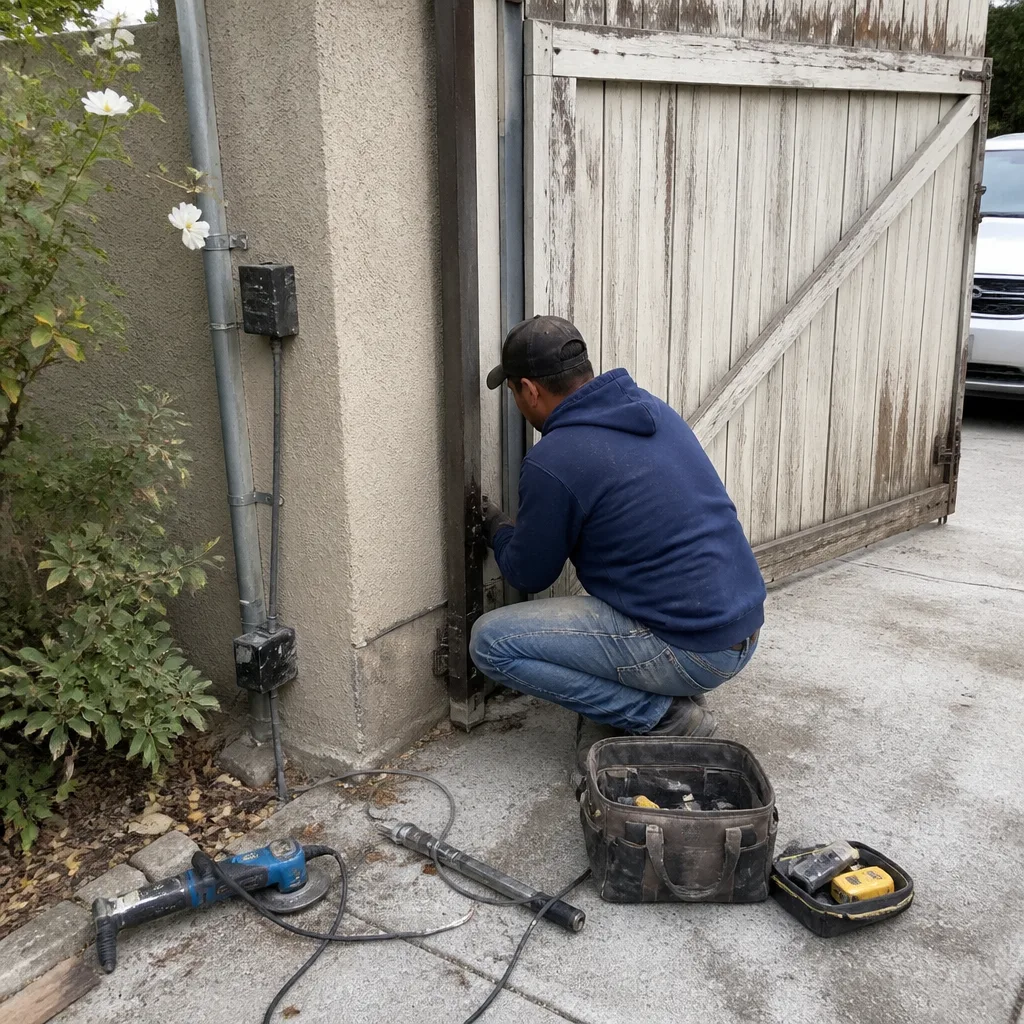 Before
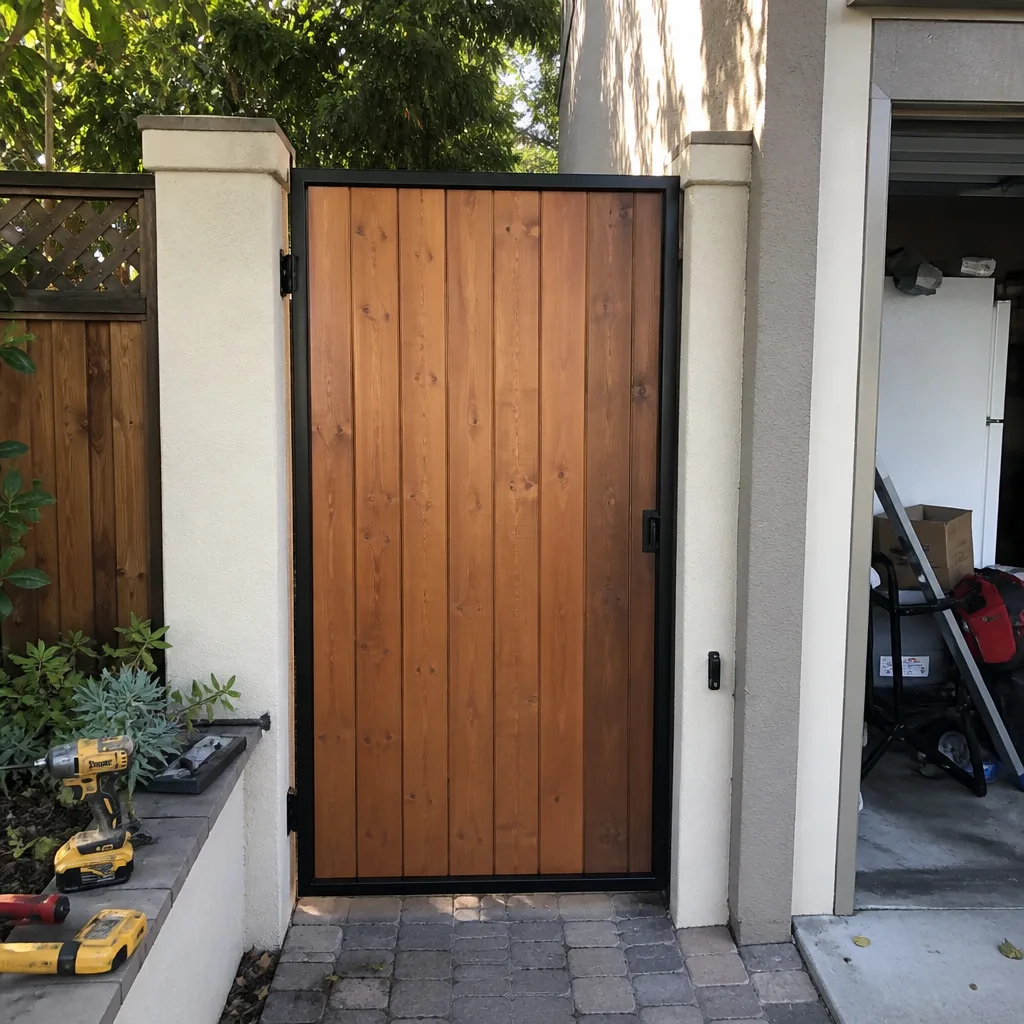 After
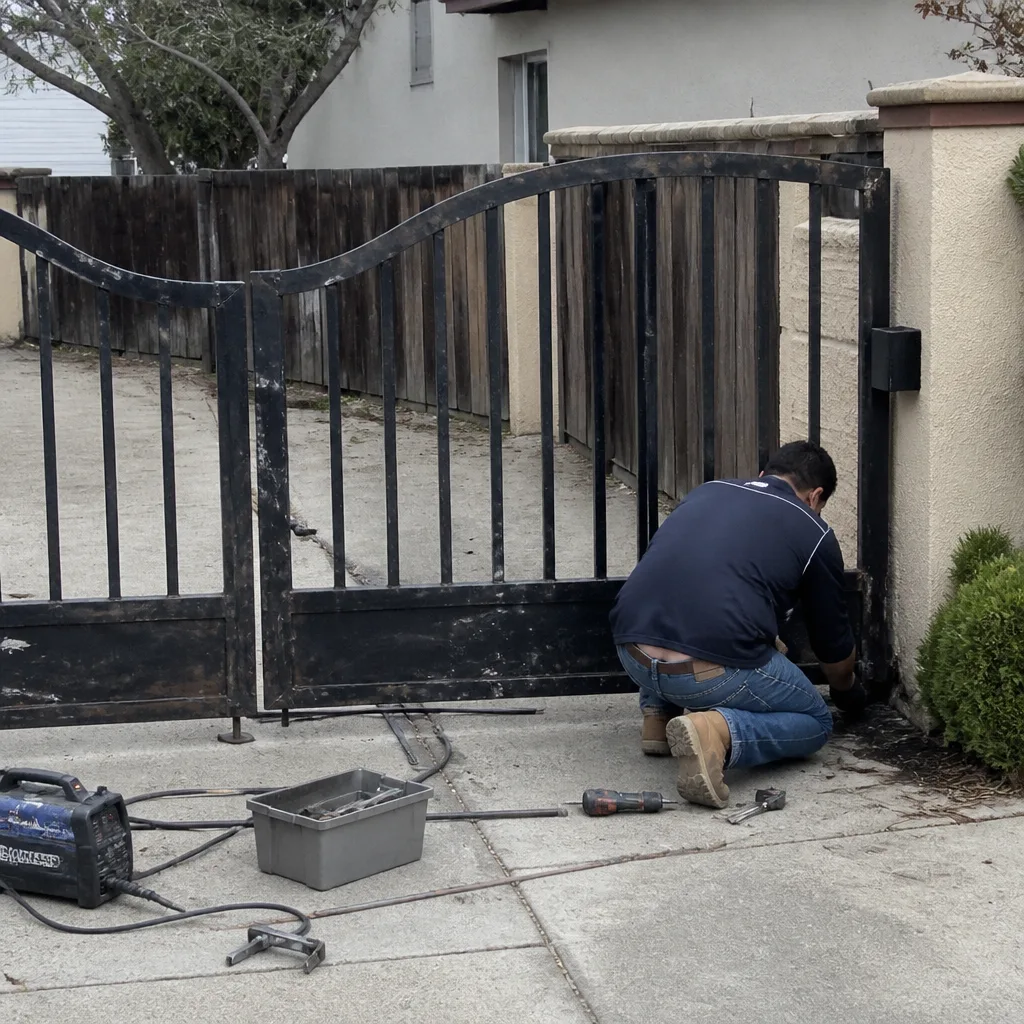 Before
 After
 Before
 After